JAPAN
Where We Sleep
Japan does luxury differently: quietly, precisely, and with an obsessive attention to detail. Our hotel picks range from design-forward city stays to deeply restorative ryokan and remote retreats, each chosen for atmosphere, craftsmanship, and a strong sense of place. Nothing generic, nothing overbuilt; just places that understand rhythm, restraint, and the art of hosting well.
$ - $$
Tokyo & Central Honshu
K5
Tokyo
Location: Japan, 〒103-0026 Tokyo, Chuo City, Nihonbashikabutocho, 3−5 K5ビル 1階
Price: ~€300/night
Vibe: Subtle, simple, modern
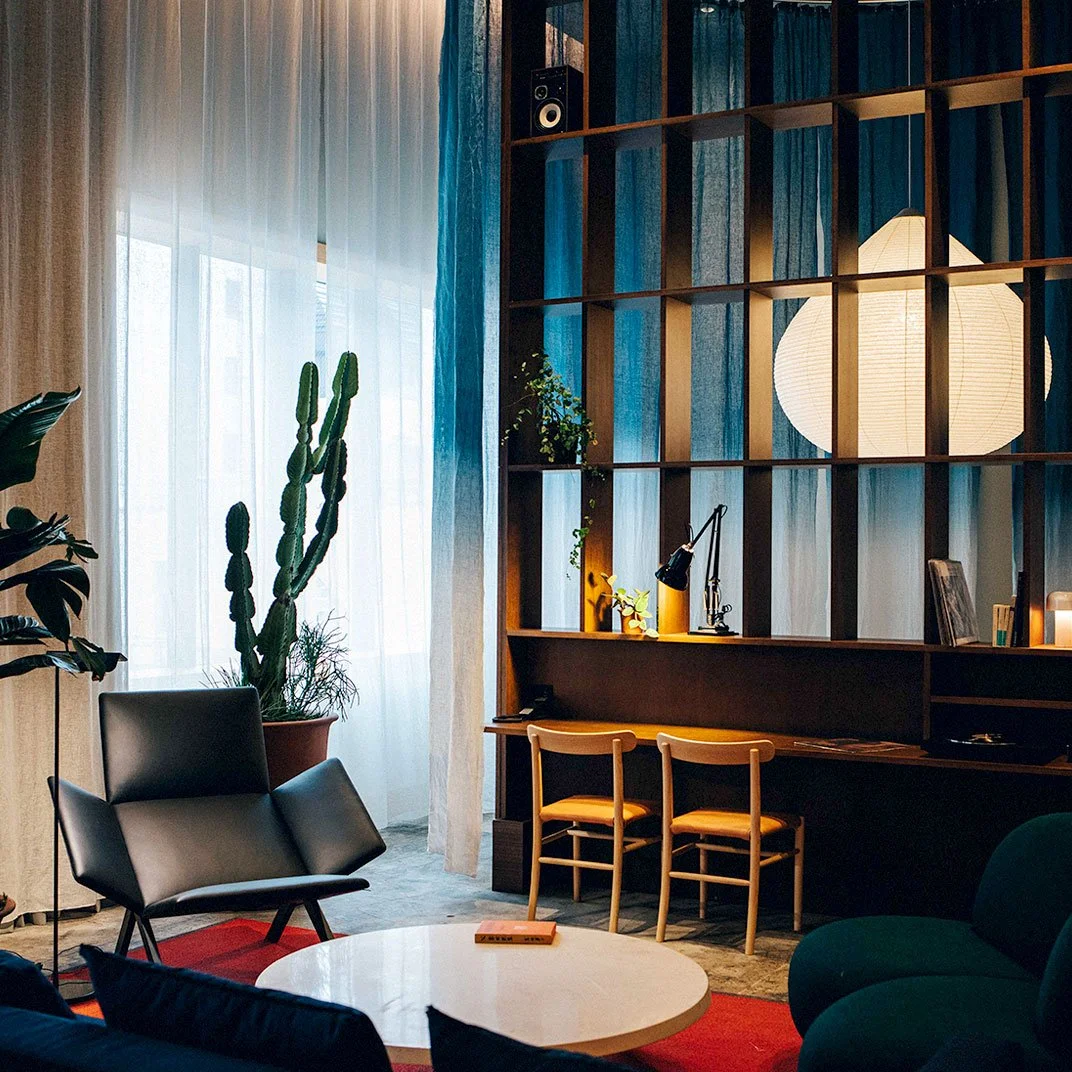
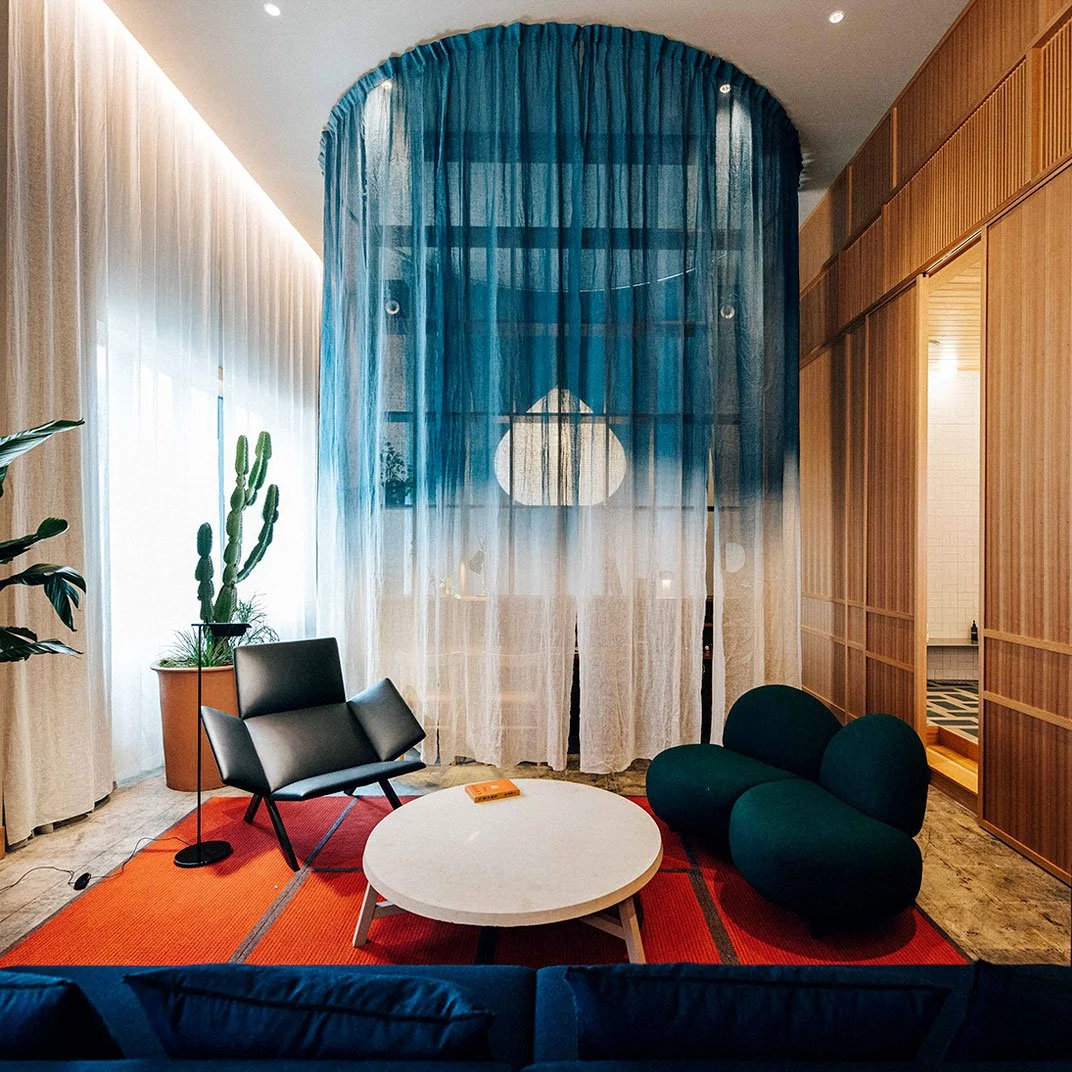
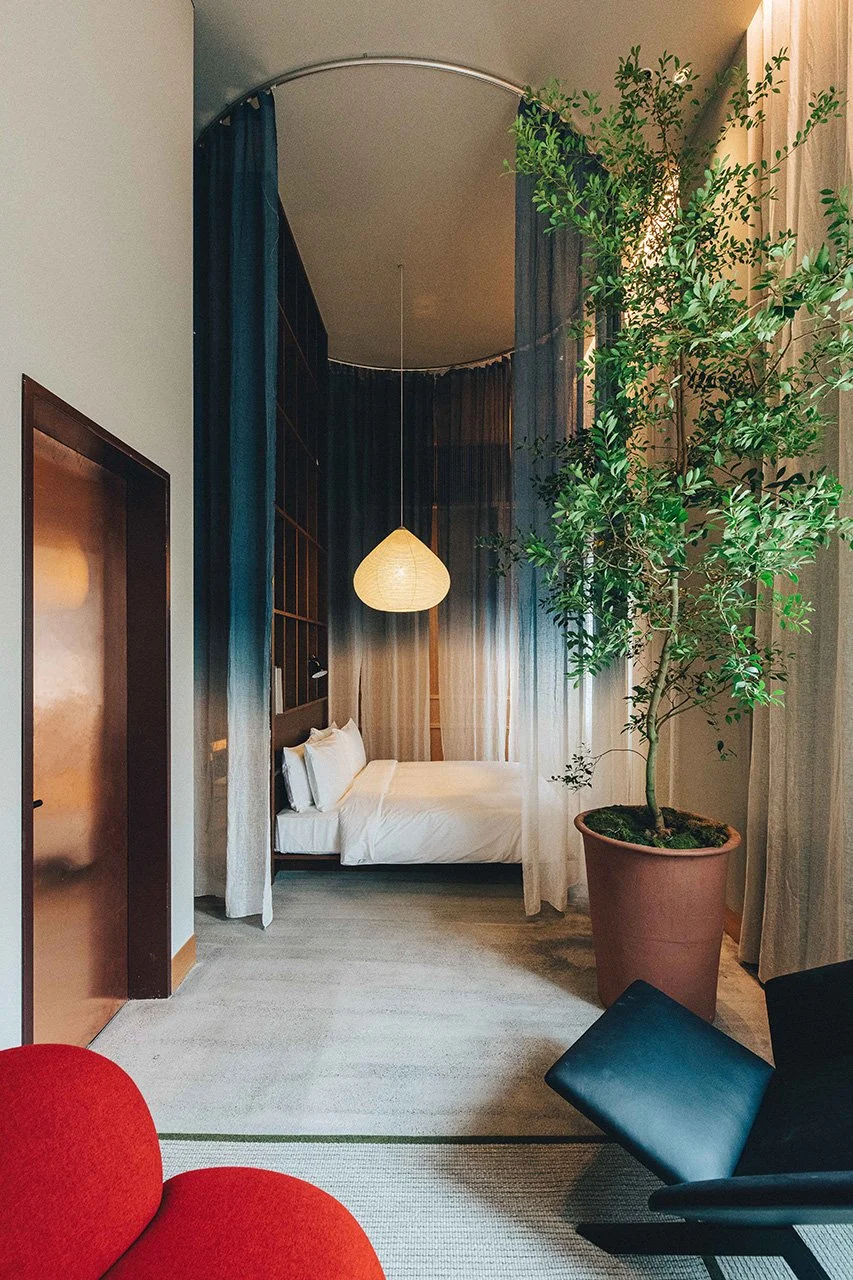
K5 feels resolutely adult in a city that often leans hyper or performative. The design is all soft woods, linen textures, and low lighting, creating a calm that immediately slows you down after Tokyo’s intensity. Rooms are generous by Tokyo standards and feel more like carefully composed apartments than hotel boxes. There’s a strong sense of intention here: nothing flashy, nothing unnecessary. The result is a stay that feels both design-forward and genuinely restful.

Located in Nihonbashi, a historic, understated neighborhood that still feels local and lived-in
20 rooms only, which keeps the atmosphere intimate and unhurried
Rooms feature high ceilings, natural materials, and excellent soundproofing
Ground floor houses Caveman, one of Tokyo’s most respected cocktail bars
Ideal for couples, solo travelers, and design-focused guests rather than families
Easy access to Tokyo Station and multiple subway lines
Excellent for longer stays thanks to generous room layouts and a genuinely livable feel
Many rooms retain subtle architectural traces of the original bank which was oncce housed here.
All images courtesy of K5
Trunk (Hotel)
Tokyo
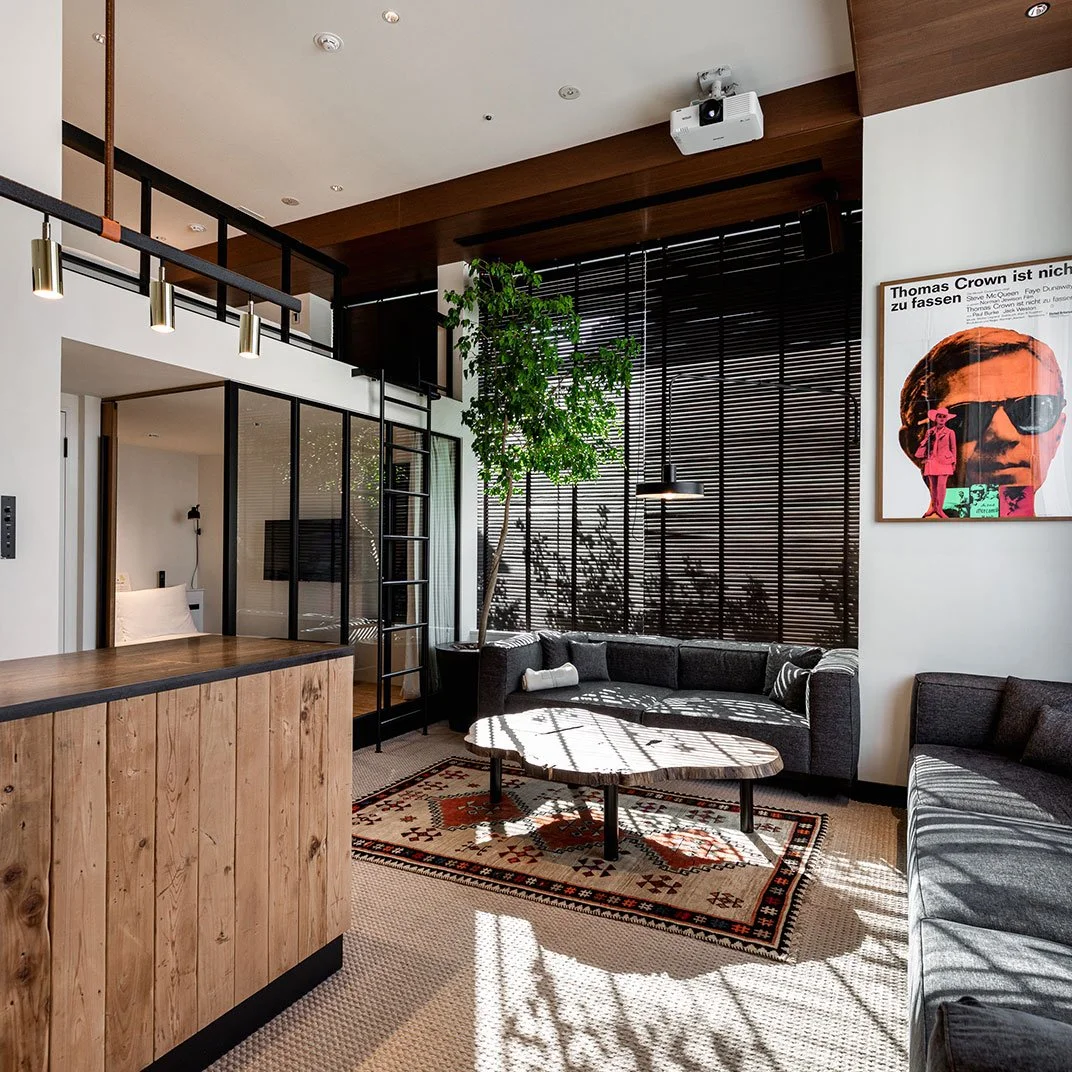
Location: 5 Chome-31 Jingumae, Shibuya, Tokyo 150-0001, Japan
Price: ~$350/night
Vibe: Cool, social, low-key
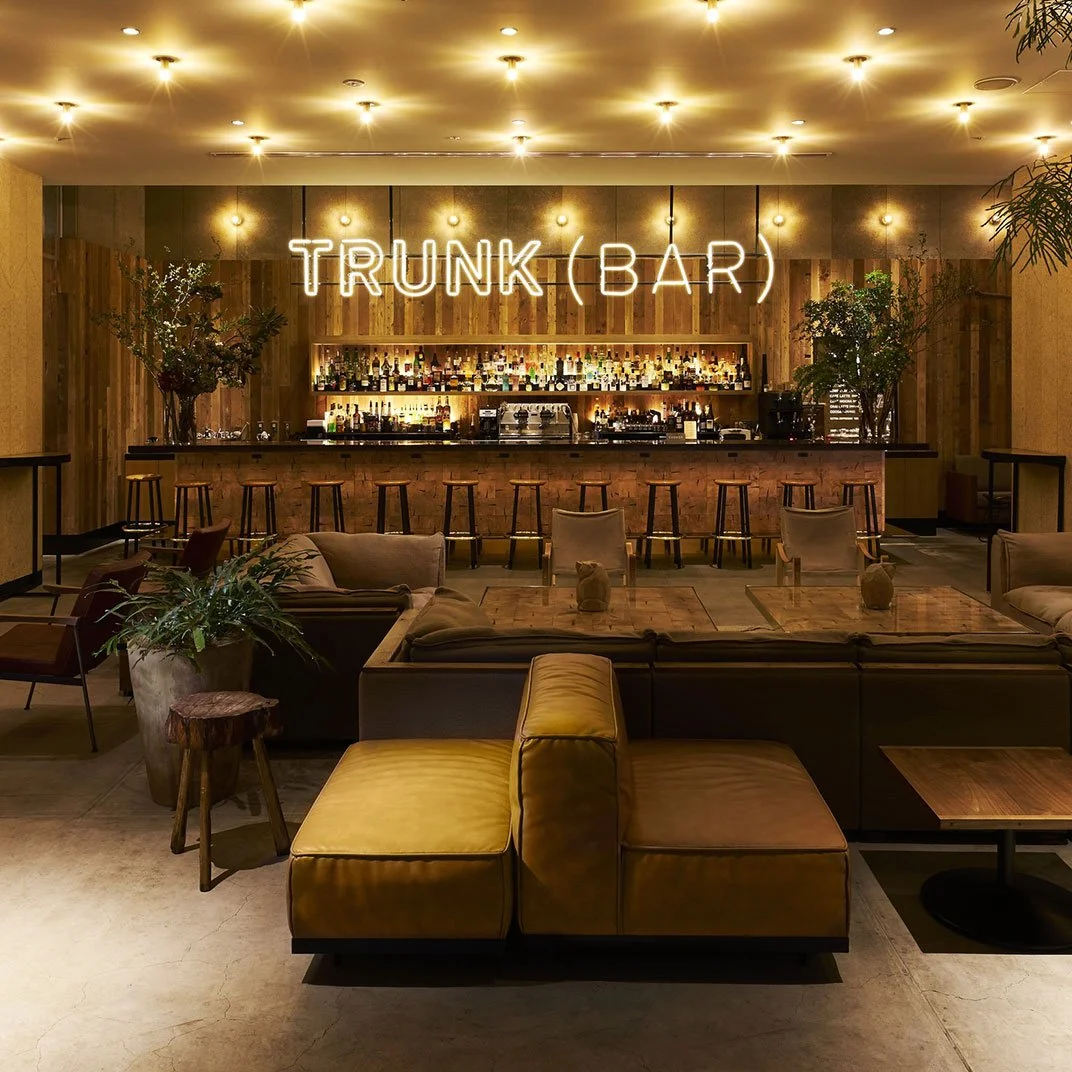
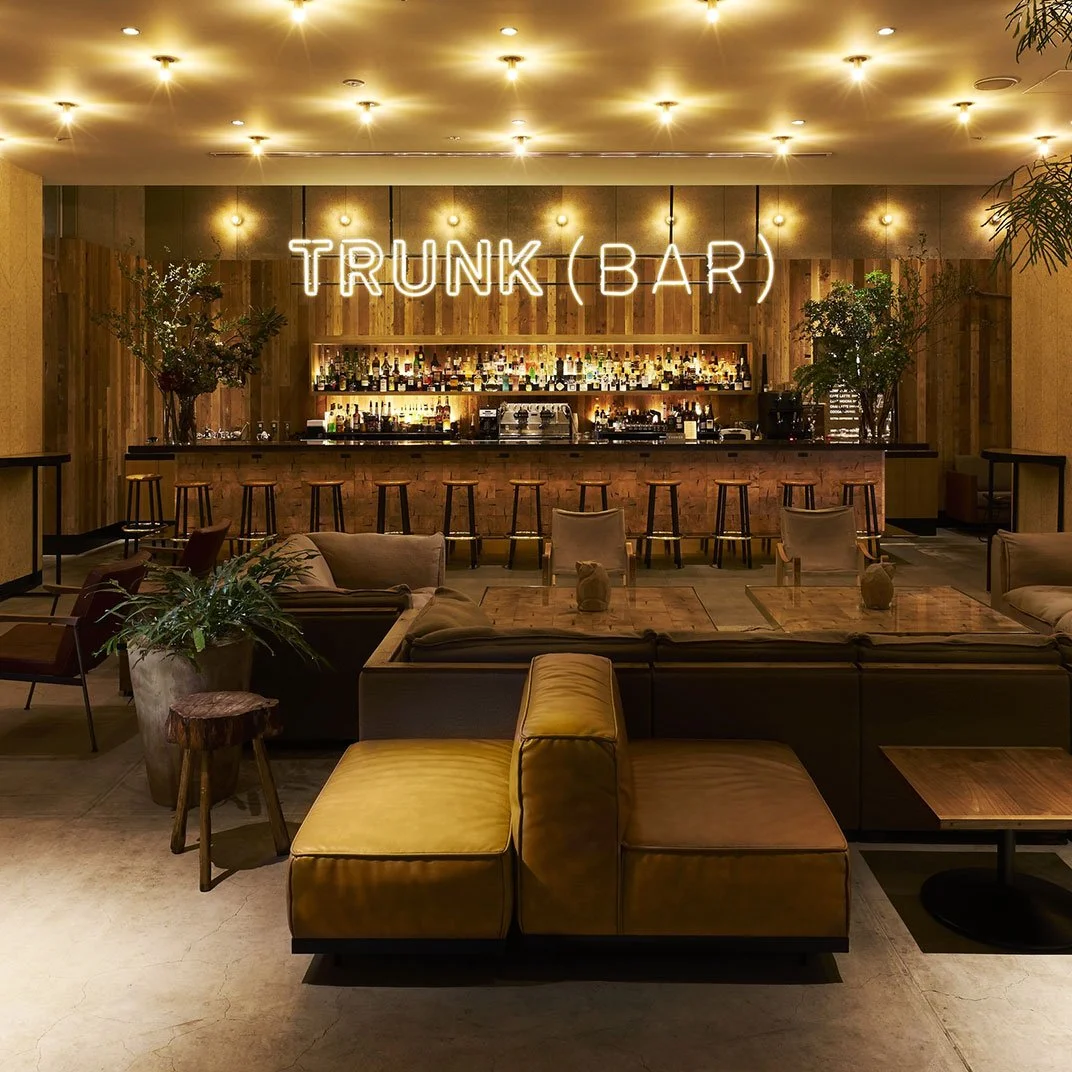
TRUNK is one of those rare Tokyo hotels that understands balance: social but never loud, stylish but not self-conscious. The interiors lean industrial-modern with warm woods and clean lines, and the public spaces are genuinely inviting rather than performative. Rooms are compact yet smartly designed, with excellent beds and thoughtful details that make short stays feel seamless. It’s the kind of place where you feel instantly connected to the city.
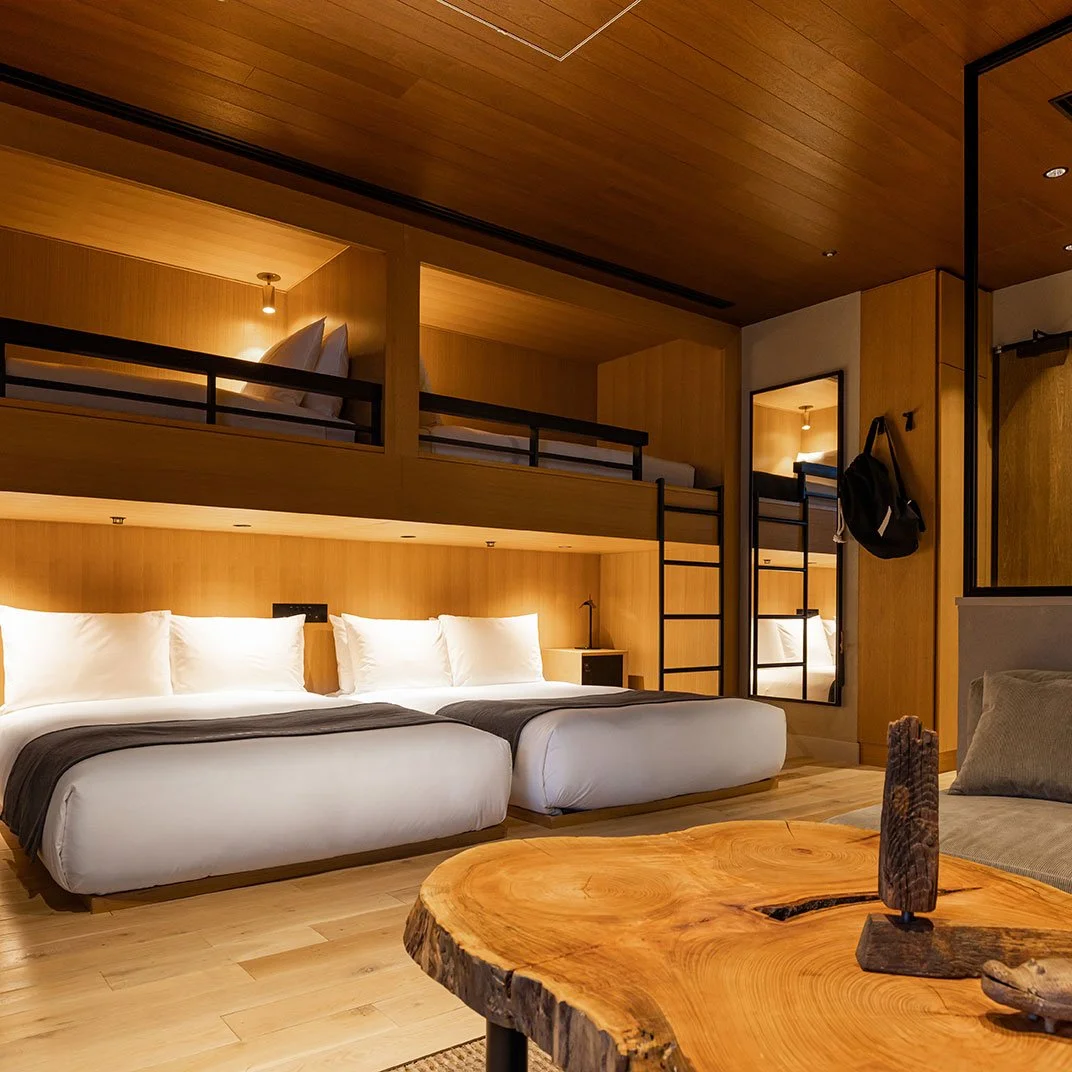
Located just off Cat Street, perfectly positioned between Shibuya and Harajuku
Strong sustainability ethos, with an emphasis on local sourcing and low-impact operations
Rooms are efficiently designed and best suited for couples or solo travelers
Excellent ground-floor bar and lounge that attracts a local, fashion-forward crowd
Popular for weddings and creative events, adding to the hotel’s social buzz
Service is polished, relaxed, and refreshingly unpretentious
Easy access to shopping, galleries, and nightlife without being on a major thoroughfare
TRUNK helped set the tone for Tokyo’s new wave of lifestyle hotels - while many have followed, few have matched its consistency or sense of ease.
All images courtesy of Trunk (Hotel) - Cat Street
Yuen Bettei Daita
Tokyo
Location: 2 Chome-31-26 Daita, Setagaya City, Tokyo 155-0033, Japan
Price: From ~$300/night
Vibe: Relaxing, simple, adult.
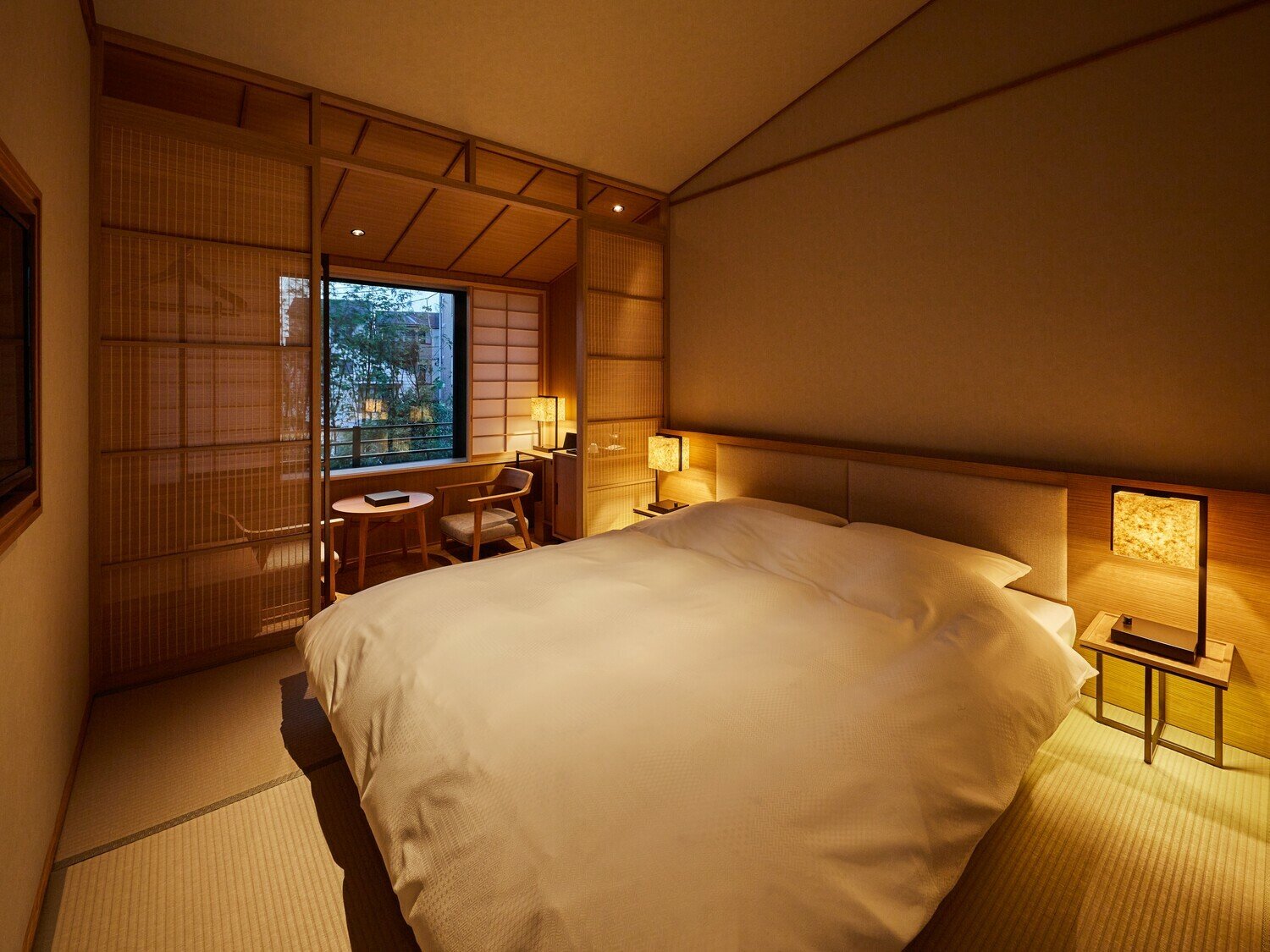
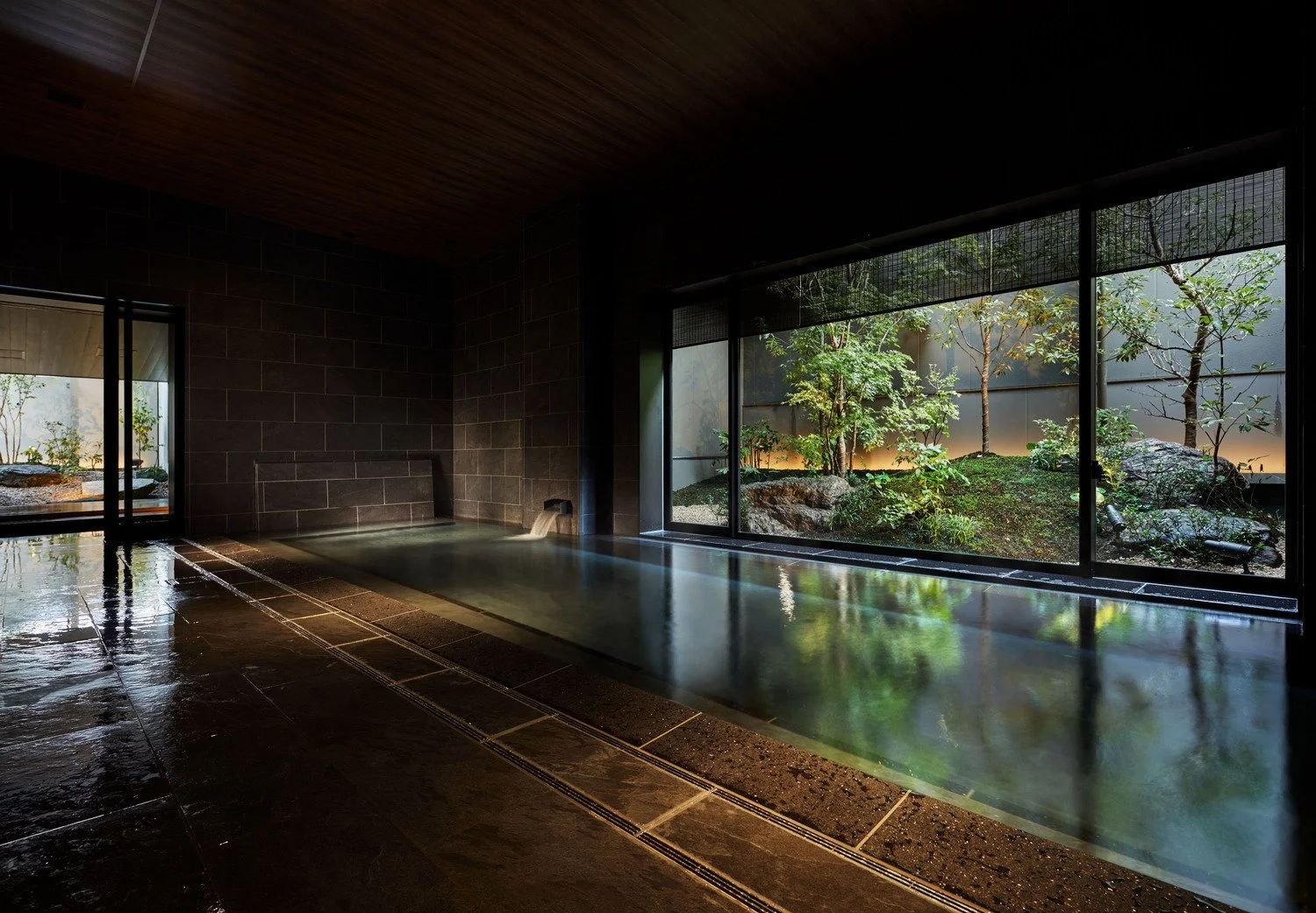
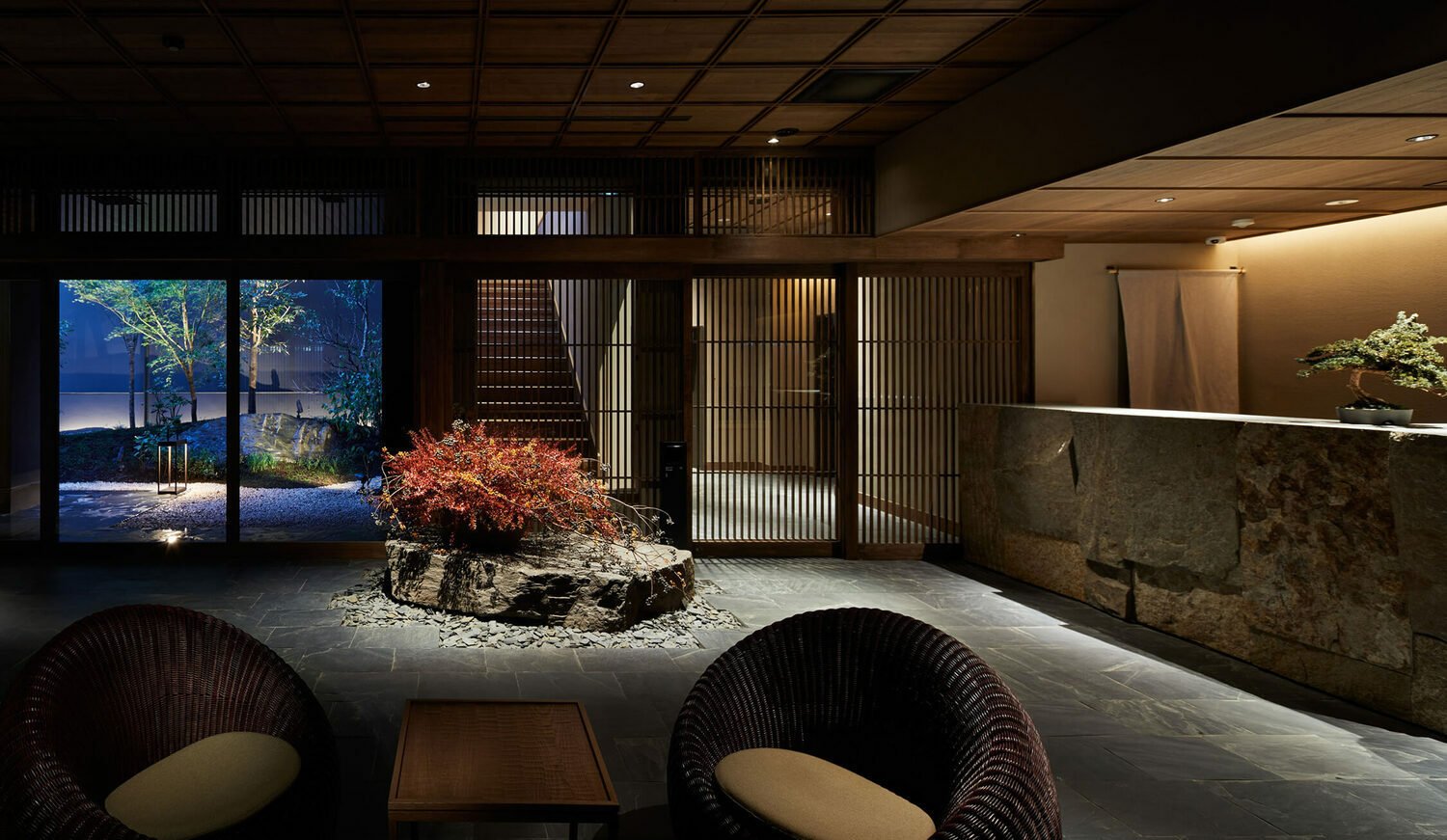
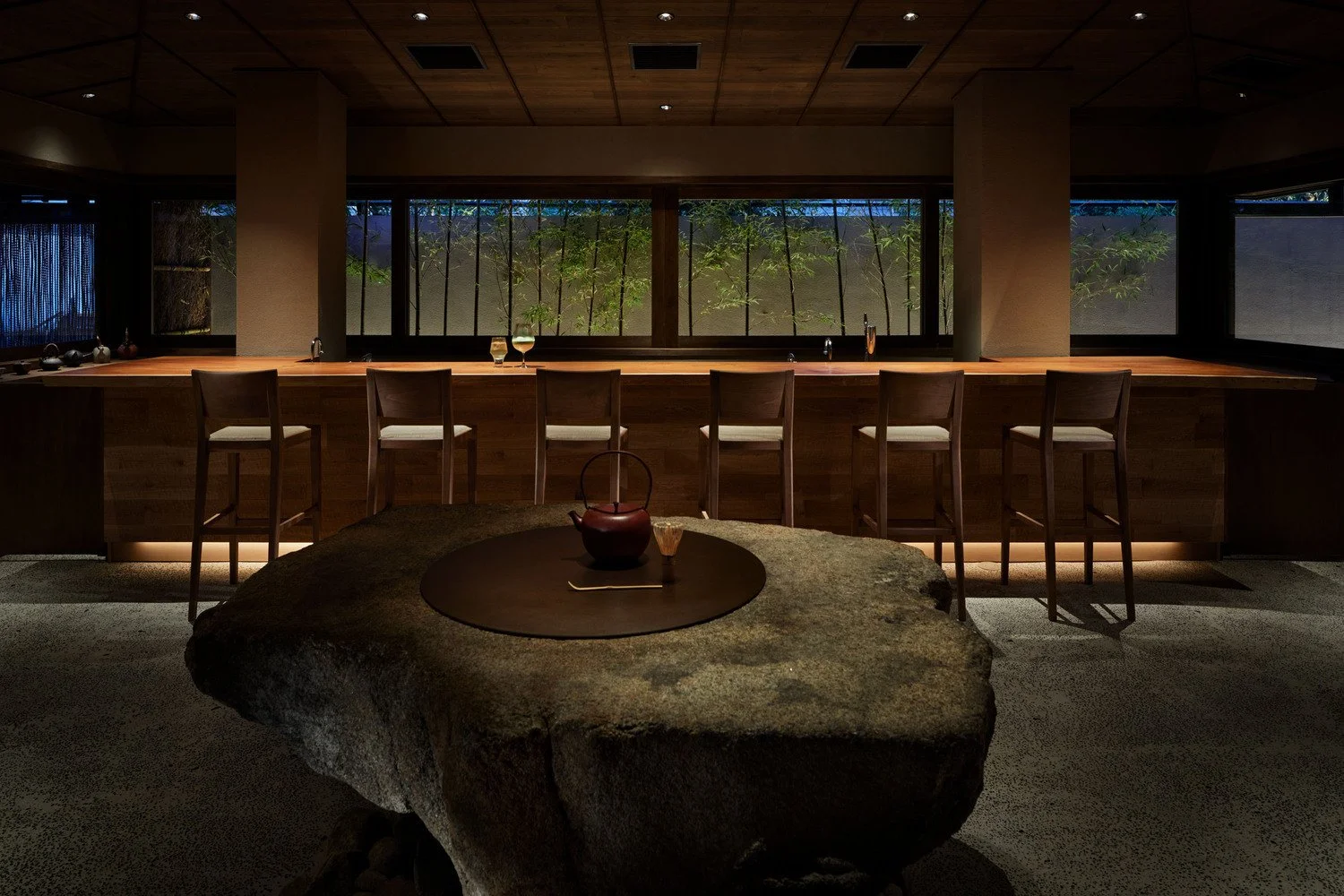
This is Tokyo at its most restrained and restorative. Yuen Bettei Daita feels purposefully removed from the city’s sensory overload, trading neon and noise for soft light, clean lines, and a rhythm that encourages slowing down. The design nods to traditional ryokan aesthetics — tatami, shoji-inspired screens, natural wood — but everything is interpreted through a modern, architectural lens. It’s the rare Tokyo stay that feels genuinely grounding, making it an ideal counterbalance to the city’s intensity.
Located in Setagaya, a calm, residential neighborhood west of central Tokyo
Easy access to Shinjuku and Shibuya via Odakyu Line
Features real hot spring onsen water, a rarity within Tokyo proper
Rooms are minimalist and serene, many with tatami flooring and low-profile beds
Communal baths are beautifully designed and meant for lingering, not rushing
On-site restaurant serves refined, seasonal Japanese cuisine
Atmosphere is hushed and intentional — this is not a social hotel
Best suited for couples or solo travelers seeking quiet rather than buzz
Early mornings here are especially special — the neighborhood is silent, the light is soft, and the experience feels closer to a countryside ryokan than a Tokyo hotel.
All images courtesy of Yuen Bettei Daita
Aoyama Grand Hotel
Tokyo
Location: 2 Chome-14-4 Kita-Aoyama, Minato City, Tokyo 107-0061, Japan
Price: ~$300/night
Vibe: Creative, urban, funky
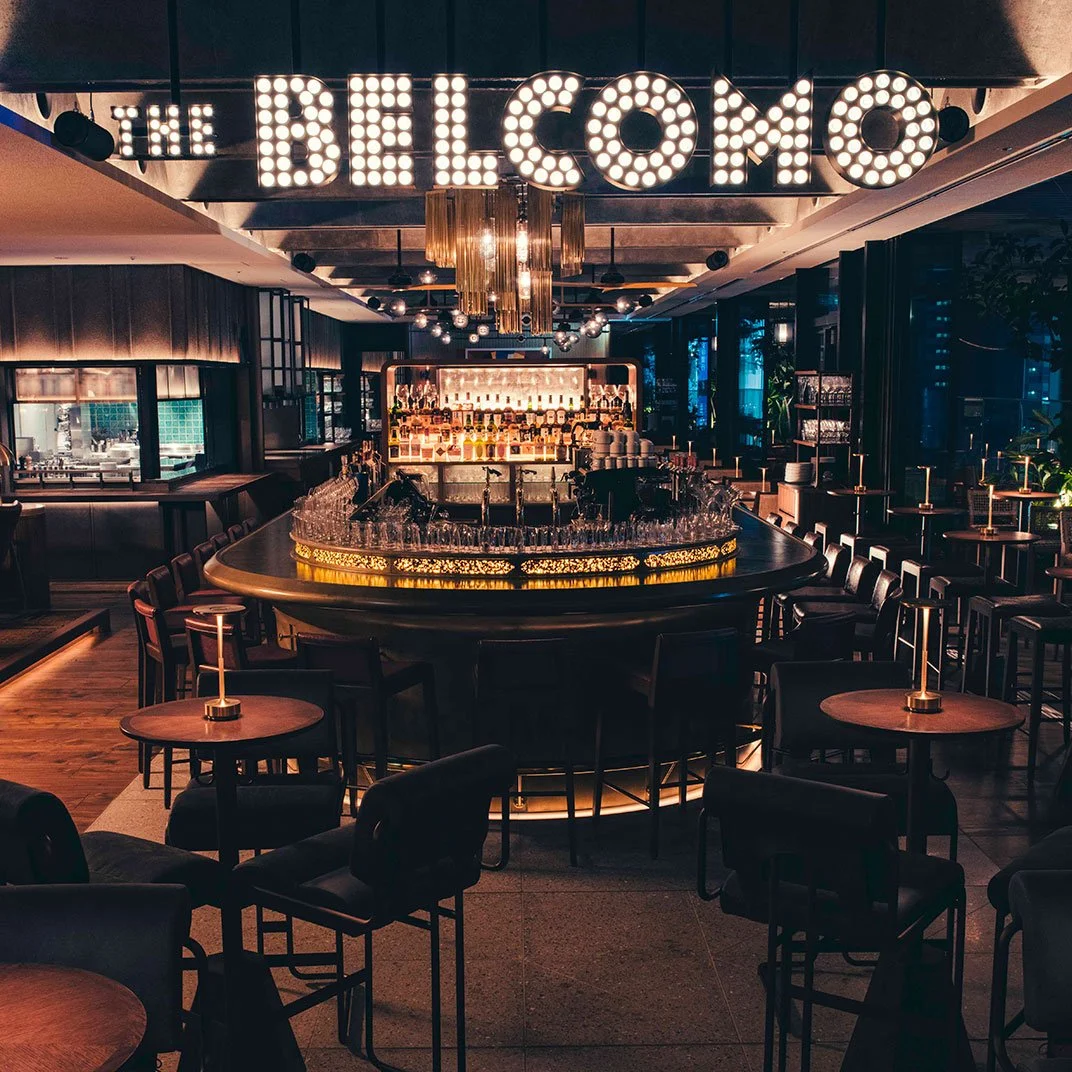
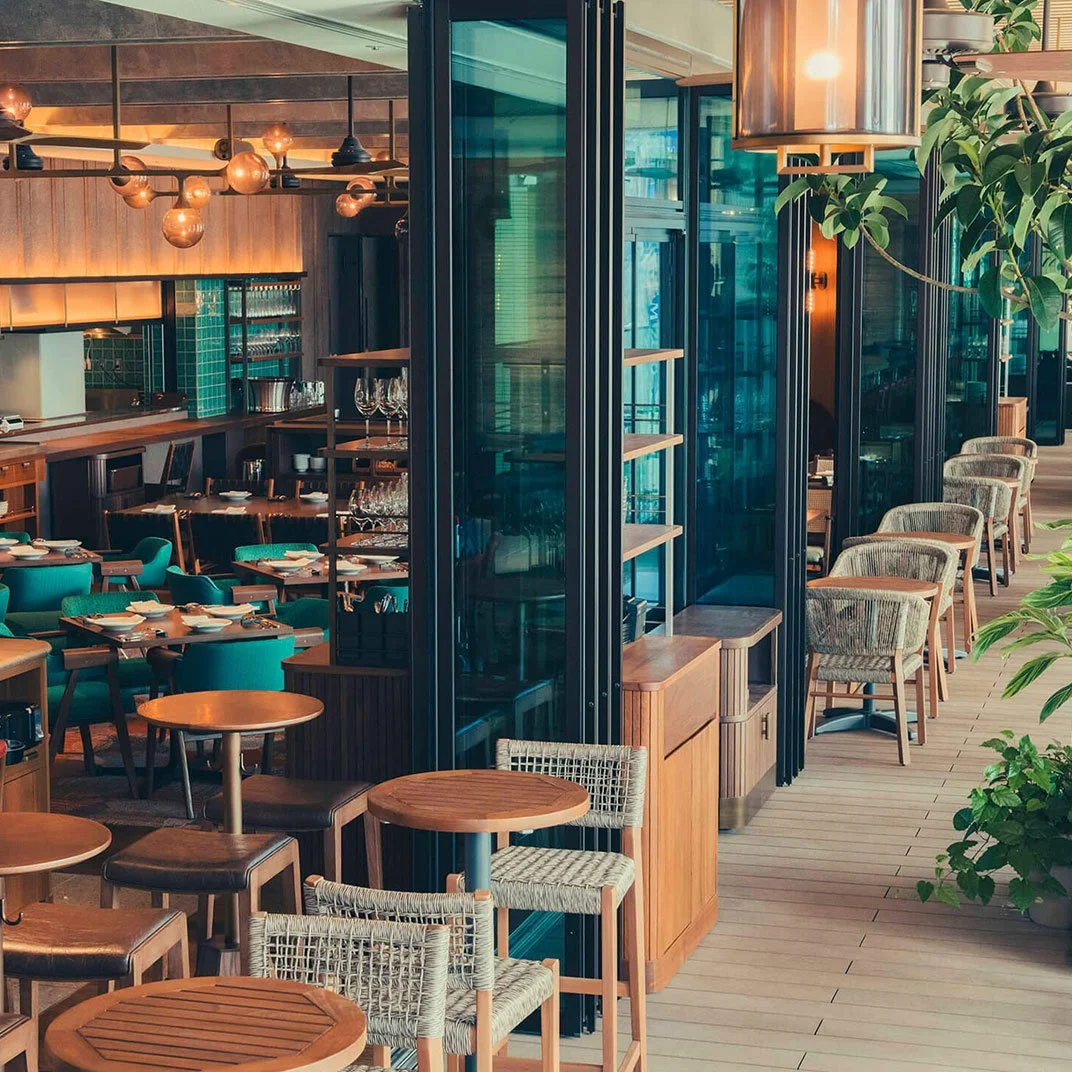
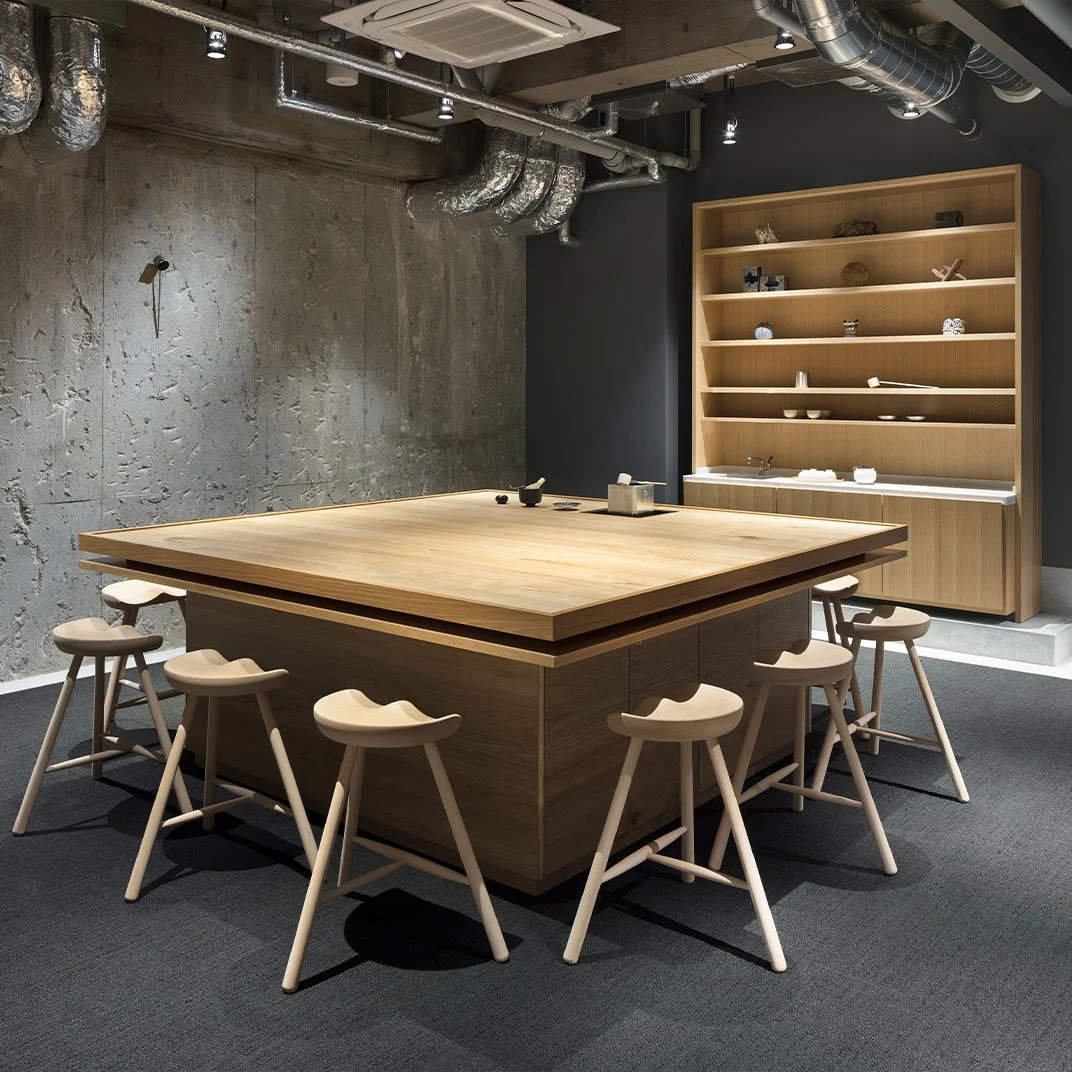
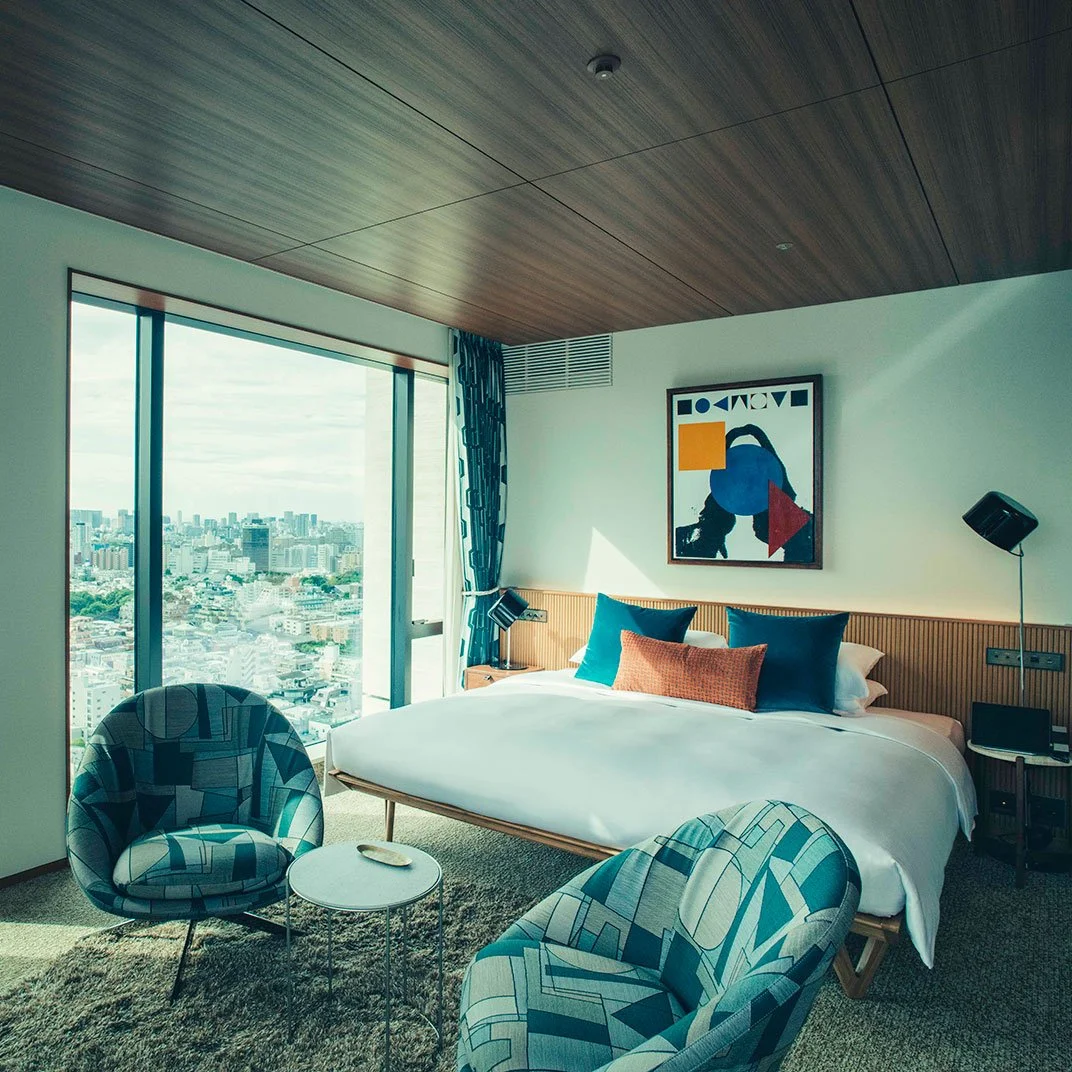
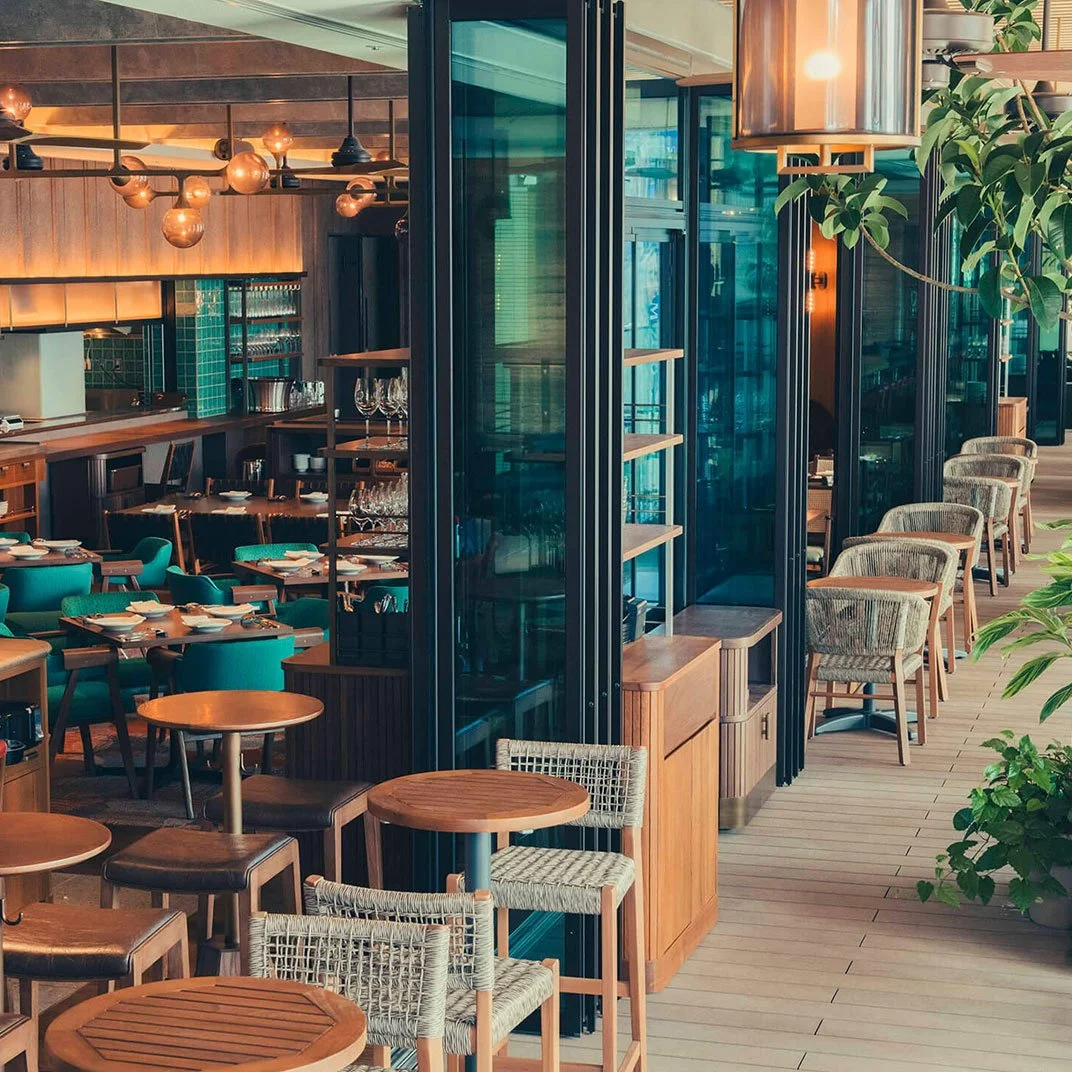
The hotel leans mid-century in spirit, with warm woods, clean geometry, and interiors that feel composed rather than showy. Public spaces are a real strength here — lively but controlled — making it just as appealing to step out for the night as it is to linger downstairs over breakfast or a drink. Rooms strike a smart balance between comfort and style, and the overall atmosphere feels international without losing its Tokyo sensibility.
Set in Aoyama, one of Tokyo’s most refined and design-forward neighborhoods
Walking distance to Omotesando, with easy access to Shibuya and Harajuku
Strong food and beverage program, including multiple restaurants and a rooftop bar
Rooms are streamlined, well-finished, and designed for short-to-medium stays
Social energy skews stylish rather than scene-y
Popular with fashion, media, and creative travelers
Service is polished and efficient, with a distinctly urban hotel rhythm
The rooftop is at its best just before sunset — a quiet moment when Aoyama feels expansive and calm, before the city fully turns on for the night.
All images courtesy of Aoyama Grand Hotel
Muji Hotel Ginza
Tokyo
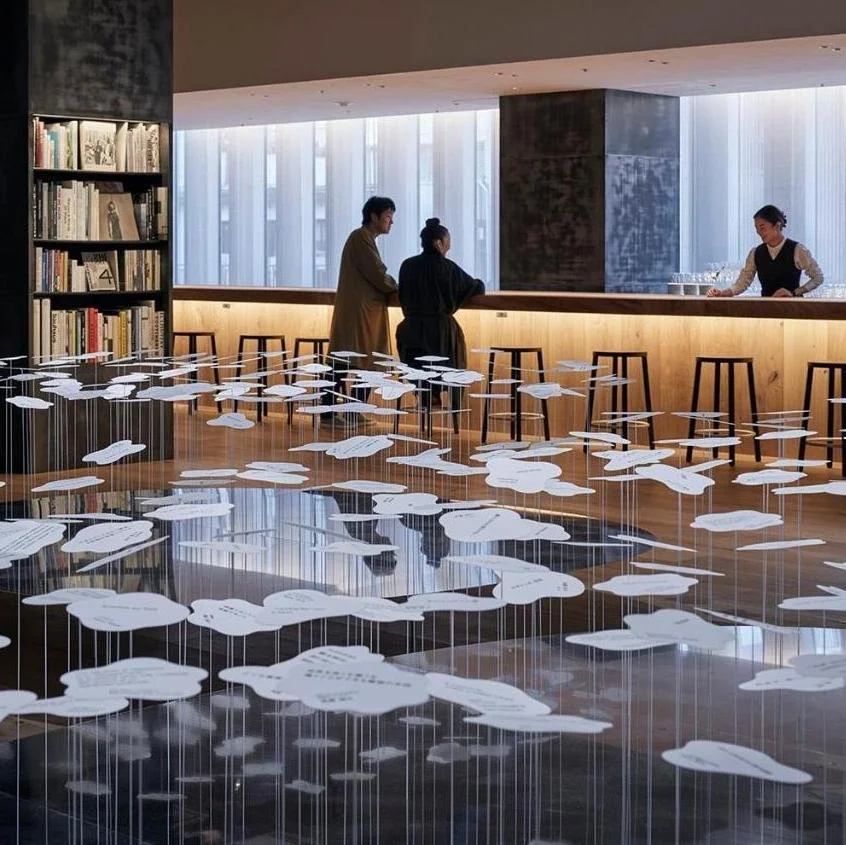
Location: 3 Chome-3-5 Ginza, Chuo City, Tokyo 104-0061, Japan
Price: ~$280/night
Vibe: Calm, minimal, cool
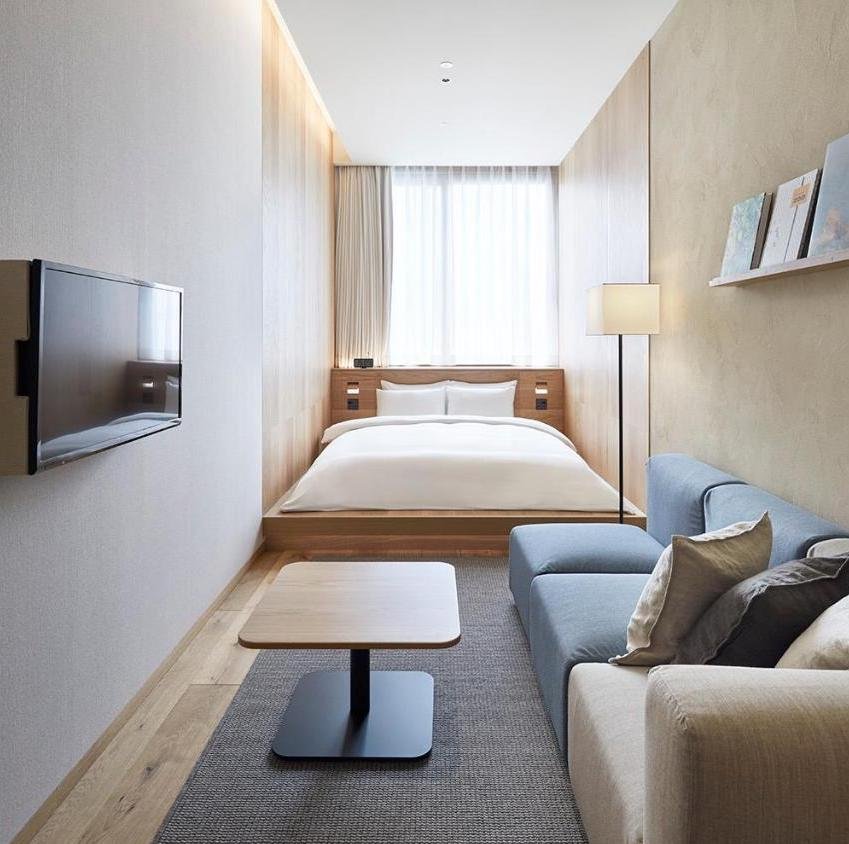
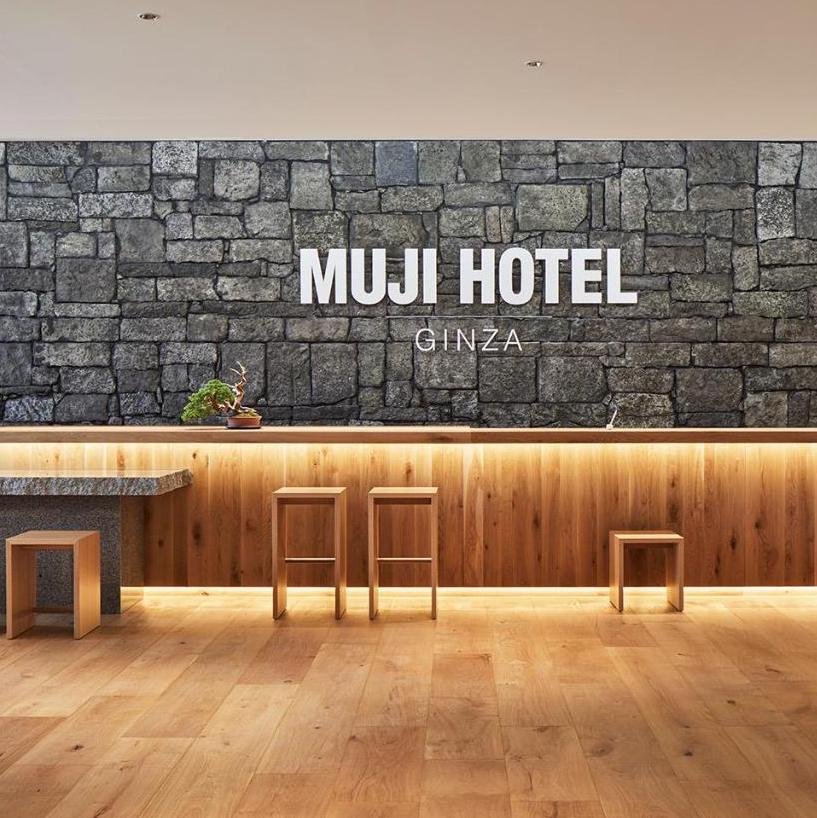
This is minimalism with warmth and intelligence, not austerity. Rooms are beautifully proportioned and thoughtfully laid out, with natural materials, soft lighting, and a sense of order that feels instantly grounding after a long day in Tokyo. Despite being housed above MUJI’s global flagship, the hotel itself feels cocooned and serene, never commercial or chaotic. It’s especially appealing for travelers who value simplicity, comfort, and a clean aesthetic over theatrical luxury.
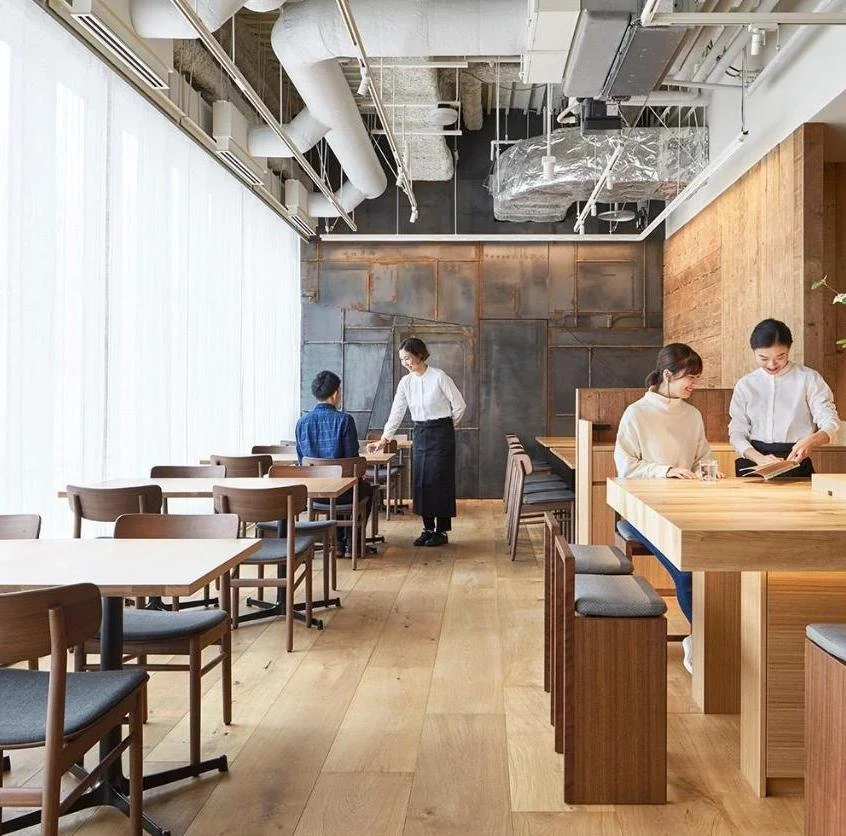
Located in Ginza, within easy walking distance of shopping, galleries, and multiple subway lines
79 rooms prioritizing function and calm
Interiors feature natural woods, linen textures, and MUJI’s signature neutral palette
On-site restaurant serves thoughtful, seasonal Japanese cuisine with a focus on balance and restraint
Atmosphere is quiet and composed rather than social
Service is efficient, discreet, and consistent
Building also houses MUJI’s flagship retail and food spaces, though hotel access is fully separate
Even small details — pajamas, lighting controls, bath amenities — feel unusually well-considered here, reinforcing the sense that the hotel was designed to be lived in, not just looked at.
All images courtesy of Muji Hotel Ginza
Hotel KUMU
Kanazawa
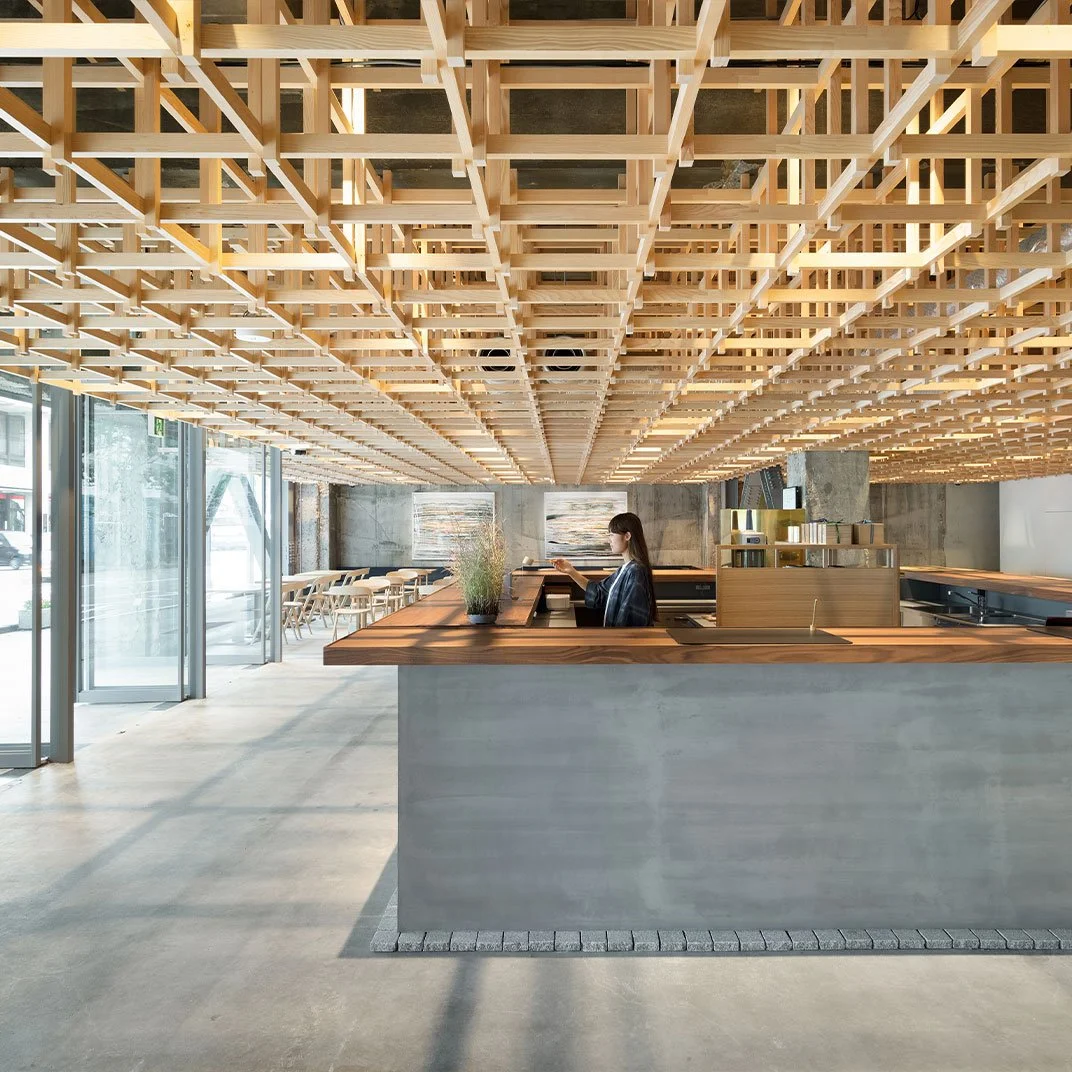
Location: 2-40 Kamitsutsumicho, Kanazawa, Ishikawa 920-0869, Japan
Price: From ~$94/night to ~$300/night
Vibe: Thoughtful, minimalistic, serene
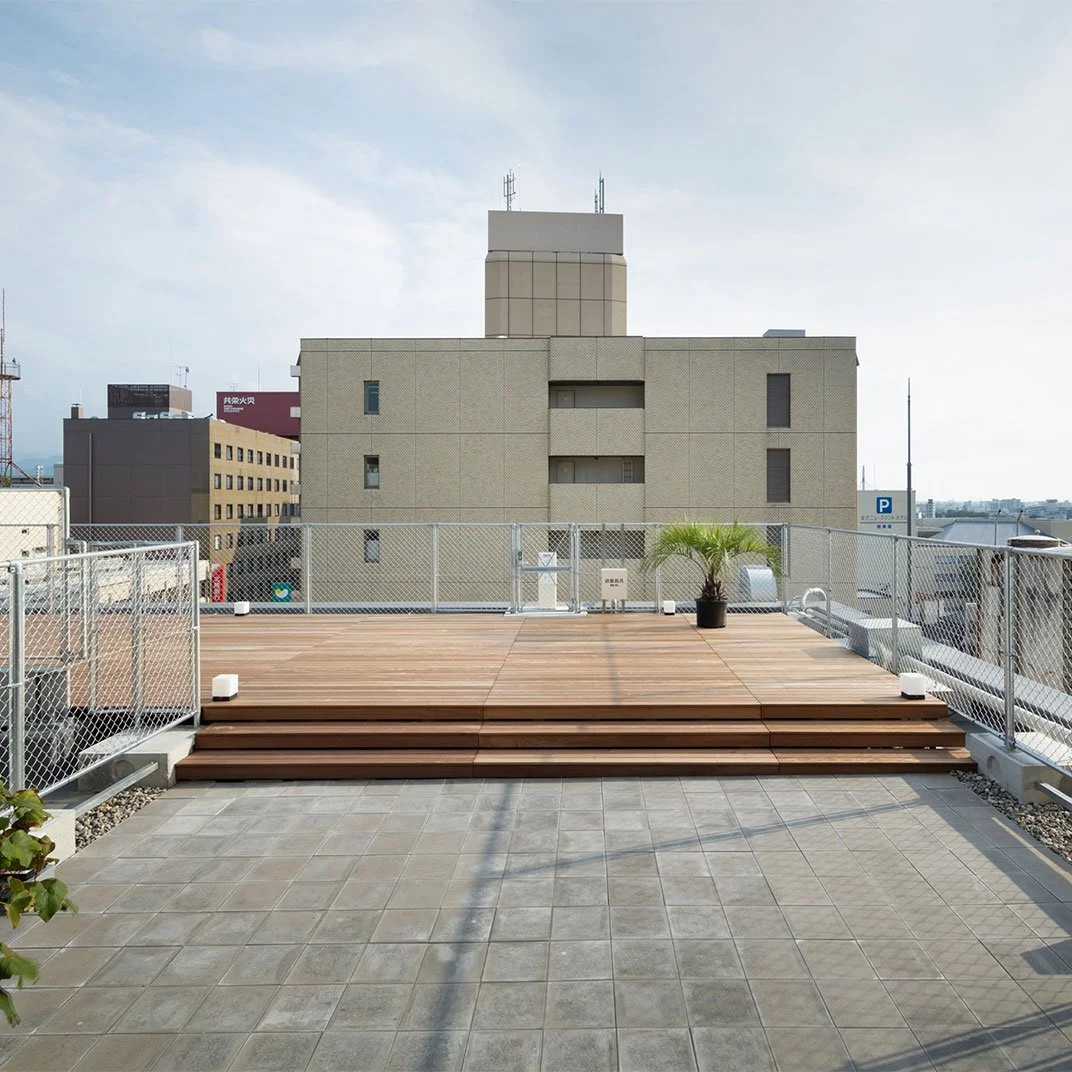
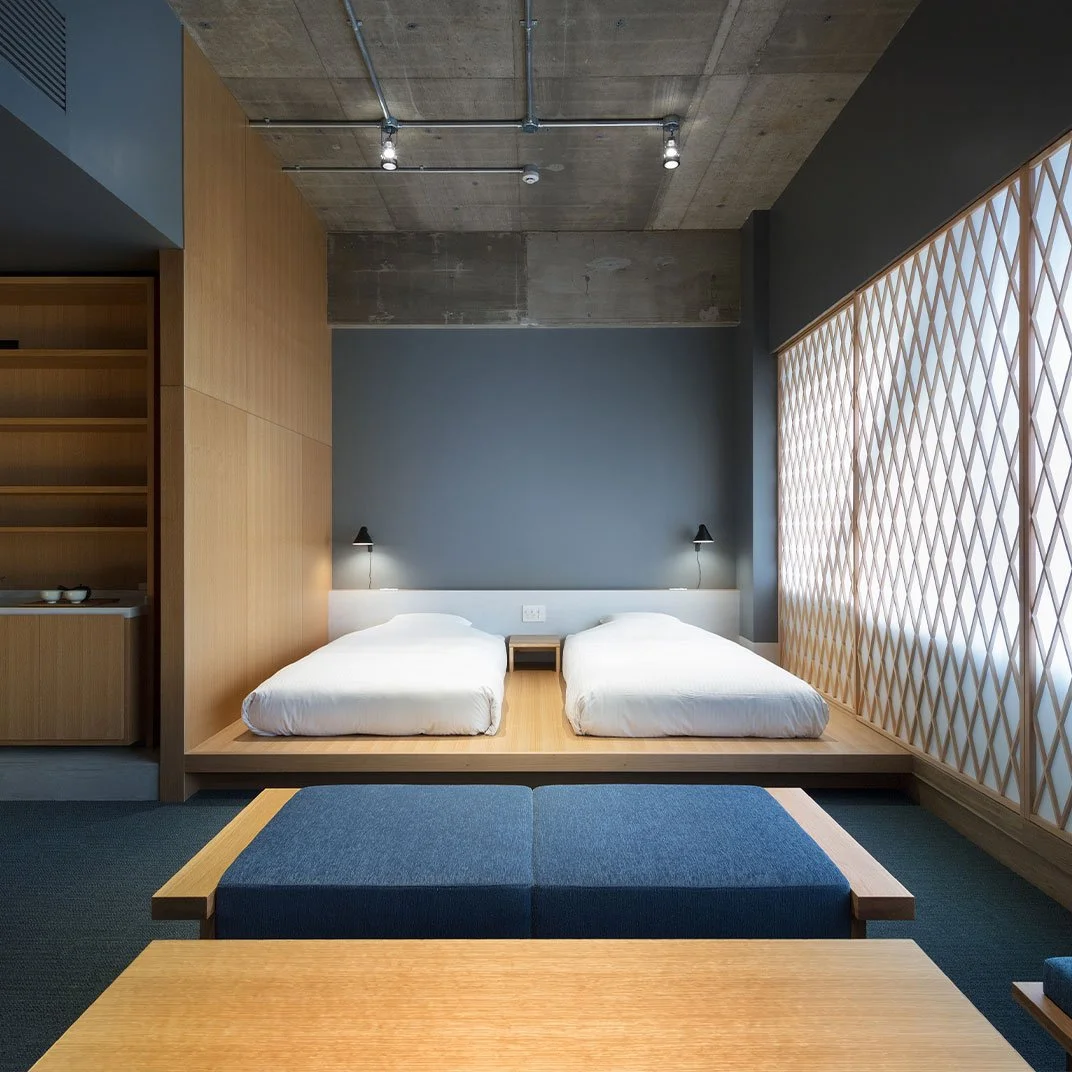
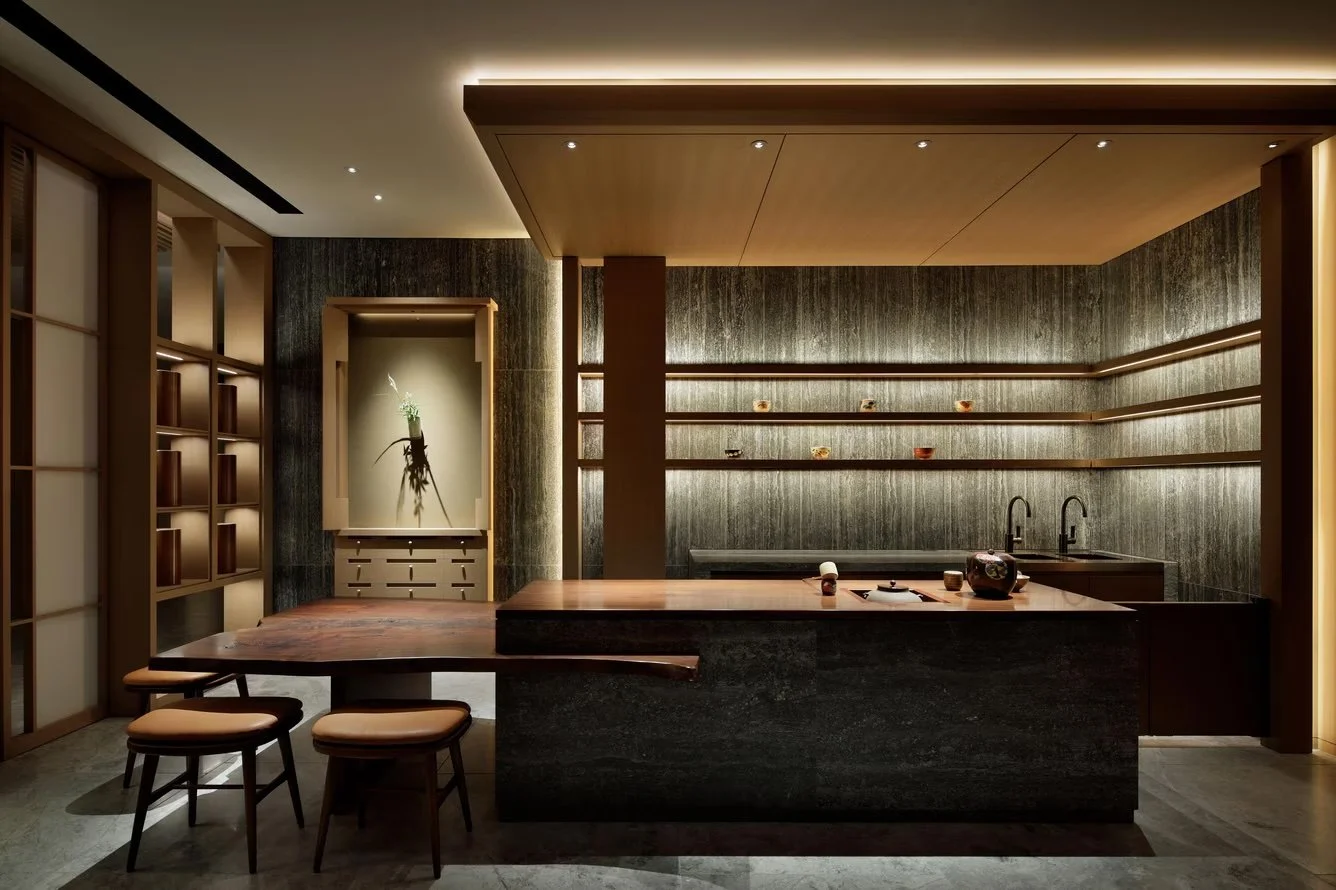
KUMU feels thoughtful in a way that’s increasingly rare — calm, grounded, and deeply connected to place. The design draws from Kanazawa’s centuries-old tea traditions, with warm woods, soft light, and communal spaces that encourage lingering rather than passing through. Rooms are serene and uncluttered, striking a perfect balance between modern comfort and ryokan-like simplicity. It’s the kind of hotel that gently recalibrates your pace, making Kanazawa feel less like a stopover and more like a destination in its own right.
Located near Kanazawa Castle and within walking distance of the Higashi Chaya geisha district
Strong emphasis on tea culture, with dedicated communal tea spaces for guests
Rooms are minimalist and calming, designed for rest rather than distraction
Public areas feel intimate and contemplative, not hotel-like or transactional
Excellent base for exploring Kanazawa’s craft, food, and historic neighborhoods
Service is warm, personal, and quietly attentive
Particularly appealing to couples, solo travelers, and culturally curious guests
Evenings here are especially lovely — the hotel’s tea spaces become softly lit and almost ceremonial, reinforcing the sense that slowing down is part of the experience, not an afterthought.
All images courtesy of Hotel KUMU
Kyoto, Kansai & The Inland Sea
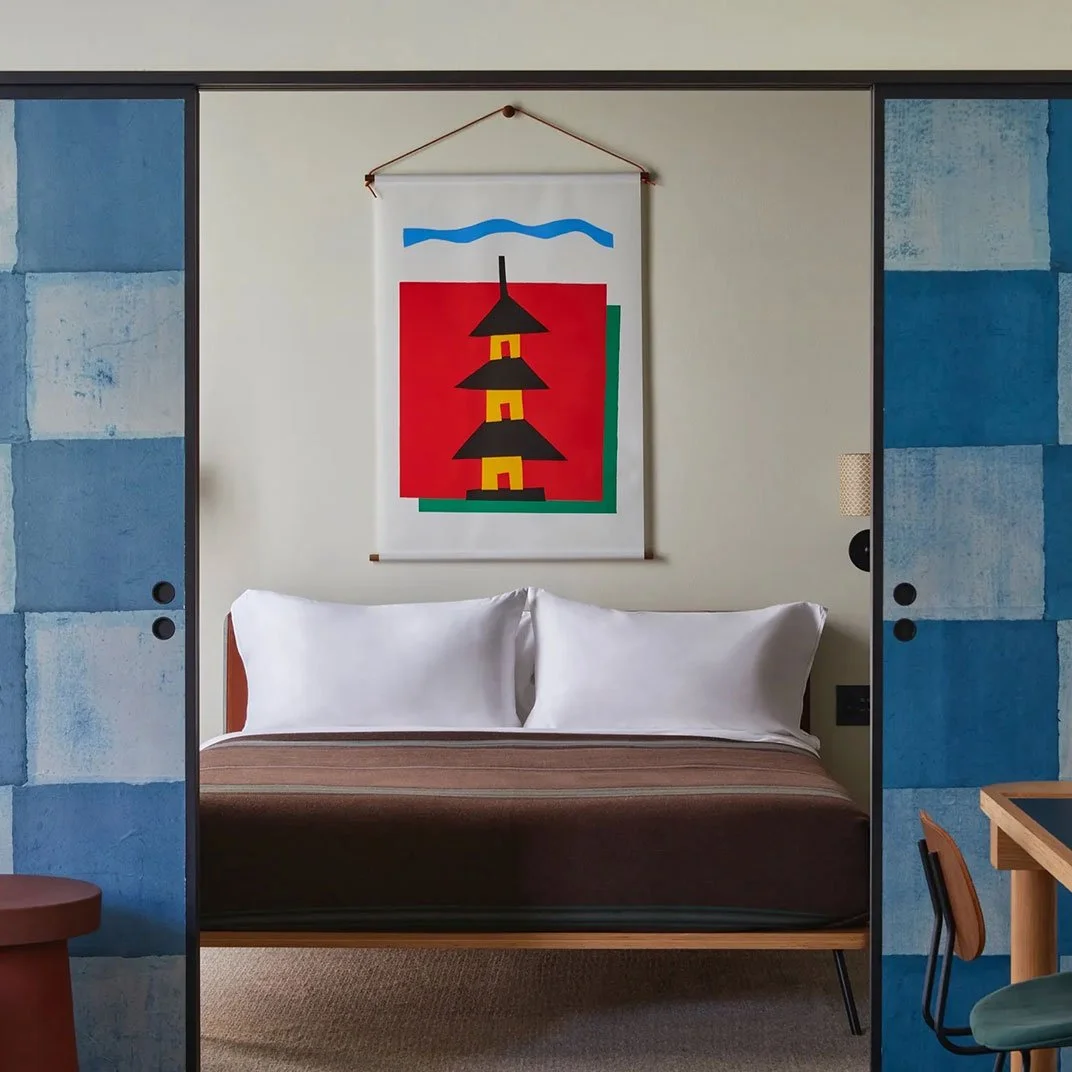
Azumi Setoda
Setoda
Location: 269 Setodacho Setoda, Onomichi, Hiroshima 722-2411, Japan
Price: ~$350/night
Vibe: Luxurious, quiet, authentic
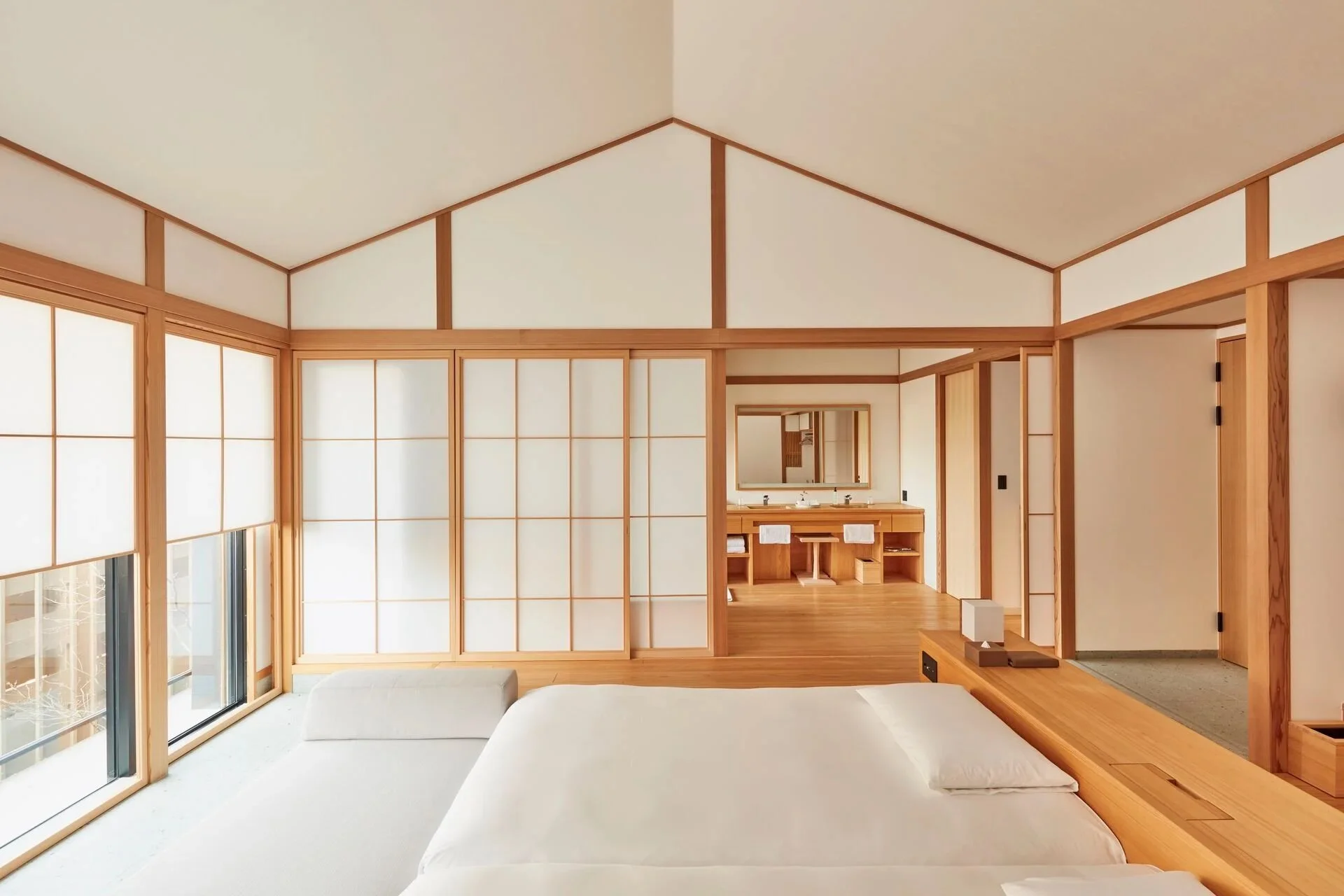
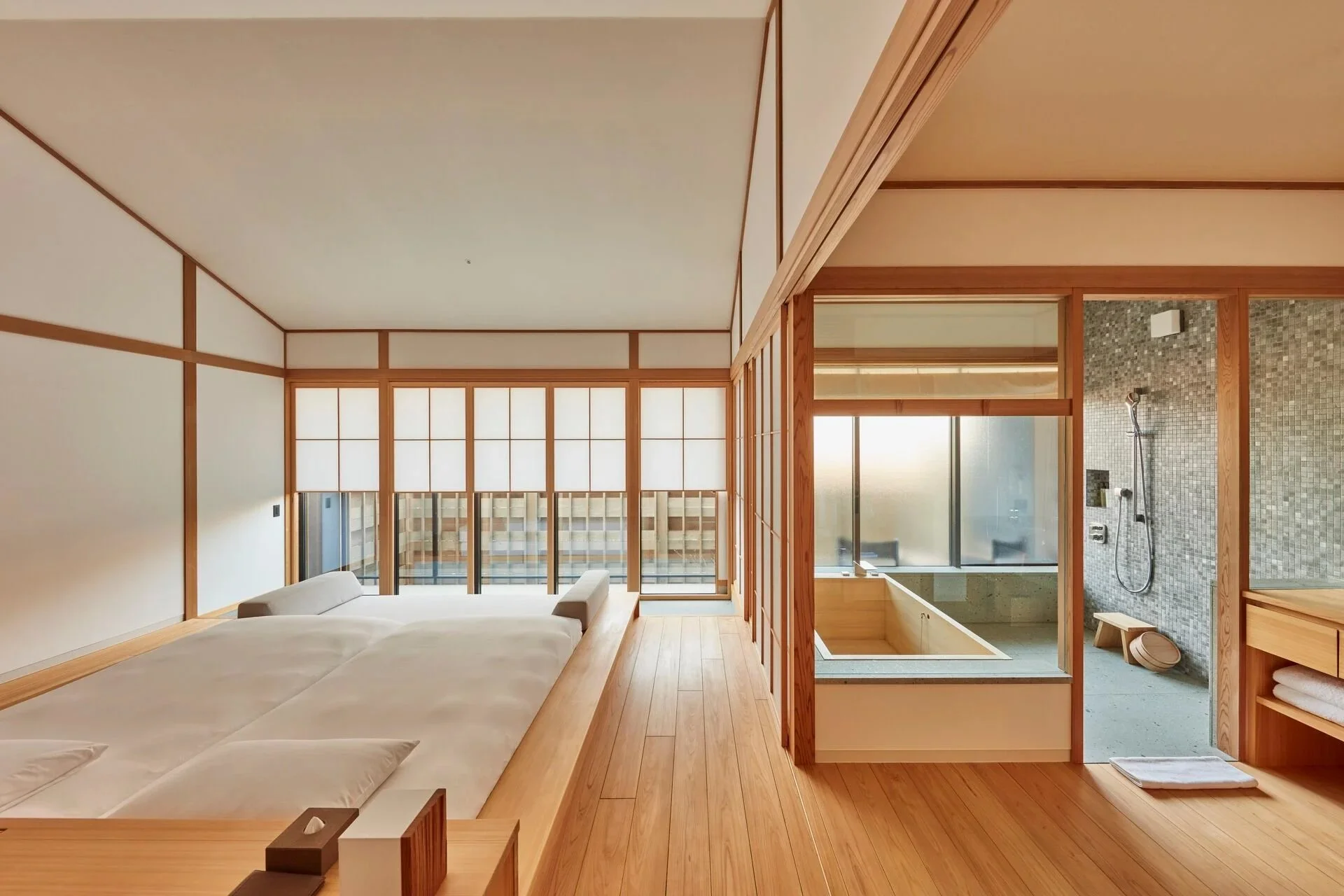
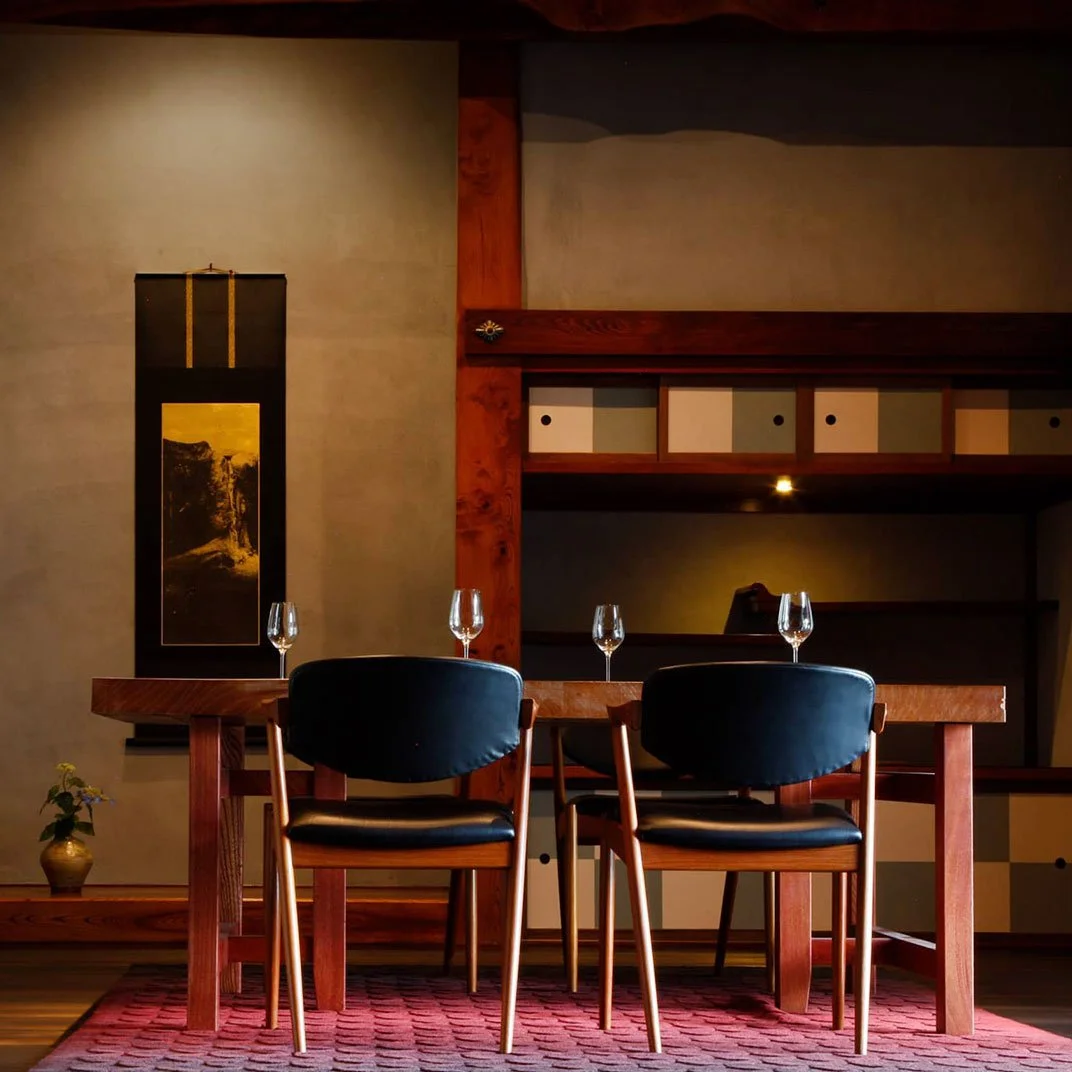
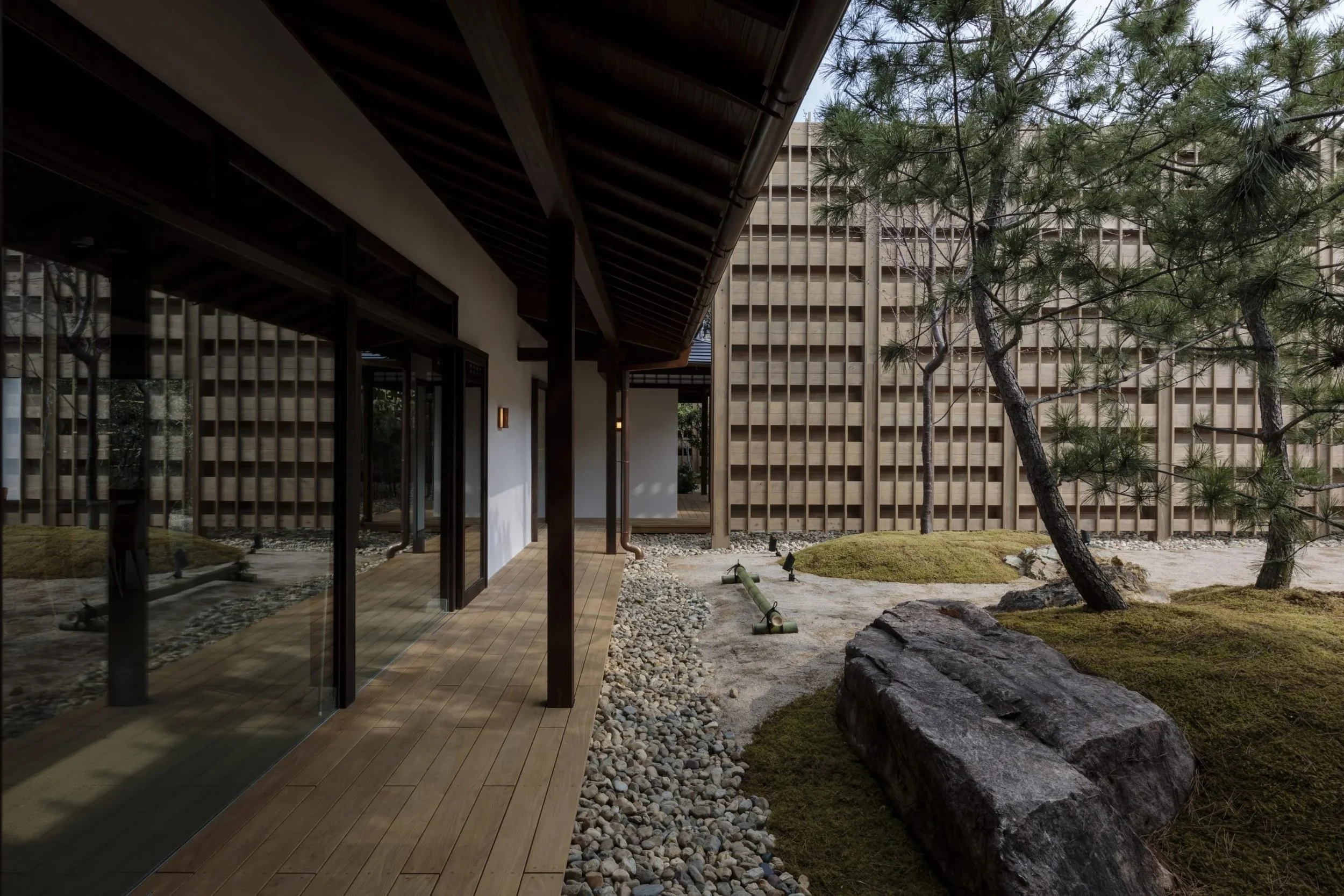
Azumi Setoda feels intentional in every sense — architectural, emotional, and experiential. The hotel occupies a former merchant residence, carefully restored rather than reinvented, with minimalist interiors that let light, proportion, and materiality do the work. There’s a distinct sense of calm here that goes beyond aesthetics; the experience is paced, thoughtful, and grounded in the rhythms of the surrounding town. It’s luxury without performance — deeply Japanese, resolutely modern, and designed for travelers who value meaning over spectacle.
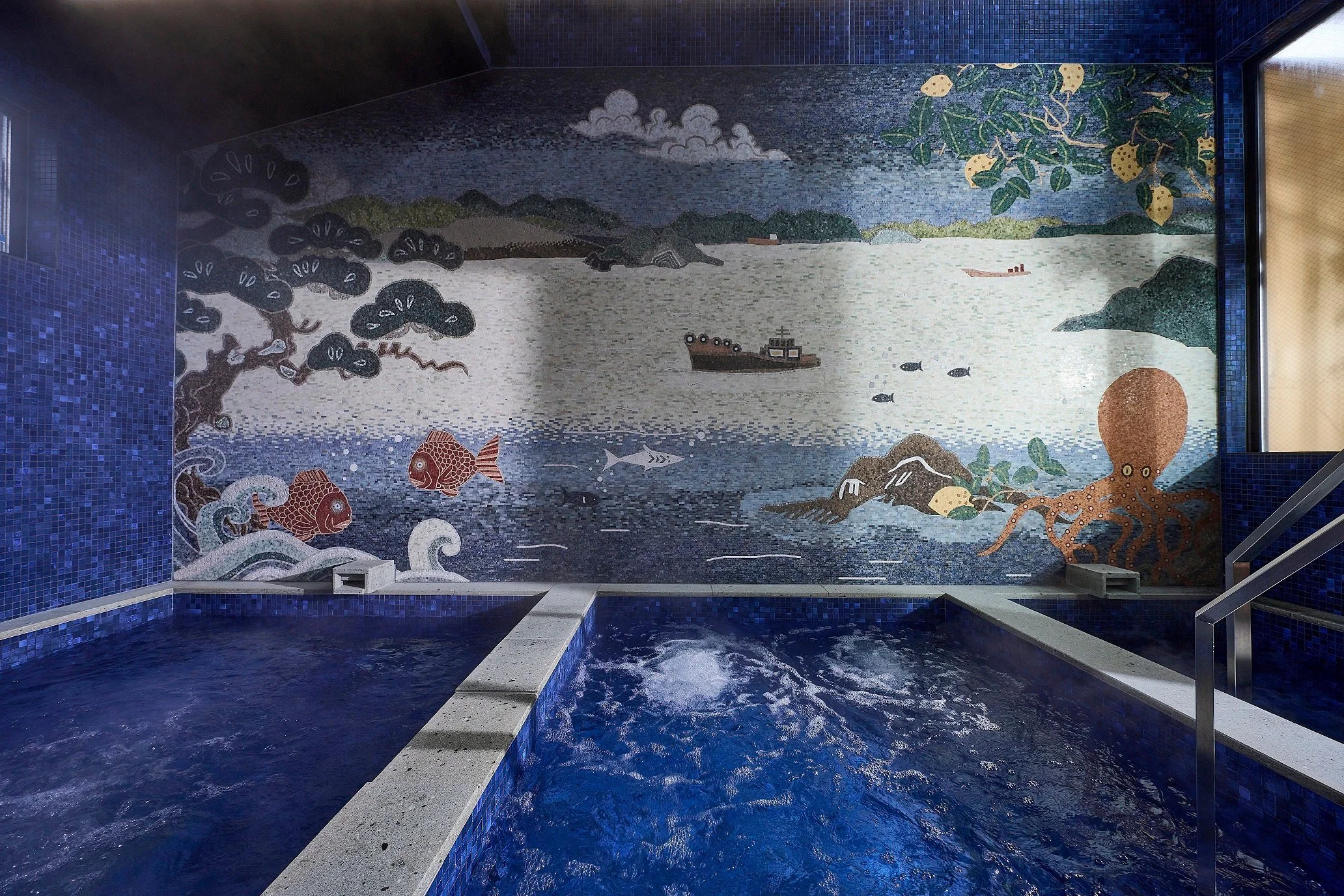
Located in Setoda, a historic port town on Ikuchijima in the Setouchi Inland Sea
Part of the Azumi collection, known for Aman-adjacent philosophy and design restraint
Intimate scale, with a limited number of rooms centered around serene courtyards
Architecture blends original structural elements with contemporary Japanese minimalism
On-site dining highlights regional ingredients and seasonal cooking
Designed to encourage slow travel and connection to the local community
Ideal base for exploring the Shimanami Kaido cycling route and nearby islands
Mornings in Setoda are especially striking — the town wakes slowly, and the hotel feels less like a destination property and more like a natural extension of the place itself.
All images courtesy of Azumi Setoda
Satoyama Jujo
Niigata
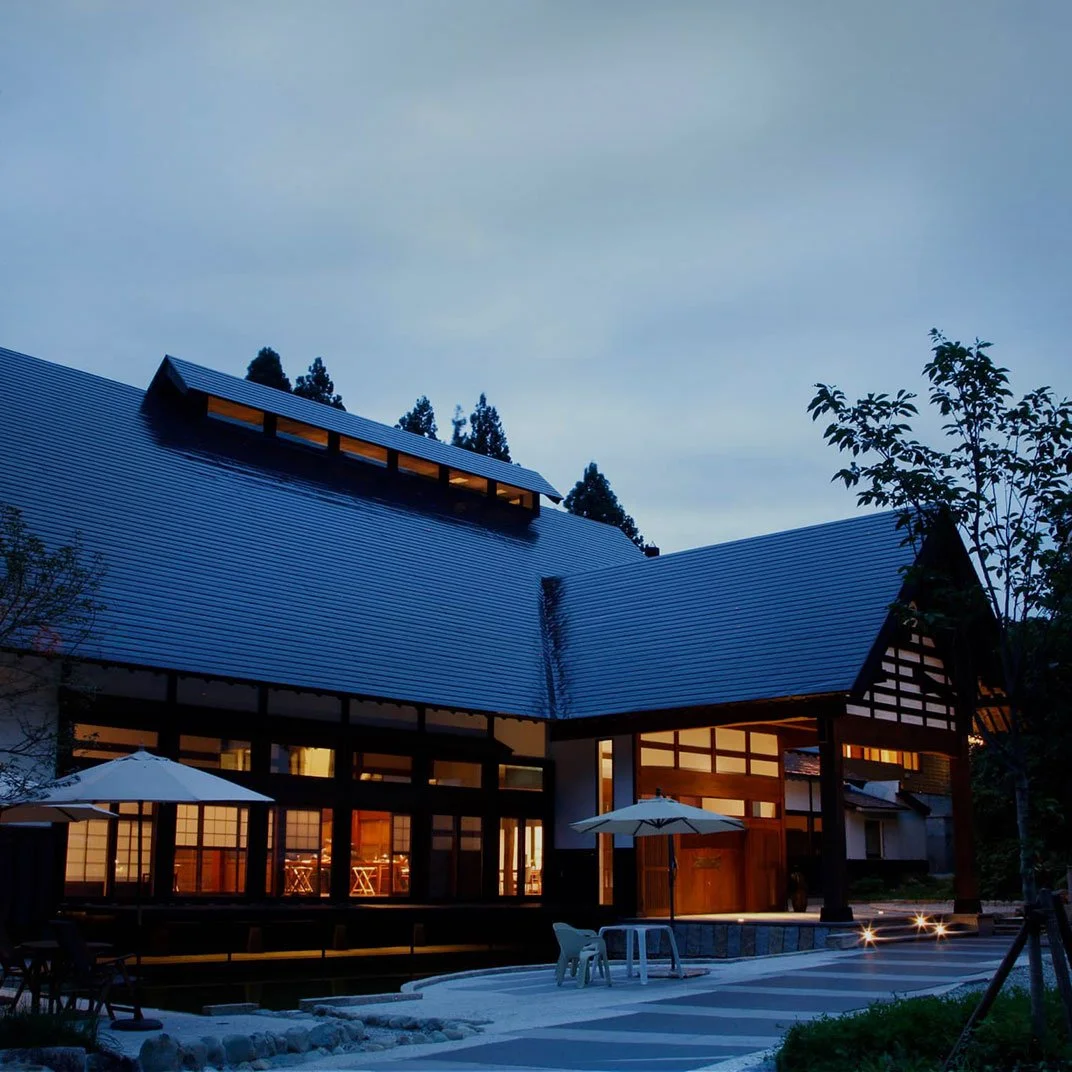
Location: 1209-6 Ōsawa, Minami-uonuma-shi, Niigata 949-6361, Japan
Price: ~$400/night
Vibe: Nature-oriented, quiet, remote
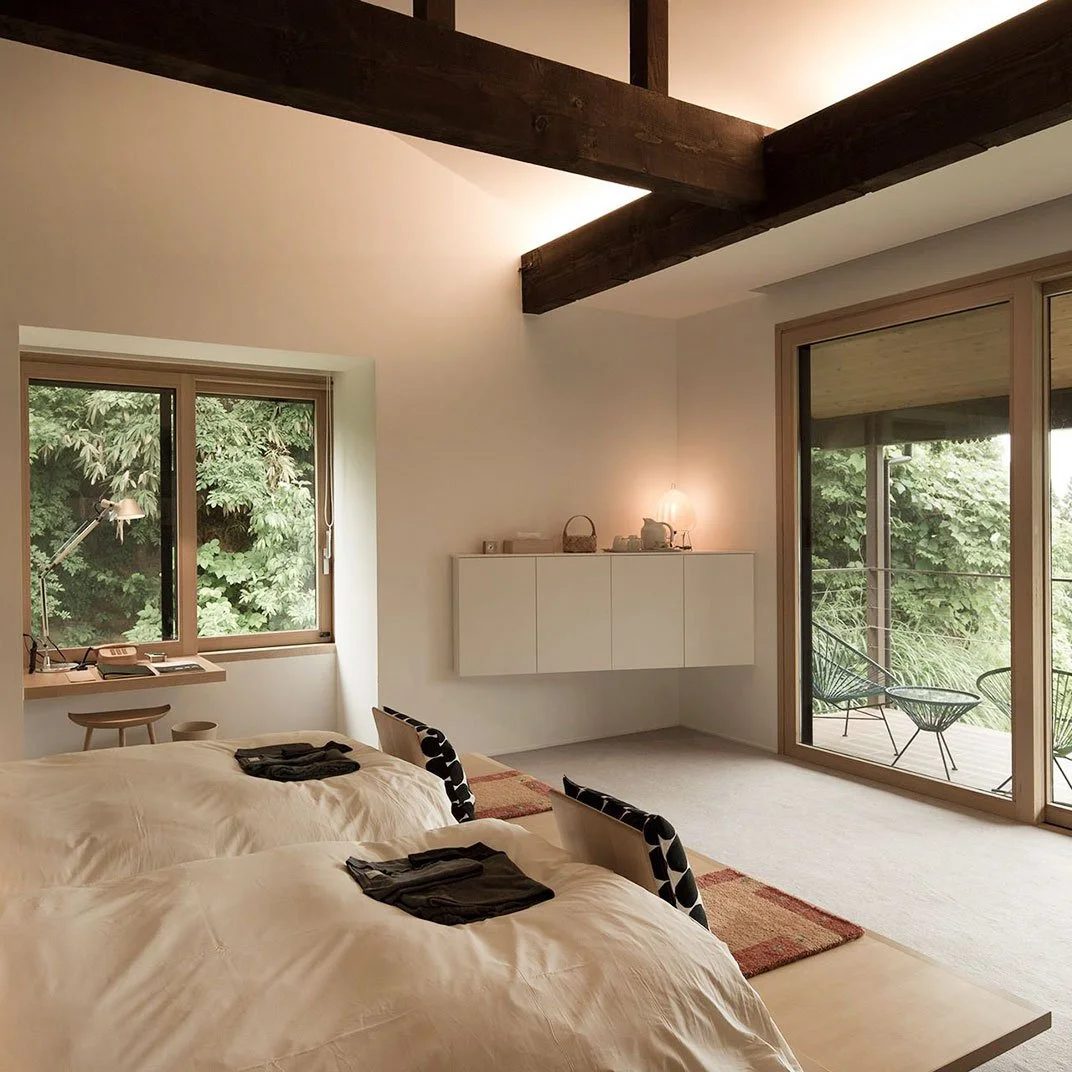
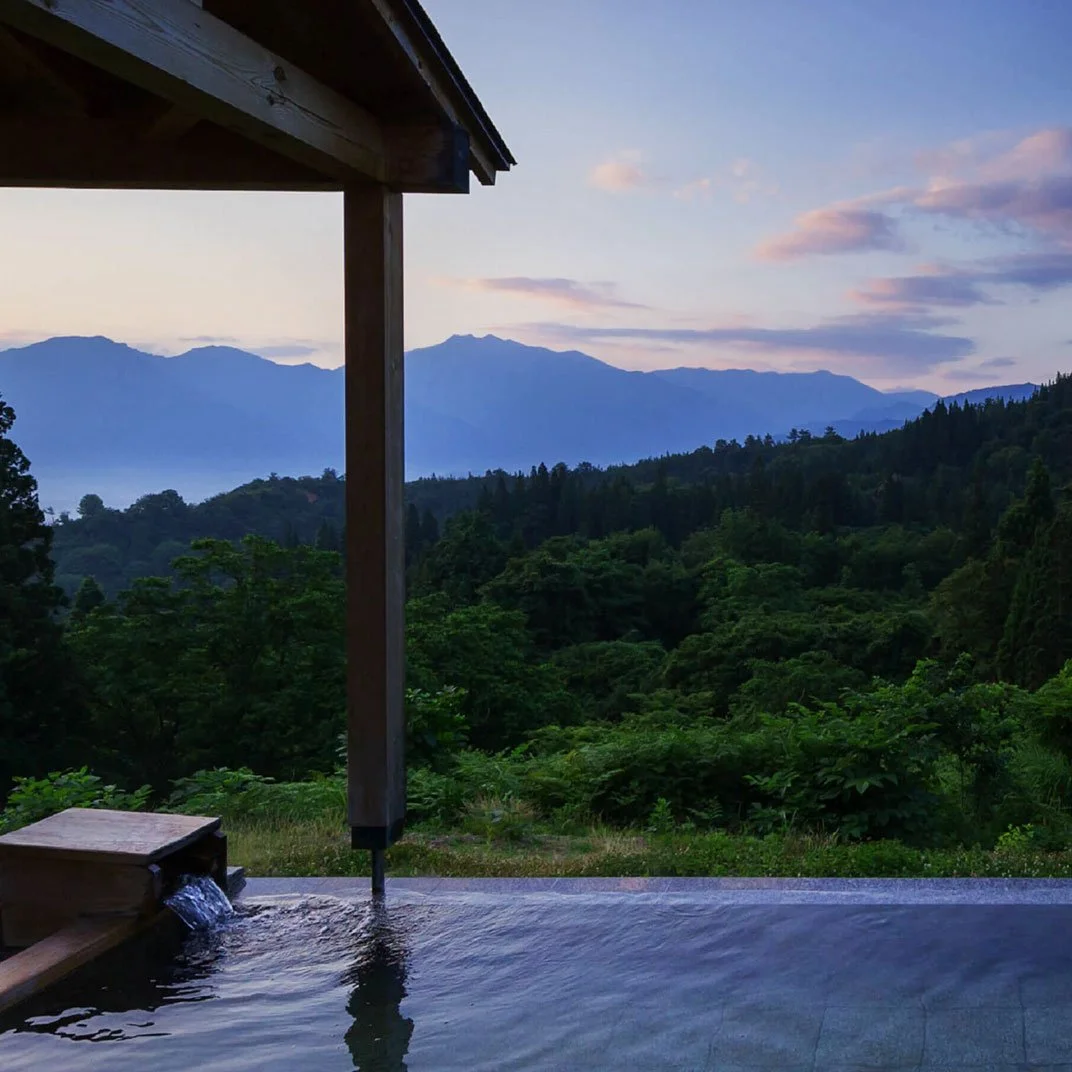
This is tradition interpreted with intelligence, not nostalgia. Satoyama Jujo pairs minimalist architecture with sweeping mountain views, creating spaces that feel contemporary yet profoundly rooted in place. The experience revolves around pace and presence — long meals, quiet mornings, and baths that pull the landscape directly into the room. Luxury here isn’t about excess; it’s about intention, craft, and the rare feeling that the hotel and its environment are speaking the same language.
Located in Niigata’s countryside, surrounded by rice terraces and mountain landscapes
Architecture is modern and pared back, designed to frame nature rather than compete with it
Rooms are serene and spacious, many with private open-air baths or panoramic views
Cuisine is a central pillar, with farm-to-table menus showcasing regional produce and Niigata rice
Onsen facilities emphasize immersion and calm, ideal for extended soaking
The atmosphere is quiet, contemplative, and destination-focused
Feels remote, though access is manageable via train and transfer from Tokyo
In winter, the surrounding snow transforms the property into something almost monastic — a rare chance to experience rural Japan at its most elemental and refined.
All images courtesy of Satoyama Jujo
Ace Hotel
Kyoto
Location: 245-2 Kurumayacho, Nakagyo Ward, Kyoto, 604-8185, Japan
Price: ~$300/night
Vibe: Young, artsy, warm
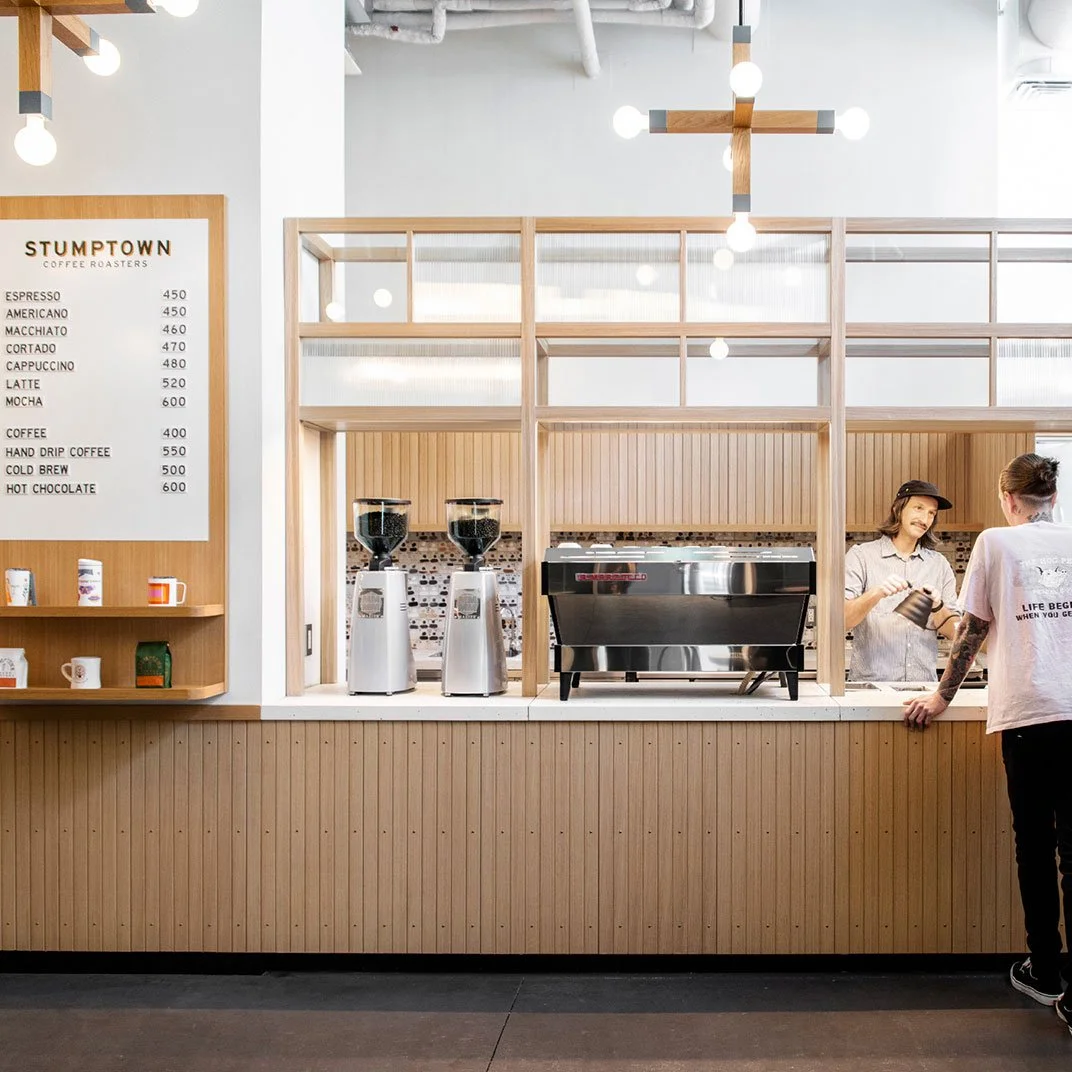
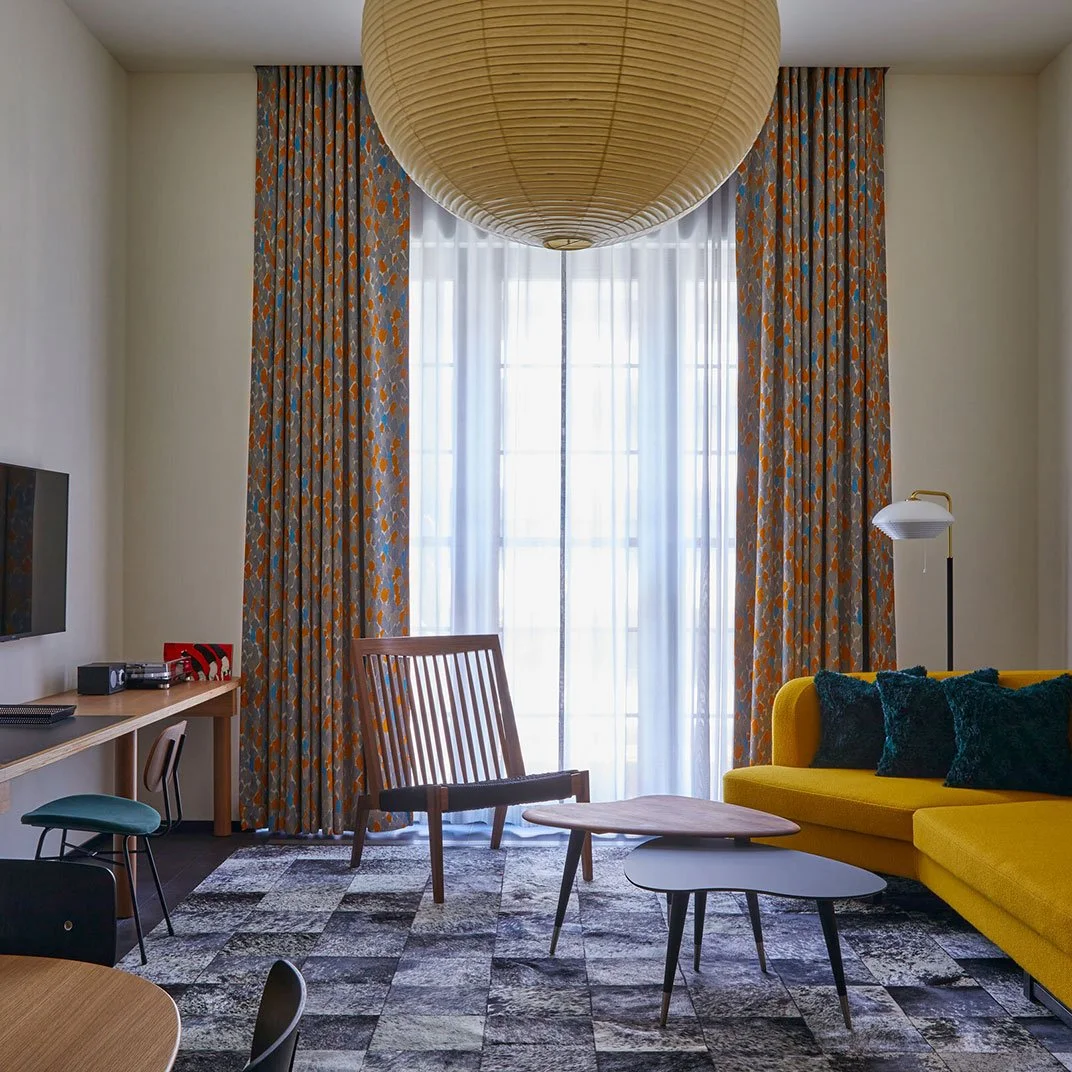
This is Ace at its most grown-up and restrained. Designed by Kengo Kuma, the building integrates seamlessly into the city’s urban fabric, using wood, light, and proportion in a way that feels respectful rather than disruptive. Interiors strike a careful balance between contemporary design and Kyoto’s inherent calm, with rooms that feel warm, livable, and thoughtfully composed. The social energy is there if you want it — cafés, bars, gentle buzz — but it never overwhelms the sense of place, which is where this hotel really succeeds.
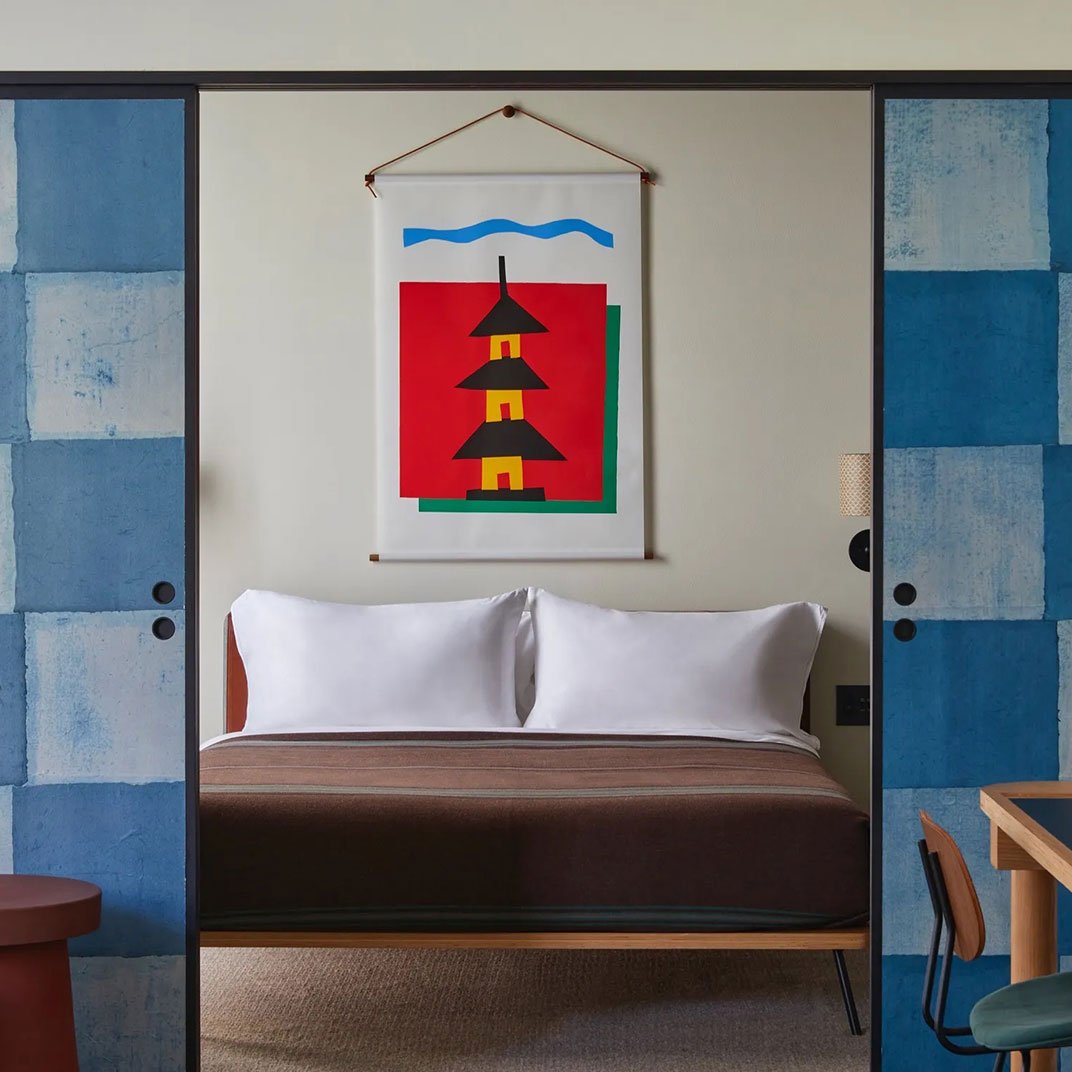
Located in central Kyoto, with direct subway access and easy reach of major sights
Architecture by Kengo Kuma, blending modern form with traditional materiality
Rooms are clean-lined, well-proportioned, and notably comfortable for longer stays
Strong food and beverage program, including Stumptown Coffee and multiple dining options
Public spaces are lively yet controlled, appealing to a design- and culture-minded crowd
Attracts creatives, couples, and repeat Japan travelers rather than tour groups
Service is polished but relaxed, with an international feel that still respects Kyoto’s rhythm
Unlike many lifestyle hotels, Ace Kyoto actually quiets down at night — a small but telling detail that makes it far more livable than its reputation might suggest.
All images courtesy of Ace Hotel Kyoto
Ryokan Kurashiki
Kurashiki
Location: 4-1 Honmachi, Kurashiki, Okayama 710-0054, Japan
Price: ~$350/night
Vibe: Traditional, historic, calm
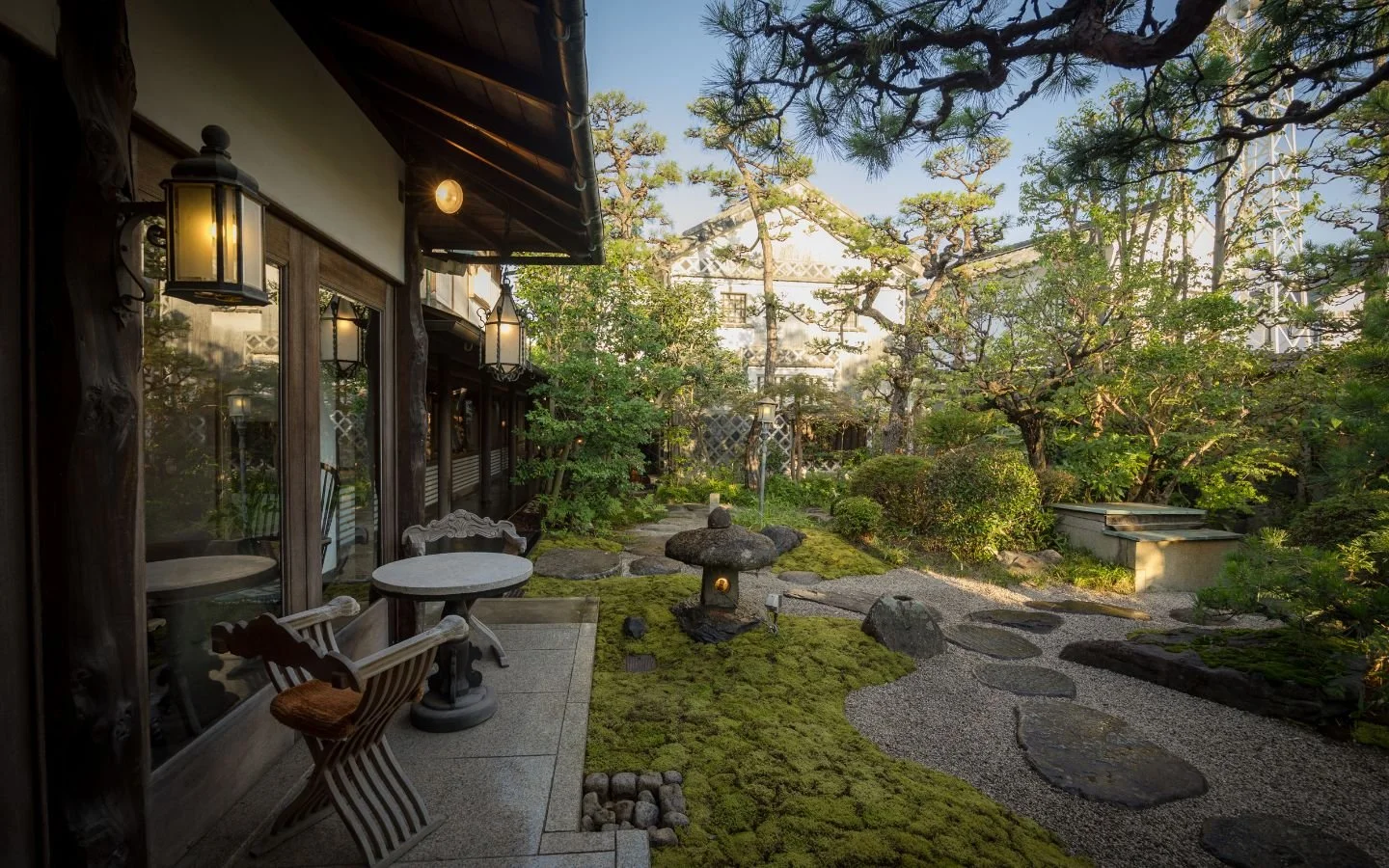
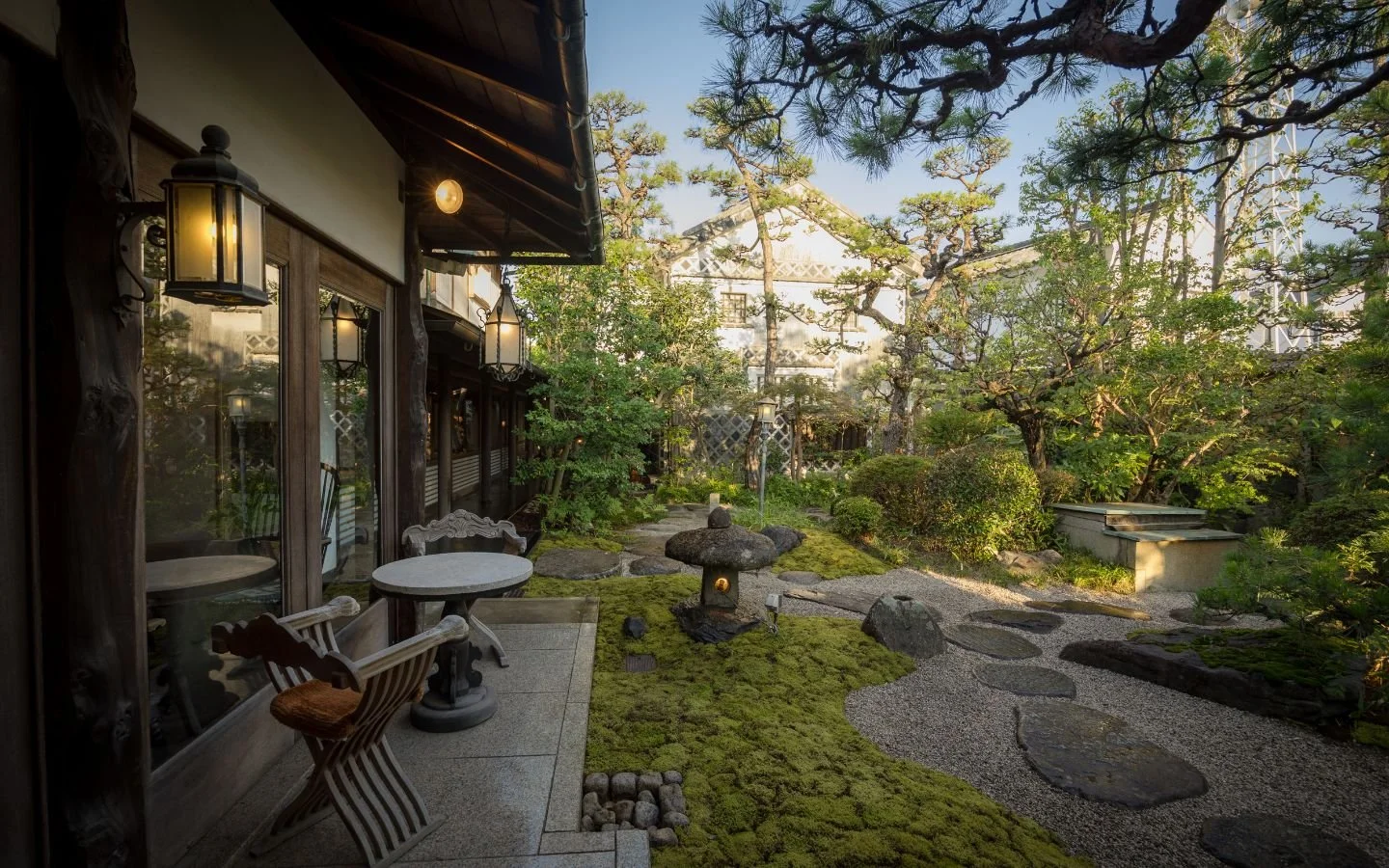
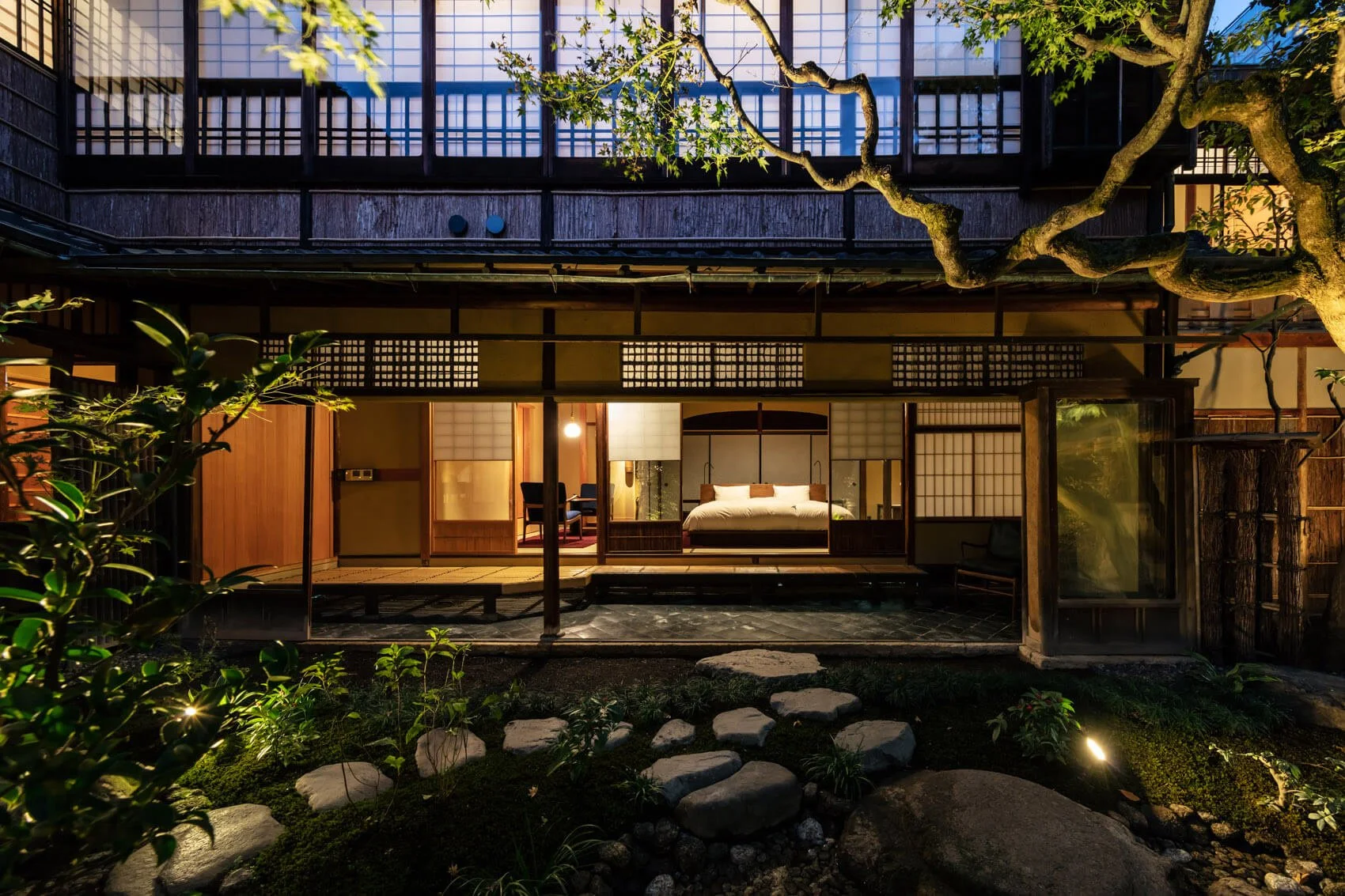
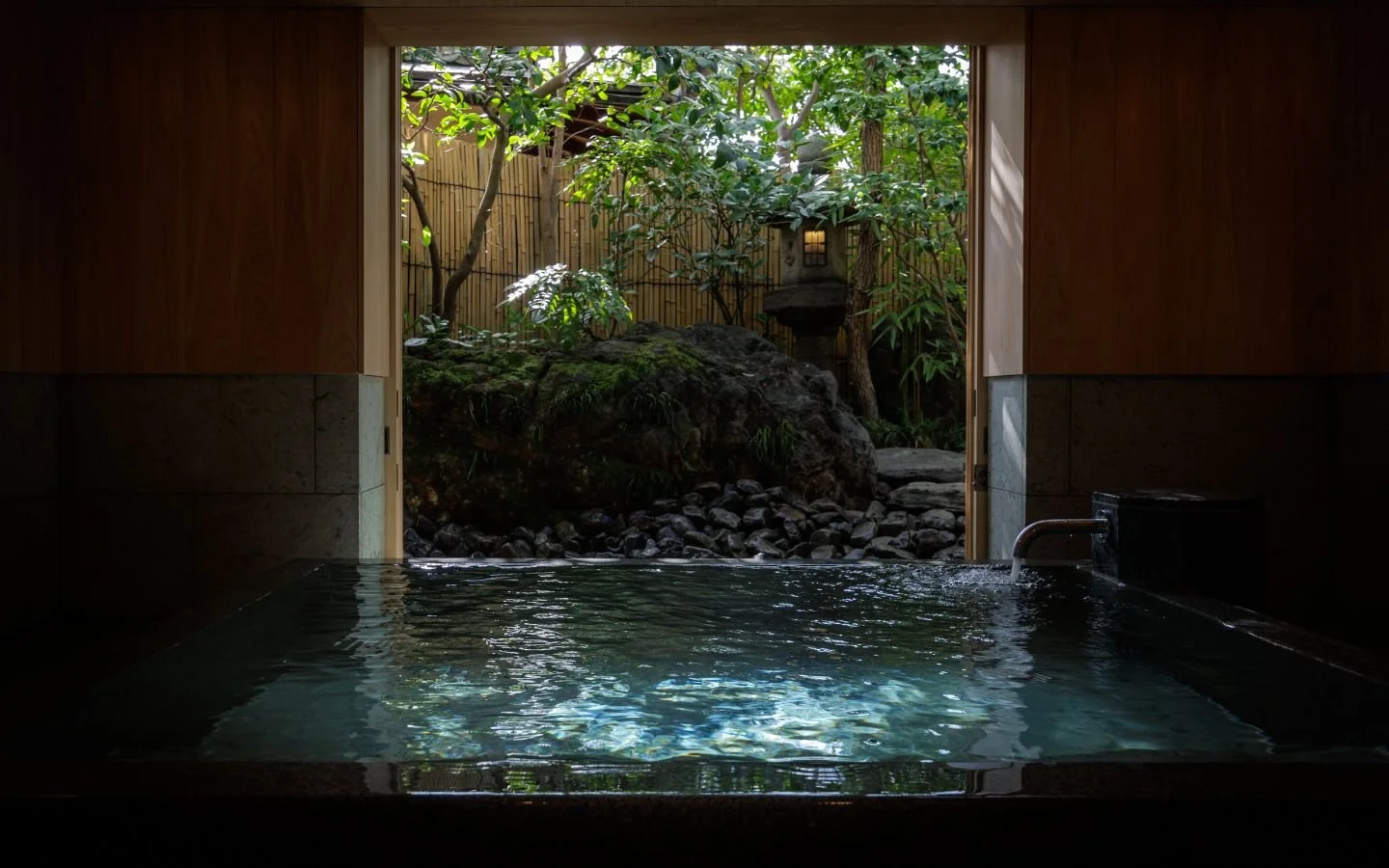
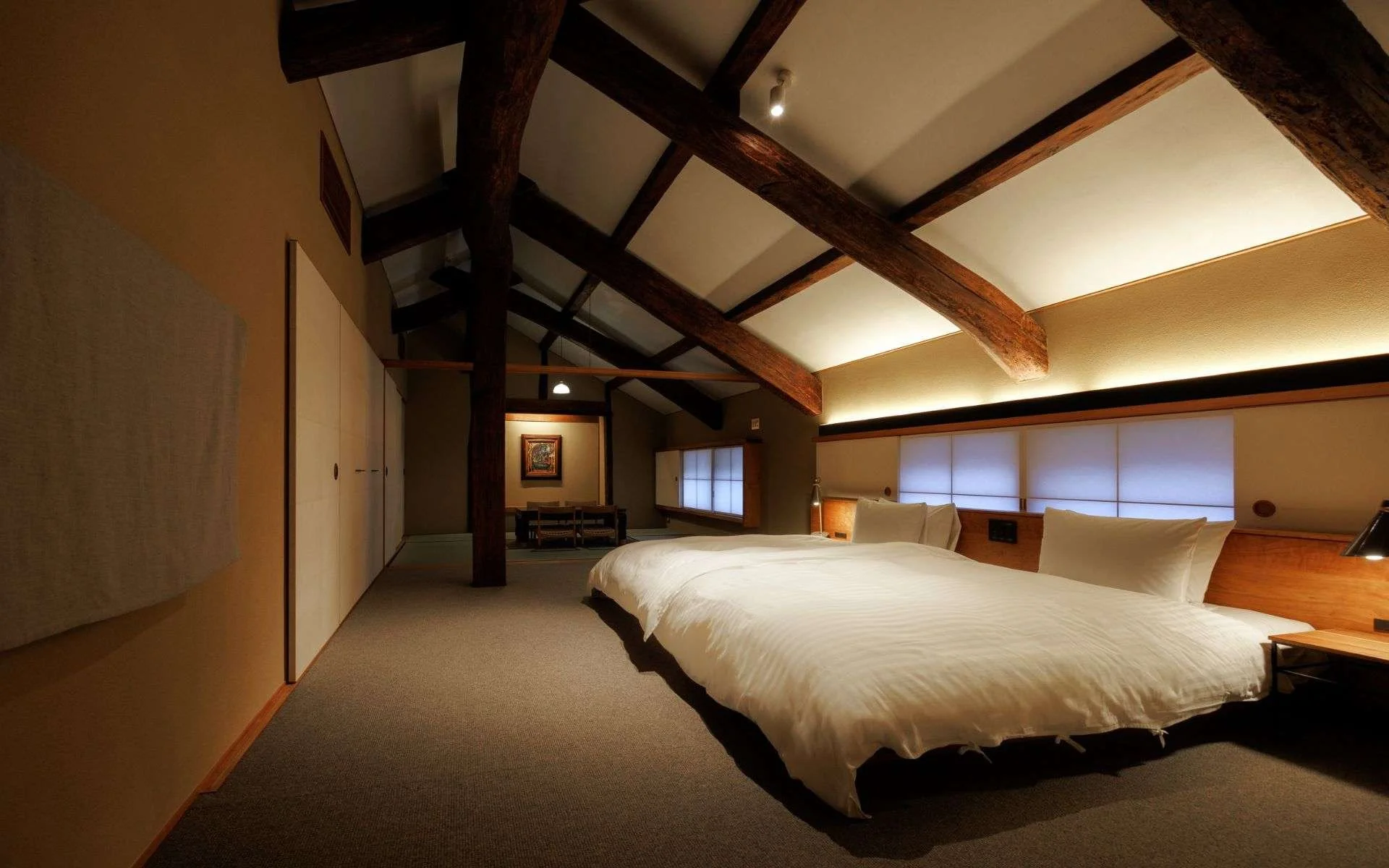
This is heritage hospitality done with extraordinary care. Ryokan Kurashiki occupies a former merchant residence, and rather than modernizing aggressively, it preserves the soul of the place — dark woods, paper screens, mossy gardens, and a sense of stillness that feels almost suspended in time. The experience is intimate and hushed, with service that is formal but deeply sincere. It’s not flashy, not experimental — but profoundly elegant, and emotionally resonant in a way very few properties manage.
Located directly on the canal in the Kurashiki Bikan Historical Quarter
Historic ryokan with a very limited number of rooms, emphasizing privacy and quiet
Traditional tatami rooms with garden or canal views
Meticulously maintained interiors that prioritize authenticity over trend
Kaiseki-style dining available, rooted in seasonal and regional ingredients
Service follows classic ryokan etiquette, attentive and unobtrusive
Evenings are exceptionally calm once day visitors leave the area
After sunset, when the canal lights come on and the streets empty, the ryokan feels almost unreal — like staying inside a preserved fragment of Edo-period Japan.
All images courtesy of Ryokan Kurashiki
Sowaka
Kyoto
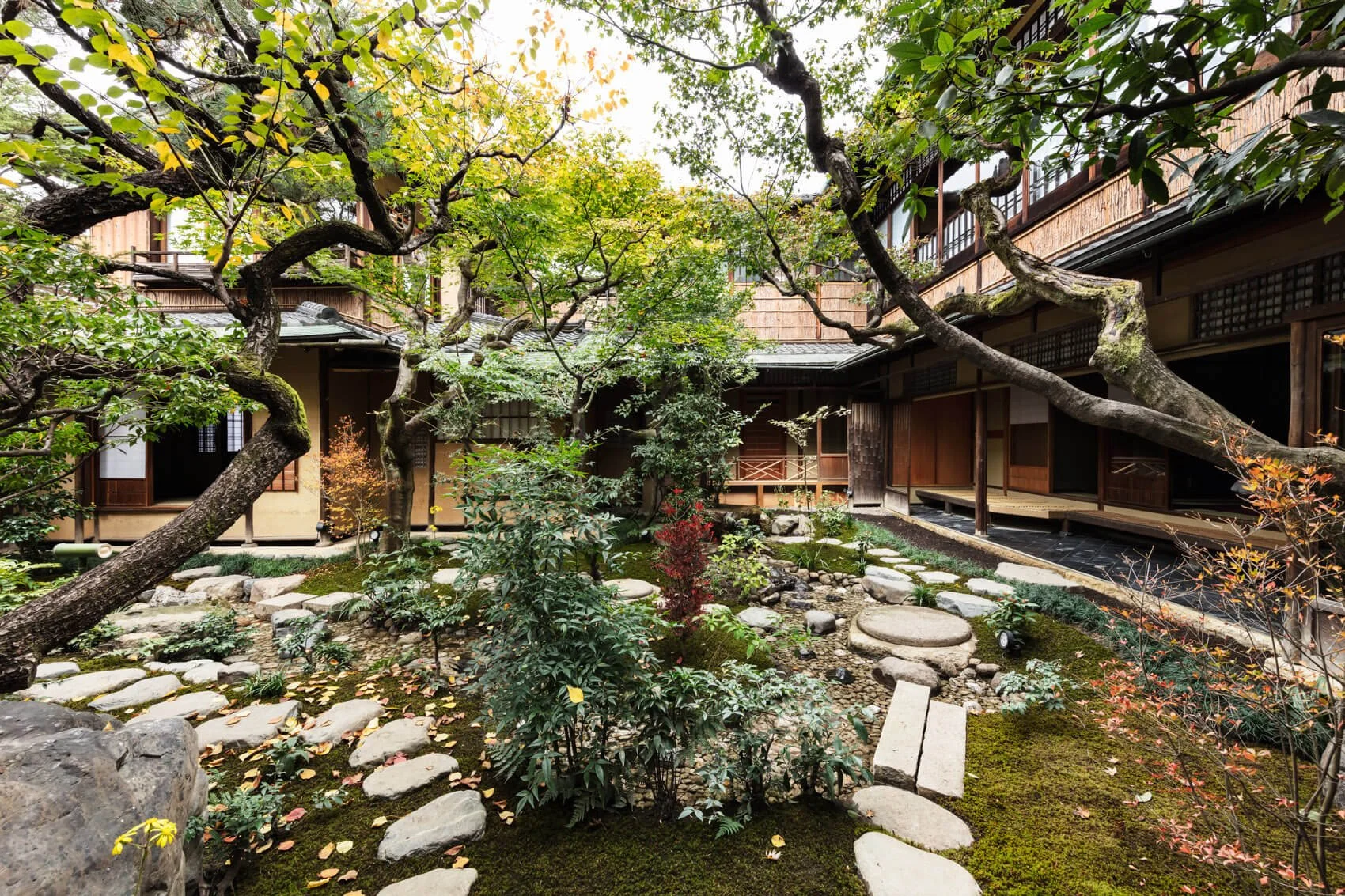
Location: 480 Kiyoicho, Higashiyama Ward, Kyoto, 605-0821, Japan
Price: ~$400/night
Vibe: Aesthetic, natural, spiritual
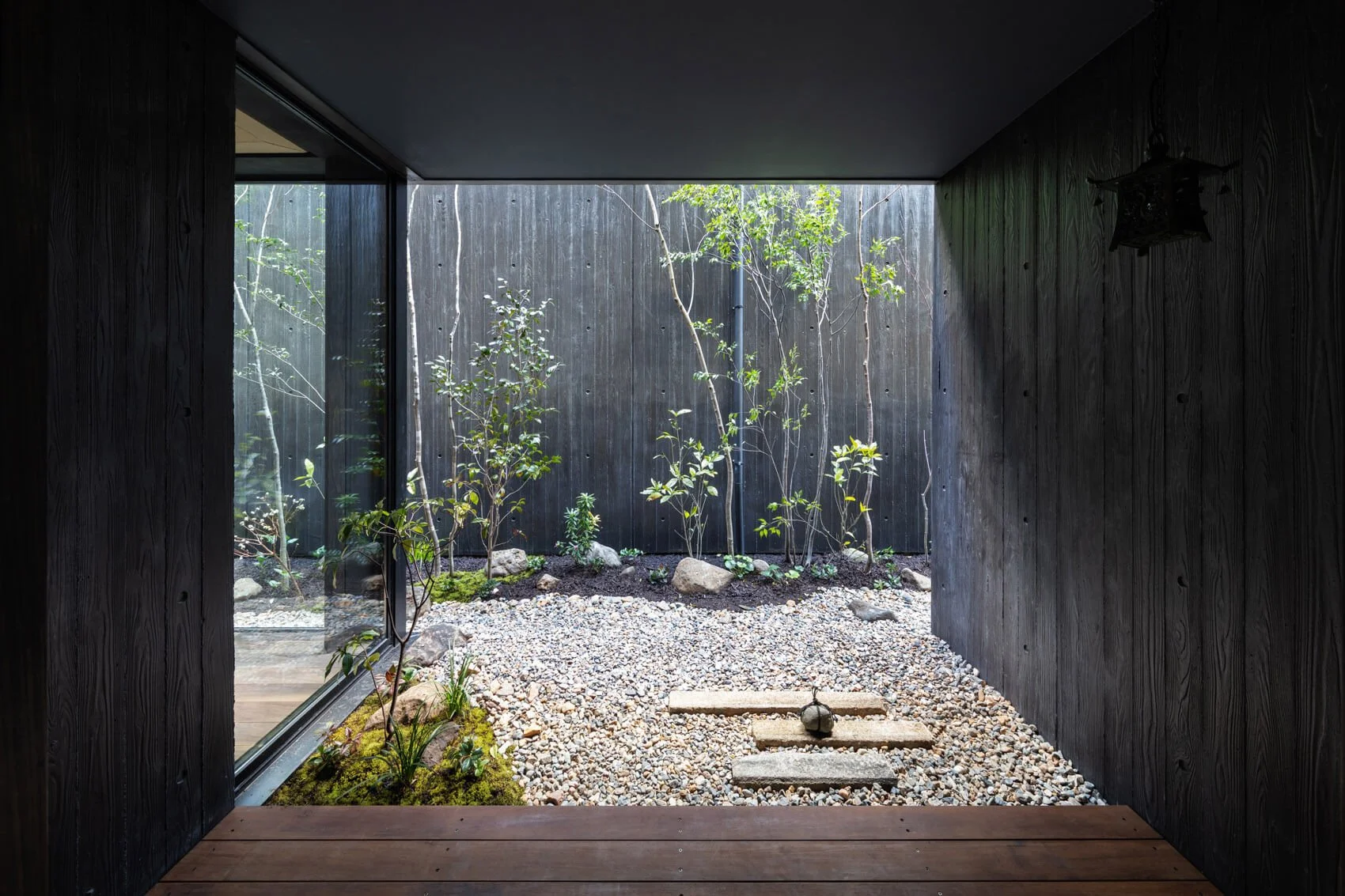
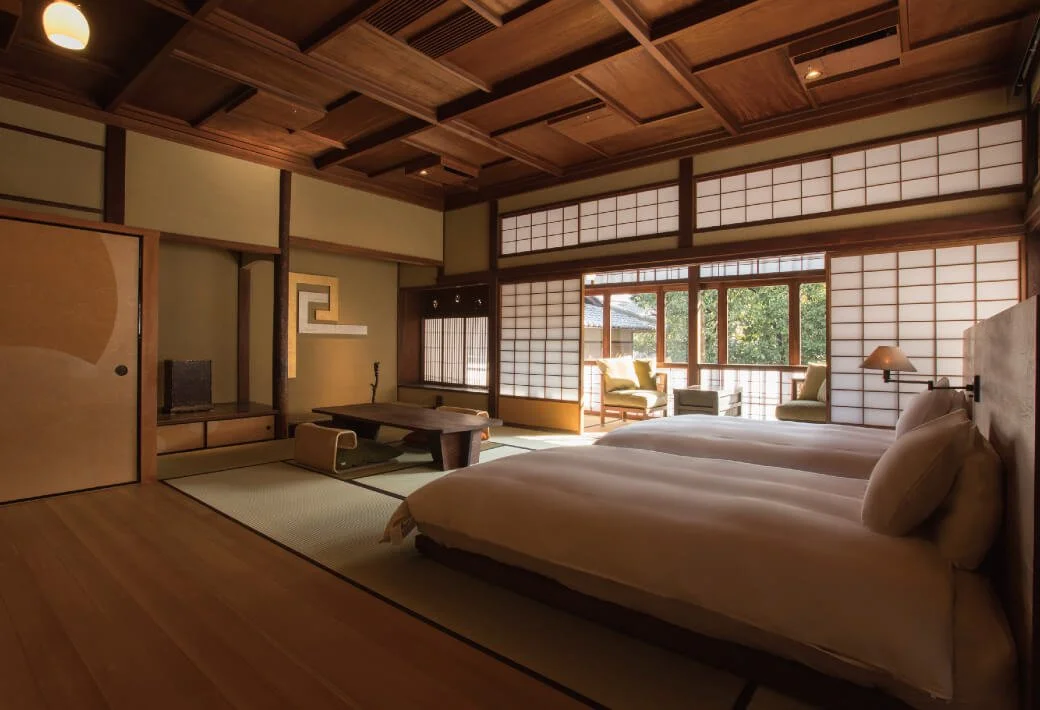
Sowaka feels deeply Kyoto without leaning on theatrics. Set within a collection of restored machiya and a former teahouse, the hotel balances heritage and modernity with unusual finesse — tatami floors, garden views, and shoji screens paired with contemporary lighting, clean-lined furnishings, and impeccable detailing. The atmosphere is hushed and protective, encouraging guests to slow down and tune into the city’s quieter rhythms. It’s luxury that’s felt rather than announced, rooted in craft, proportion, and calm.
Located in Gion, within walking distance of temples, teahouses, and the Higashiyama district
Composed of multiple restored historic structures, creating an intimate, village-like feel
Rooms blend traditional ryokan elements with modern comfort and design discipline
Many rooms feature garden views or private outdoor soaking tubs
On-site dining is refined and seasonal, emphasizing Japanese technique and restraint
Service is attentive, discreet, and deeply polished
Atmosphere is serene and contemplative, with no social or nightlife focus
Sowaka feels almost sealed off from the city — a rare sense of stillness in one of Japan’s most visited neighborhoods.
All images courtesy of Sowaka
Nipponia Tomonoura
Hiroshima Coast
Location: Japan, 〒720-0201 Hiroshima, Fukuyama, Tomocho, Tomo−595 鞆肥後屋
Price: ~$400/night
Vibe: Coastal, slow, historic-meets-modern
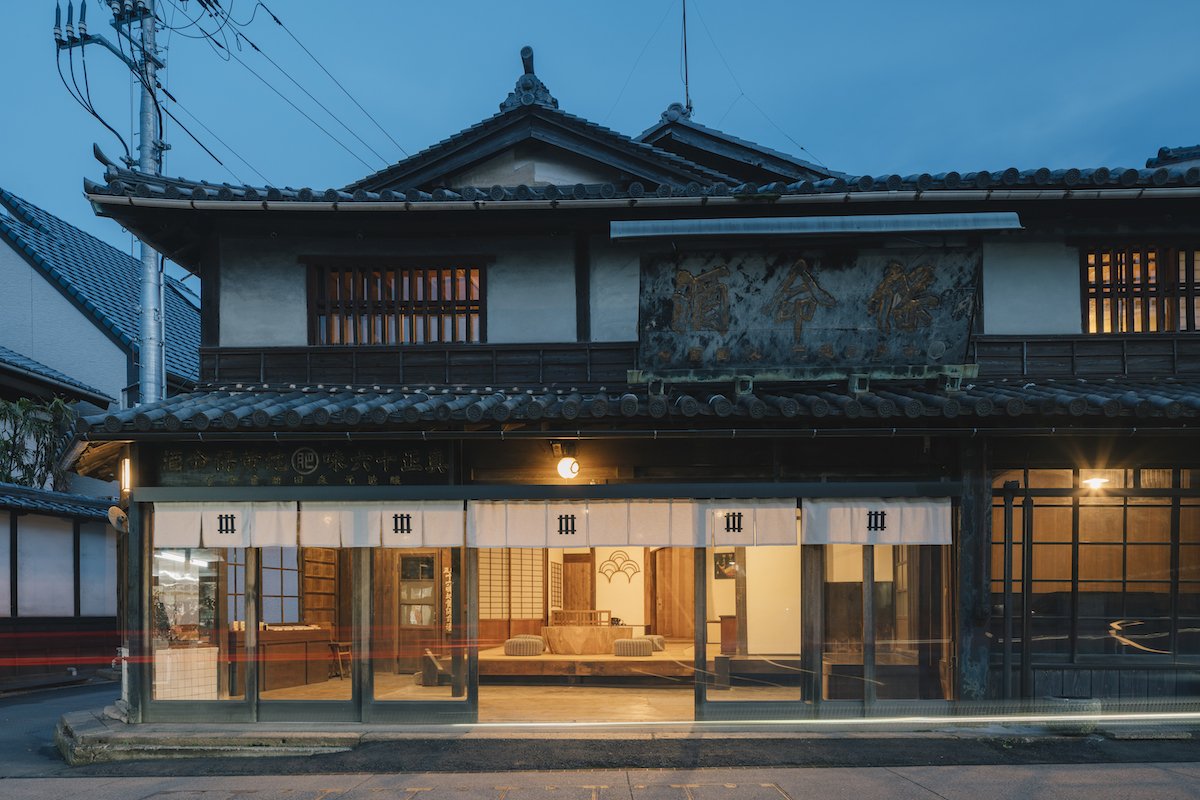
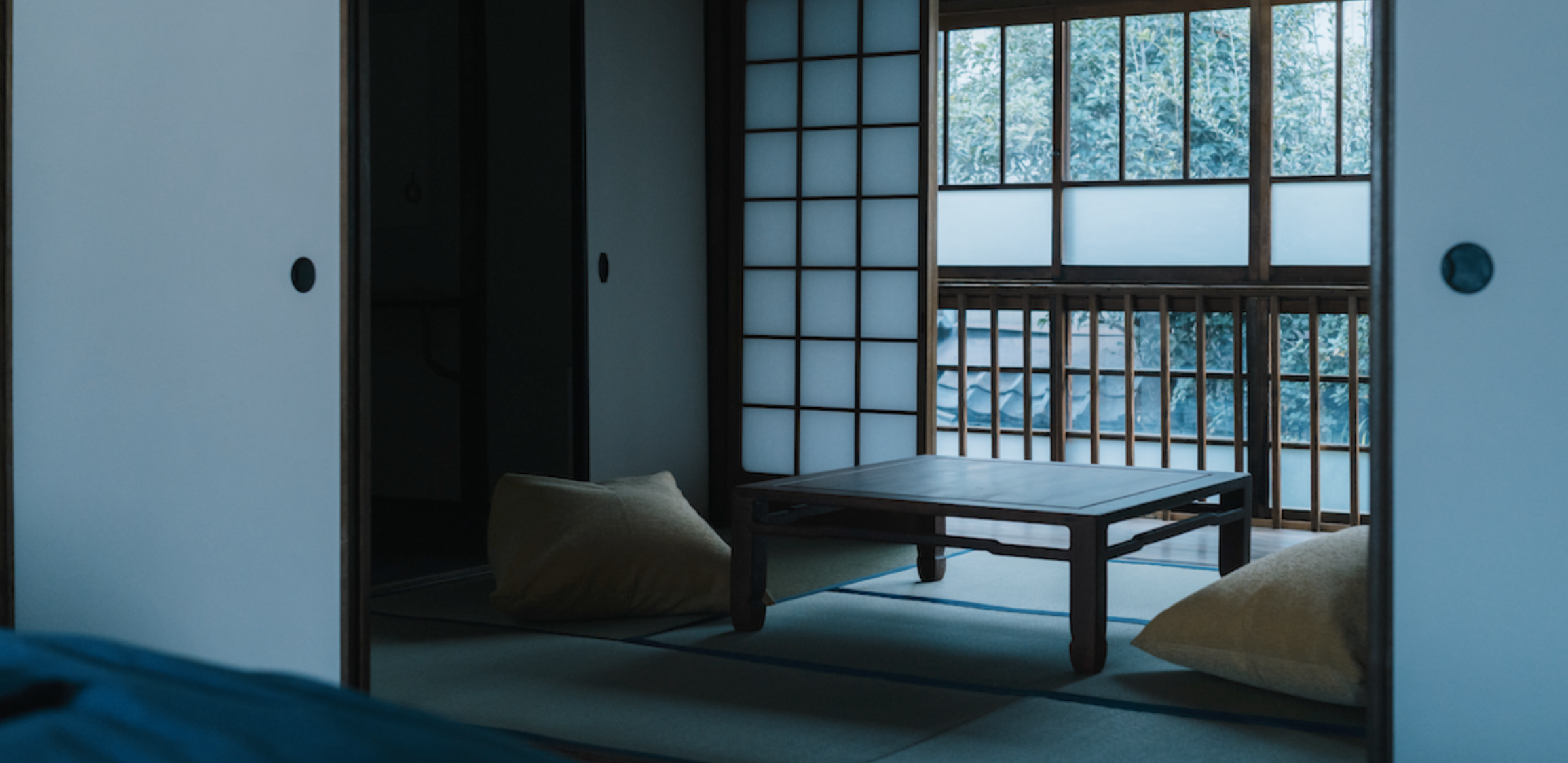
This is Japan at its most quietly emotional. Rather than a single hotel building, Nipponia Tomonoura is composed of restored merchant houses woven into the fabric of the town itself, creating a stay that feels lived-in rather than staged. Interiors are restrained and architectural, letting age, texture, and light do the work. There’s a softness to the experience — morning walks along the harbor, evenings that fall completely silent — that makes this feel less like accommodation and more like temporary belonging.
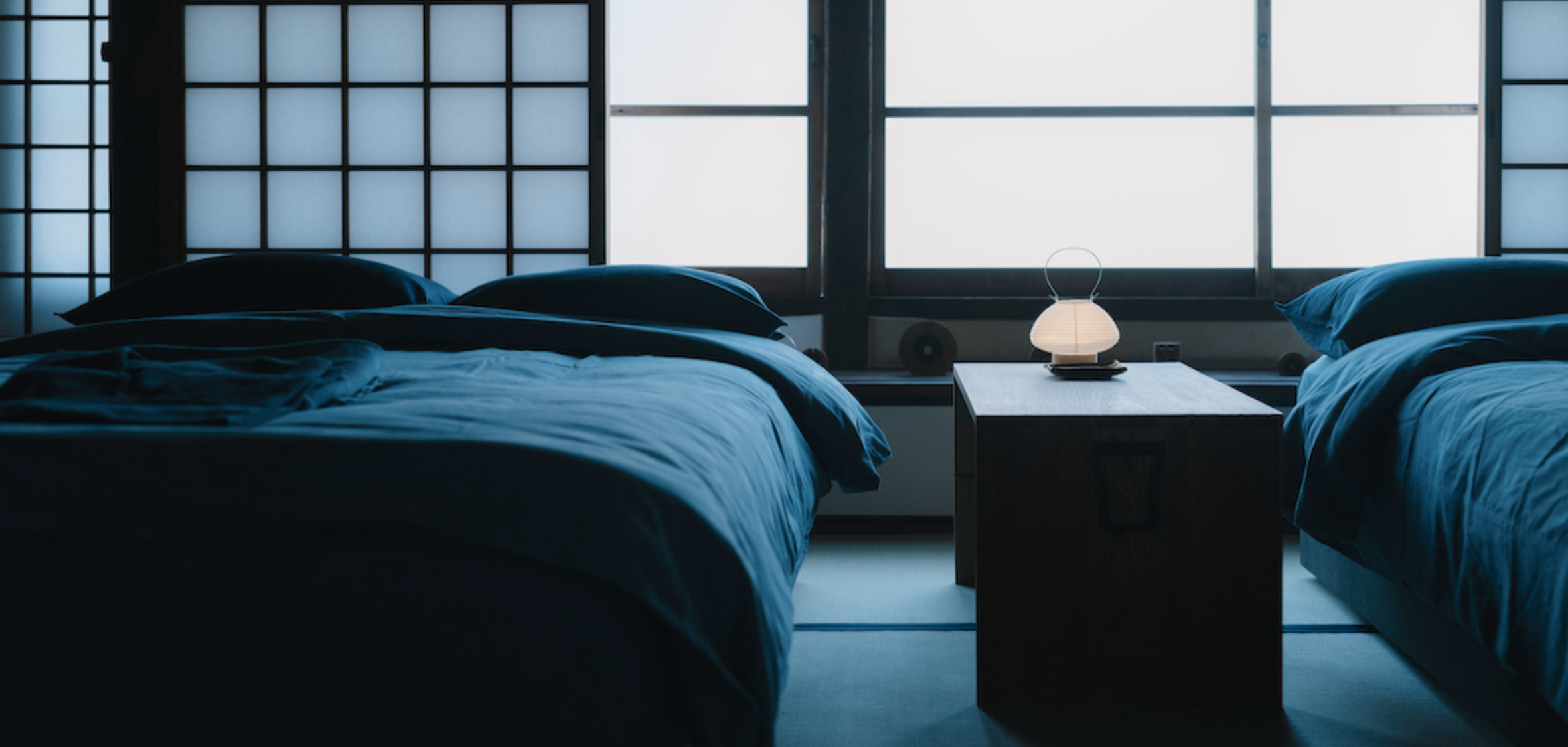
Located in Tomonoura, a historic port town in Hiroshima Prefecture
Part of the Nipponia heritage hotel collection, focused on architectural preservation
Rooms are spread across restored townhouses rather than a single structure
Design emphasizes original materials, clean lines, and quiet modern comfort
On-site dining highlights regional Setouchi ingredients
The pace here is intentionally slow; this is not a sightseeing base
Pairs beautifully with Kyoto or Hiroshima city for contrast
Each room is located in a different restored historic building, meaning no two stays are the same.
All images courtesy of Nipponia
Northern & Southern Islands
Otaru Ryotei Kuramure
Hokkaido
Location: 〒047-0154 Asarigawa Onsen 2-685, Otaru City, Hokkaido
Price: ~$400/night
Vibe: Cozy, slow, natural

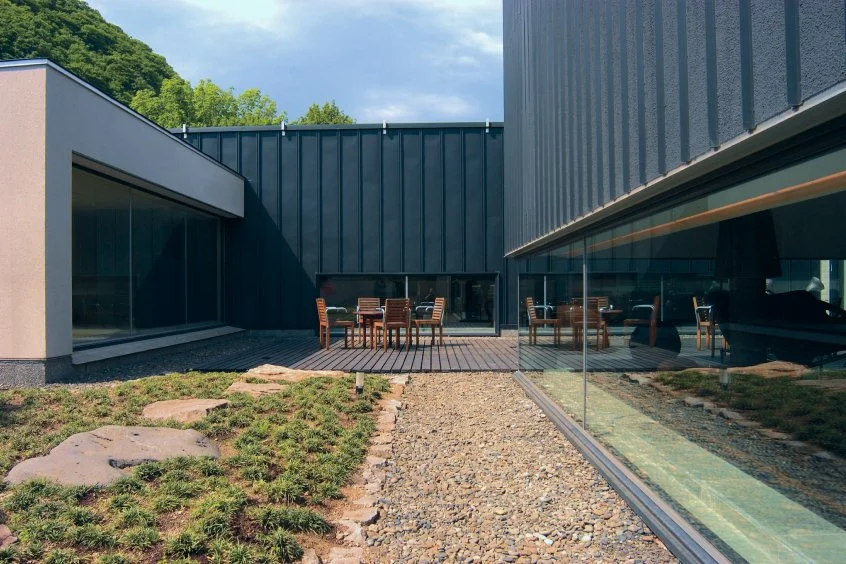
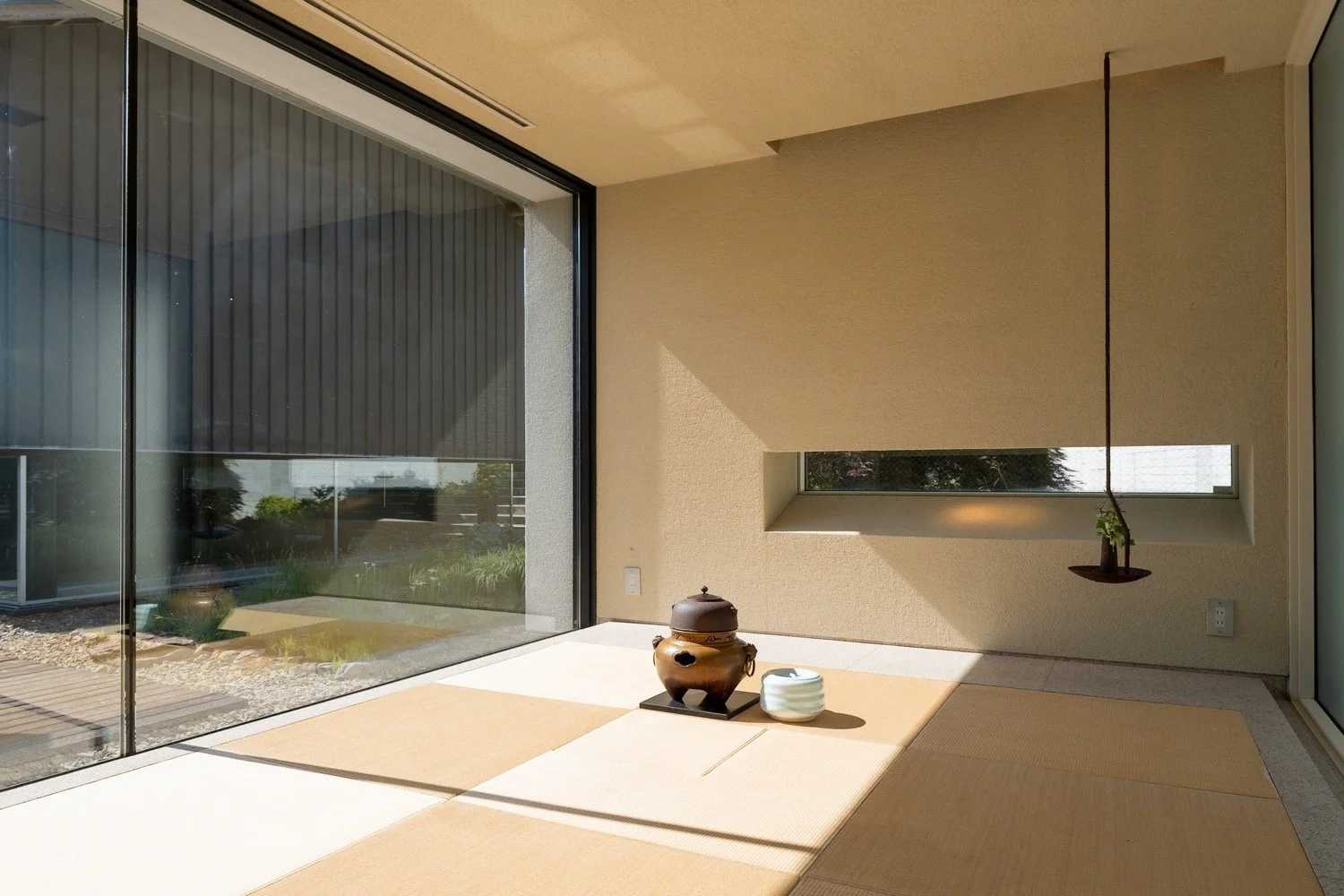
Kuramure feels intentional in a way many ryokan don’t. Rather than leaning on nostalgia, it uses clean lines, dark woods, and generous negative space to create a calm, almost architectural experience. Rooms are villa-like and private, many with open-air baths that look directly onto trees and seasonal snowfall. The mood is hushed and inward-looking, designed for travelers who want immersion and quiet rather than ceremony or spectacle. It’s minimalist, adult, and deeply grounding — luxury as experience, not display.
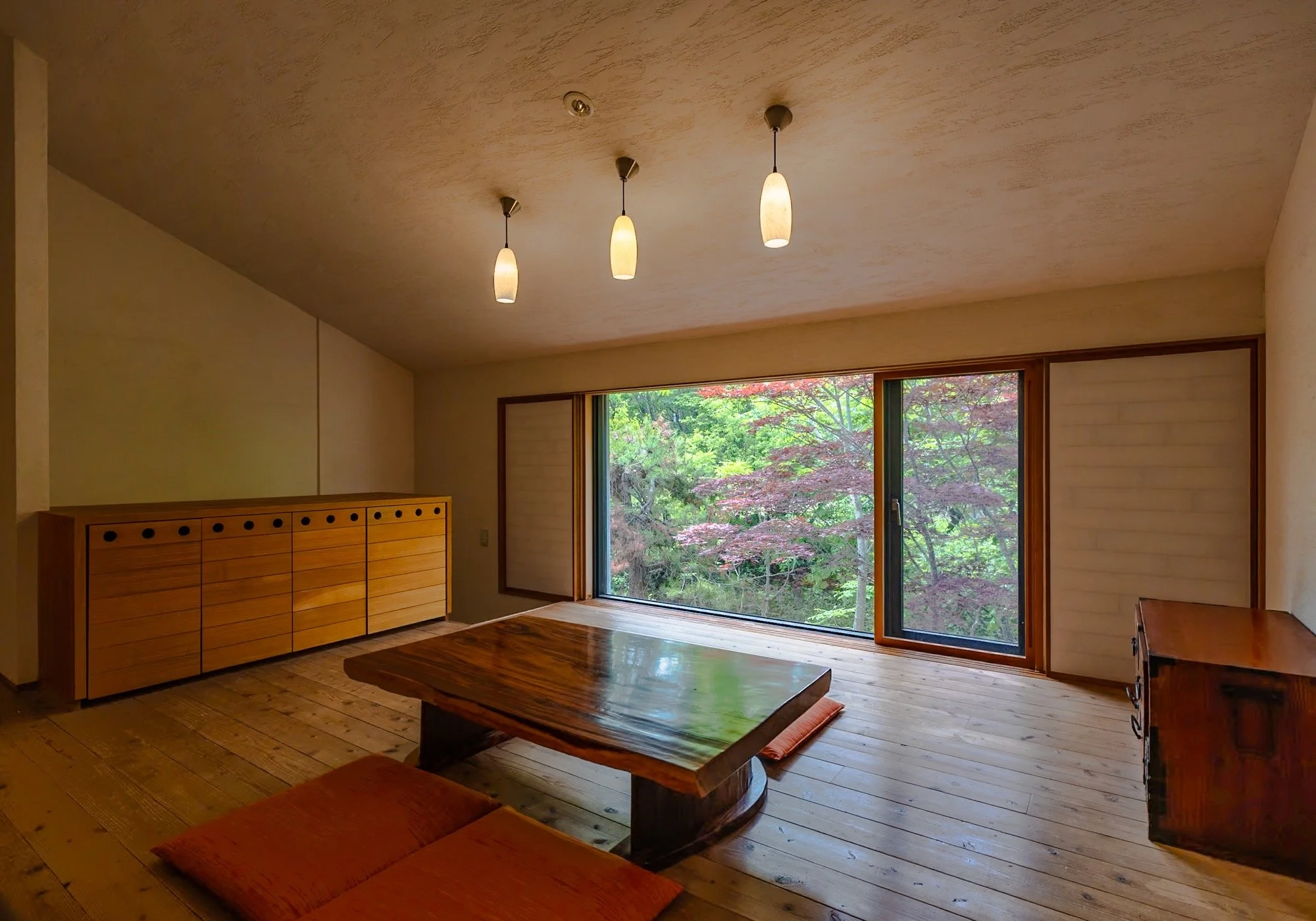
Located in a forested area just outside Otaru, about 45 minutes from Sapporo
Intimate ryokan with a limited number of suites, emphasizing privacy
Contemporary design with natural materials and subdued lighting
Many rooms feature private open-air onsen baths
Cuisine focuses on seasonal Hokkaido ingredients with refined, modern execution
Atmosphere is quiet and contemplative, not social
Best suited for couples and slow-travelers seeking a retreat
Works year-round, with especially strong winter atmosphere
Kuramure intentionally avoids overt traditional décor, making it one of the most modern-feeling ryokan experiences in Hokkaido.
All images courtesy of Otaru Ryotei Kuramure
$$$ - $$$$
Tokyo & Central Honshu
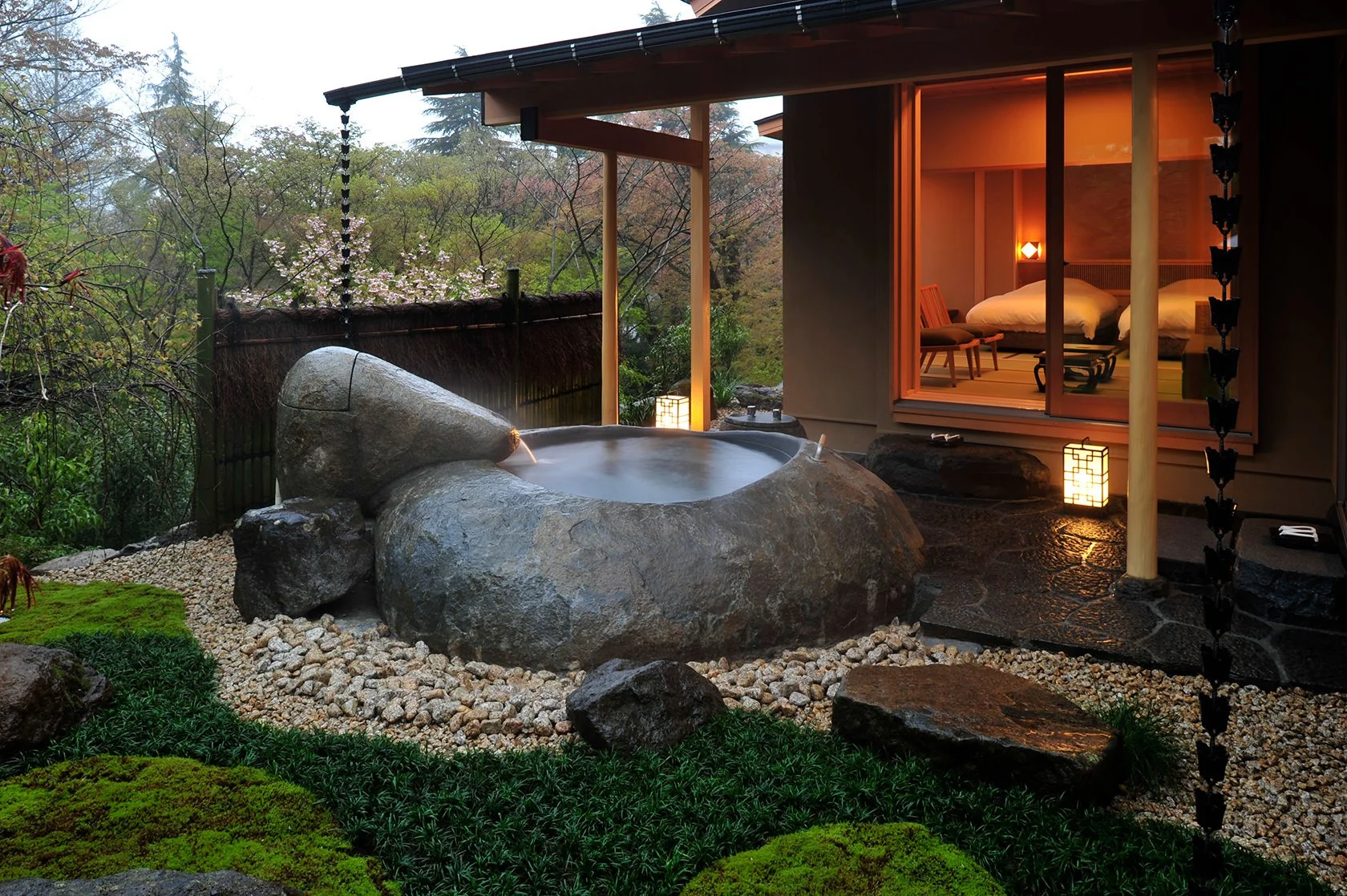
Aman
Tokyo
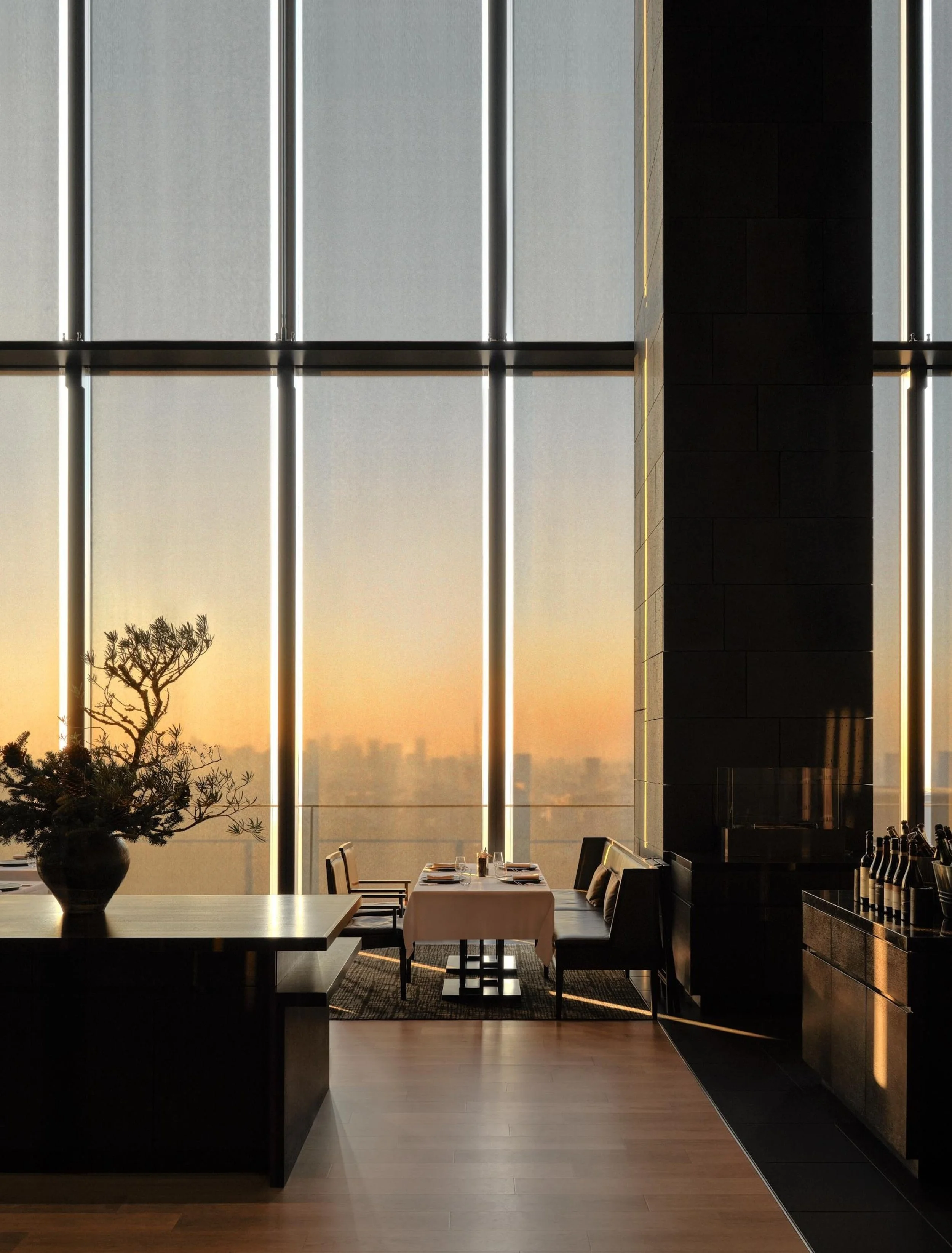
Location: The Otemachi Tower, 1 Chome-5-6 Ōtemachi, Chiyoda City, Tokyo 100-0004, Japanido
Price: From ~$1,000/night
Vibe: Luxurious, architectural, serene
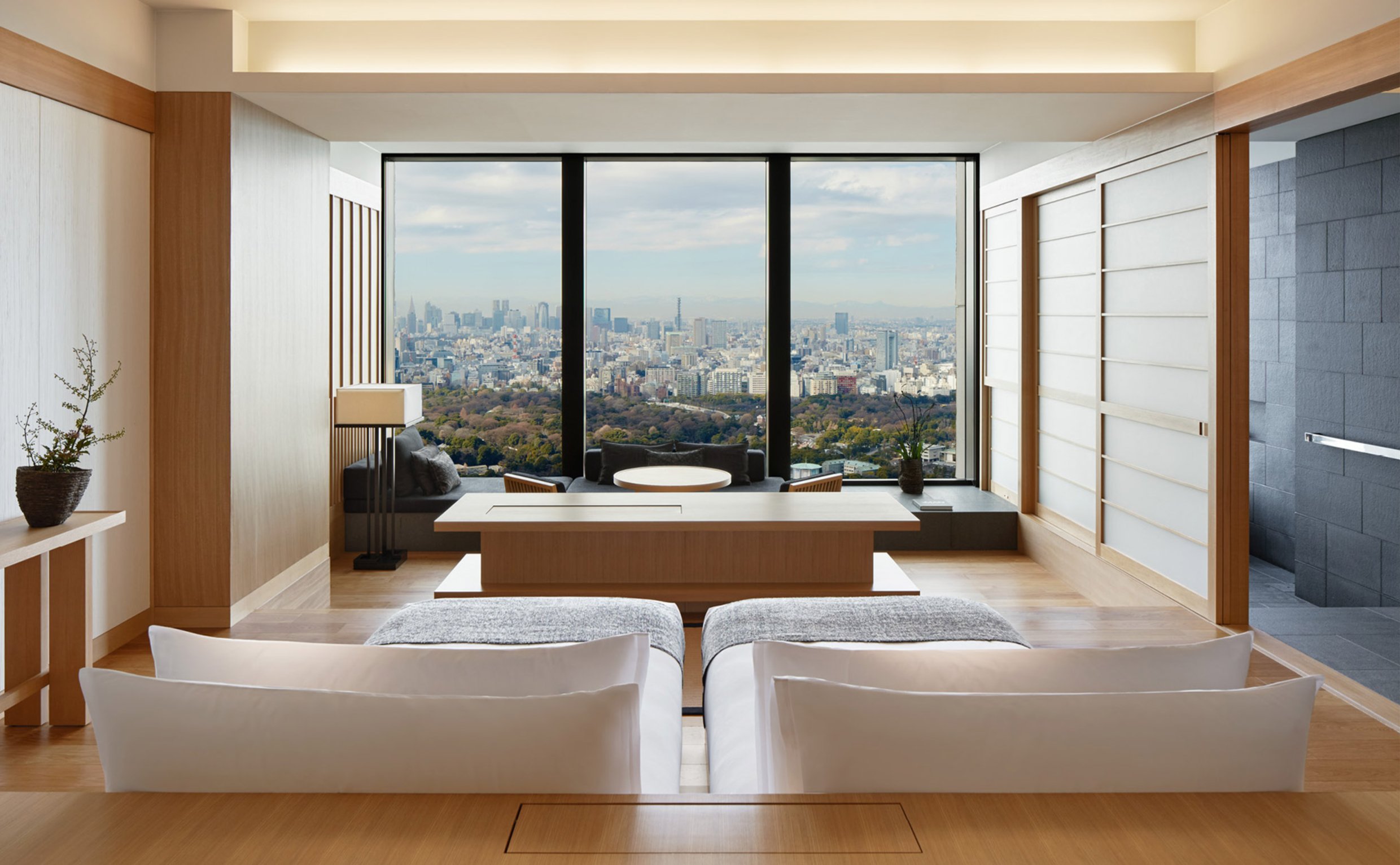
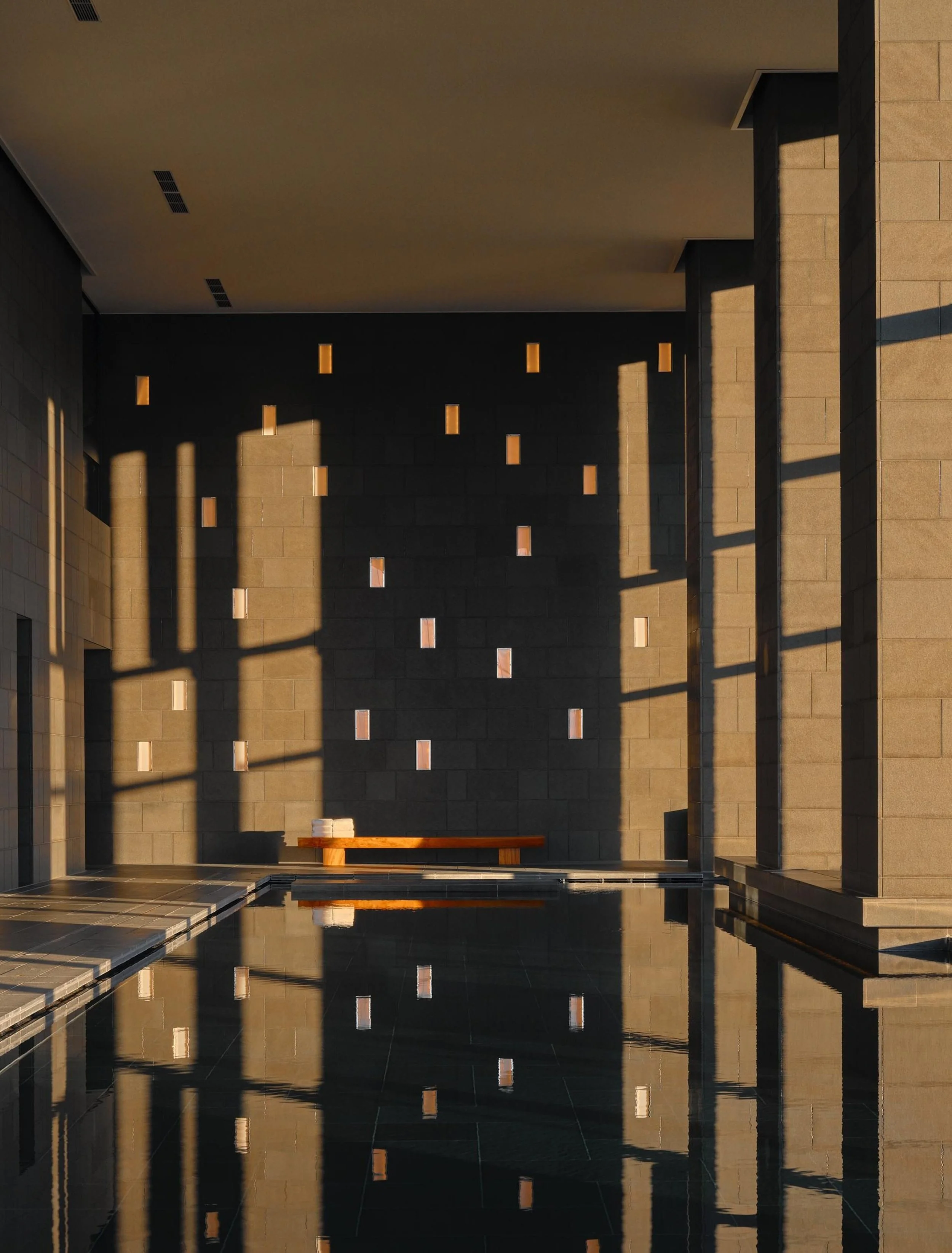
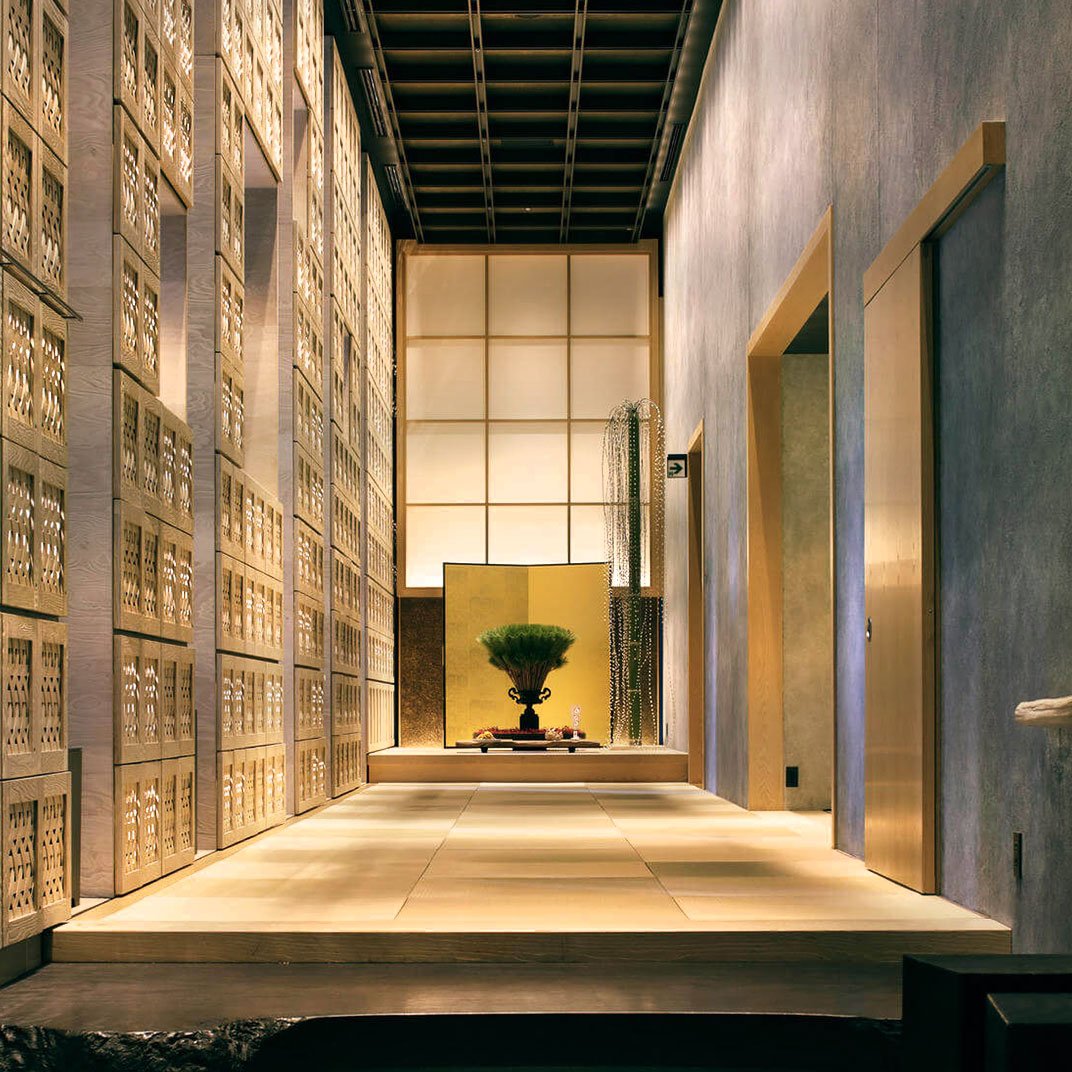
Aman Tokyo doesn’t merely quiet Tokyo; it reframes it. The hotel’s monumental atrium, defined by washi paper, stone, and water, sets a tone of near-monastic calm that carries through every space. Rooms are expansive and contemplative, with floor-to-ceiling views that feel painterly rather than performative. Service is impeccable yet invisible, and the overall experience is deeply Japanese in its restraint — luxury expressed through scale, silence, and precision rather than ornament or excess.
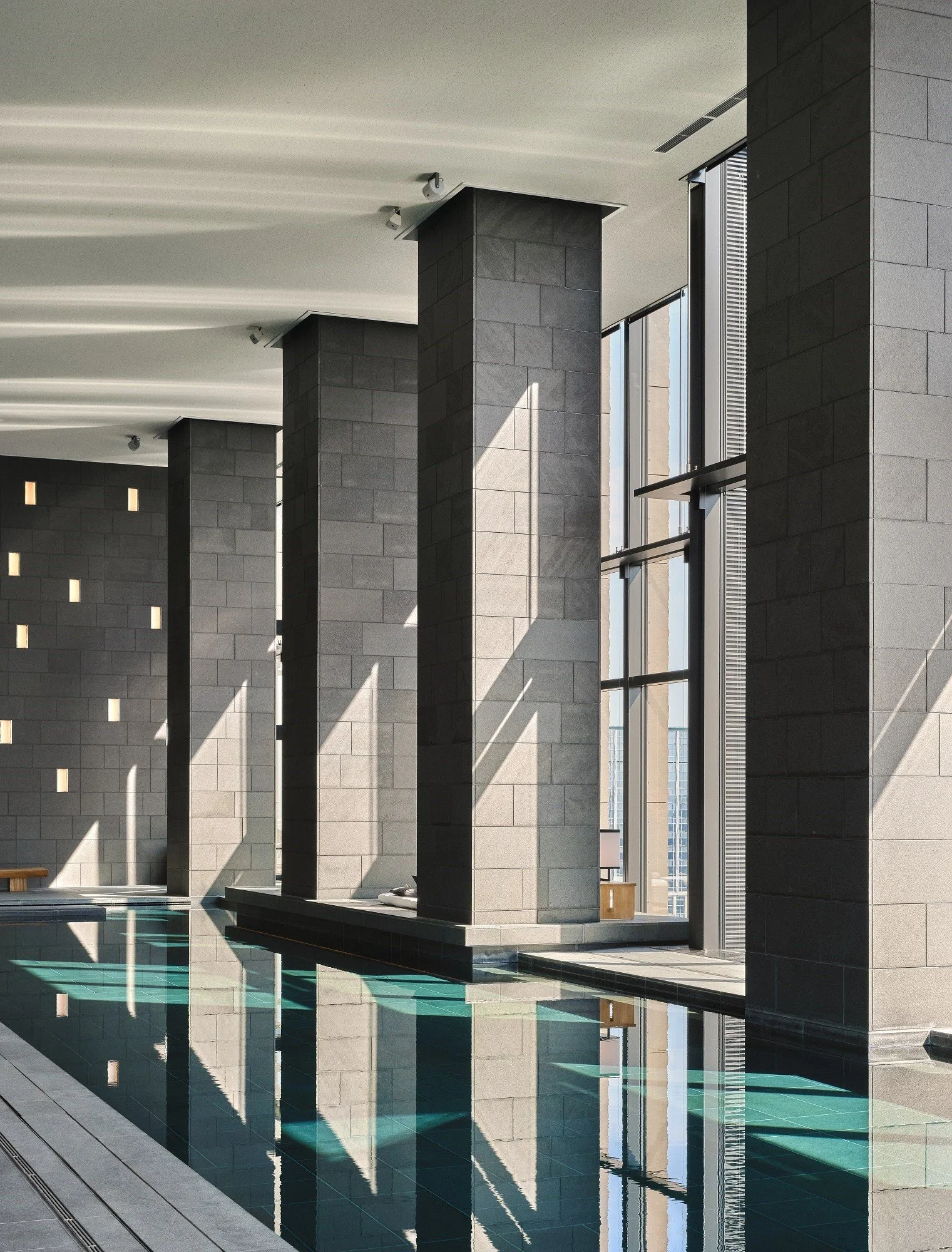
Located in Otemachi, directly connected to Tokyo Station and multiple subway lines
Architecture and interiors draw heavily from traditional Japanese materials and spatial principles
Rooms are among the largest in Tokyo, with soaking tubs positioned for skyline views
The spa is a destination in its own right, featuring a serene indoor pool overlooking the city
Dining focuses on seasonality and technique, with Japanese and Italian options executed at a high level
Atmosphere is hushed and adult, designed for retreat rather than social buzz
The lobby’s central pool is aligned with Tokyo’s skyline in a way that subtly mirrors a traditional Japanese garden axis
All images courtesy of Aman Tokyo
Hoshinoya
Tokyo
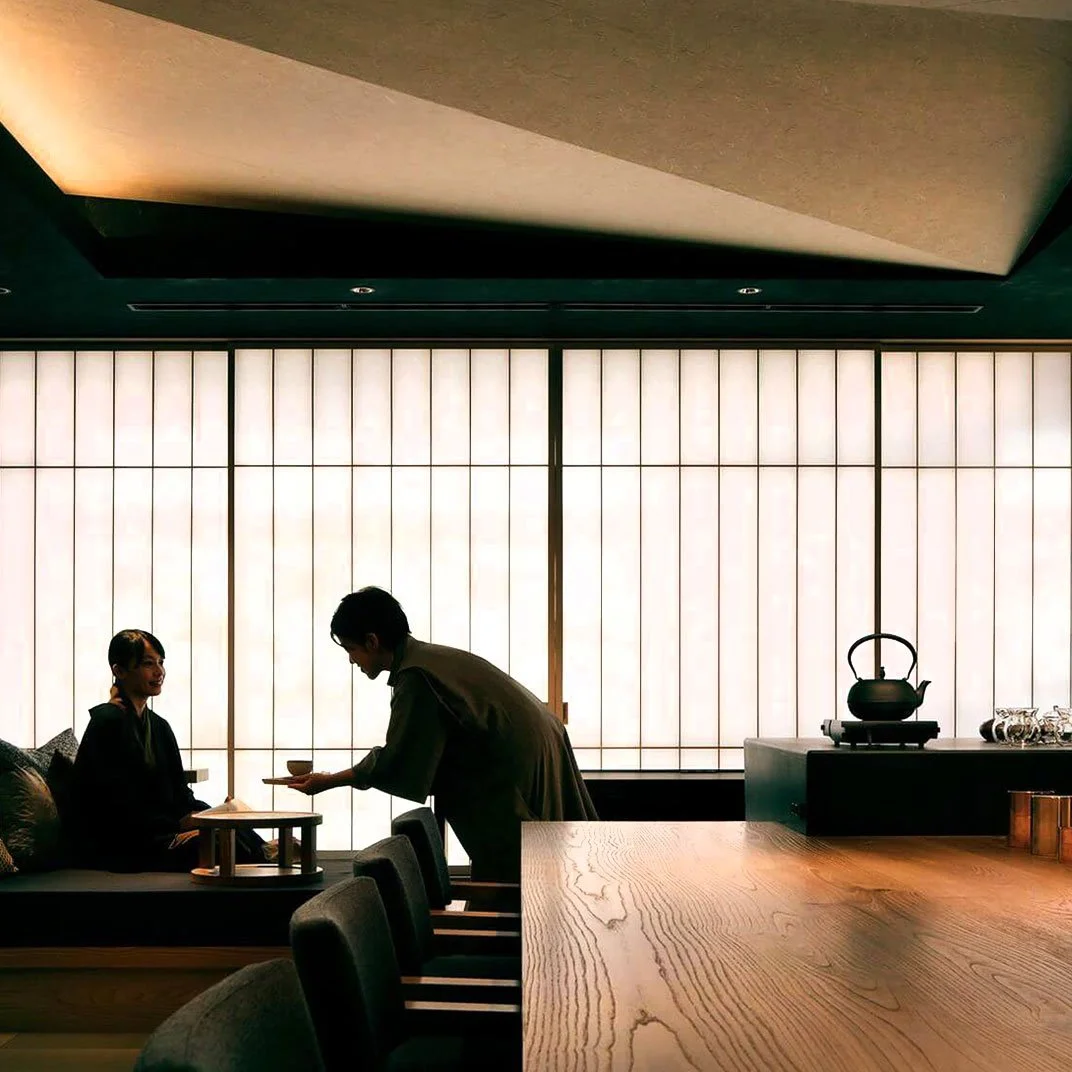
Location: 1 Chome-9-1 Ōtemachi, Chiyoda City, Tokyo 100-0004, Japan
Price: ~$800/night
Vibe: Ceremonial, slow, cultural
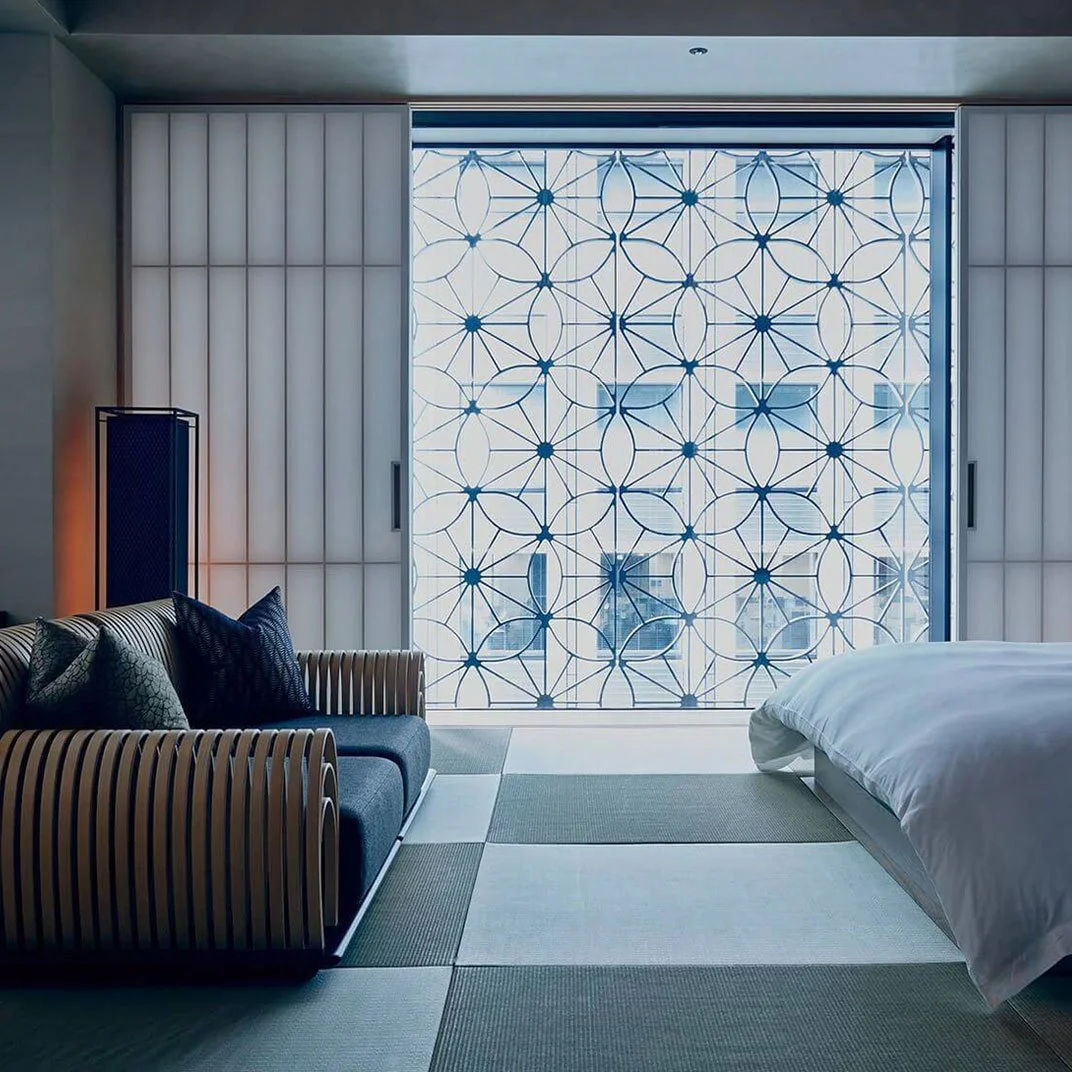
This is one of Tokyo’s most original hotel concepts, executed with total conviction. From the moment you enter and remove your shoes, the city’s pace drops away, replaced by tatami floors, kimono-clad service, and a deeply considered sense of ritual. Each floor functions like a ryokan wing, creating intimacy despite the building’s height, while rooms feel calm, inward-looking, and deliberately free of distraction. It’s not subtle in concept, but it is disciplined — a fully formed idea that never wavers.
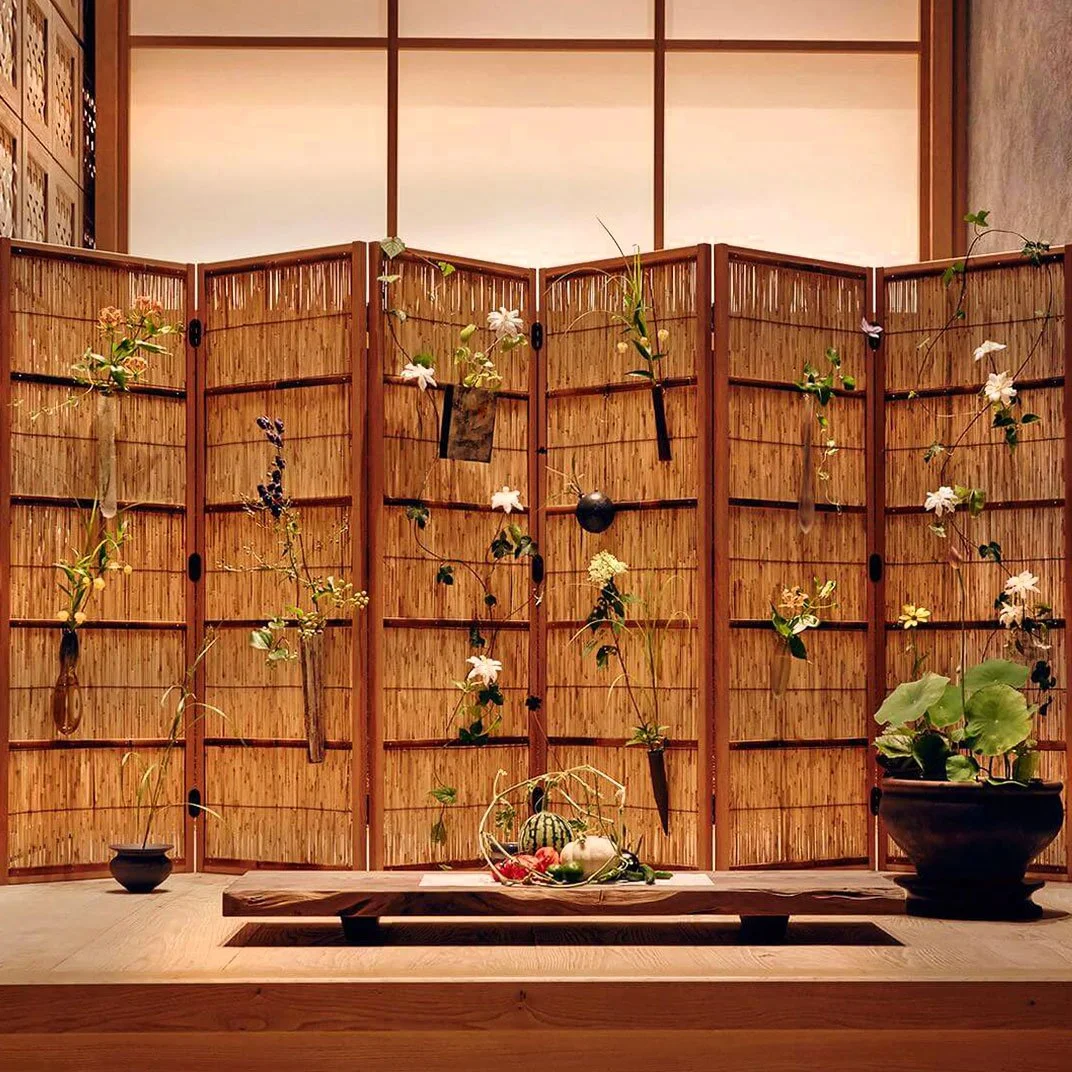
Located in Otemachi, within walking distance of Tokyo Station
Conceptualized as a modern ryokan, with shoes-off policy throughout
Rooms feature tatami flooring, low furniture, and minimalist Japanese design
Rooftop open-air onsen offers a rare bathing experience in central Tokyo
Kaiseki-style dining available, rooted in seasonality and technique
Particularly compelling for travelers interested in traditional Japanese culture
Service follows classic ryokan rhythms with contemporary precision
Each guest floor is organized around a shared ochanoma (tea lounge), echoing the communal structure of a traditional ryokan
All images courtesy of Hoshinoya Tokyo
Gōra Kadan
Hakone
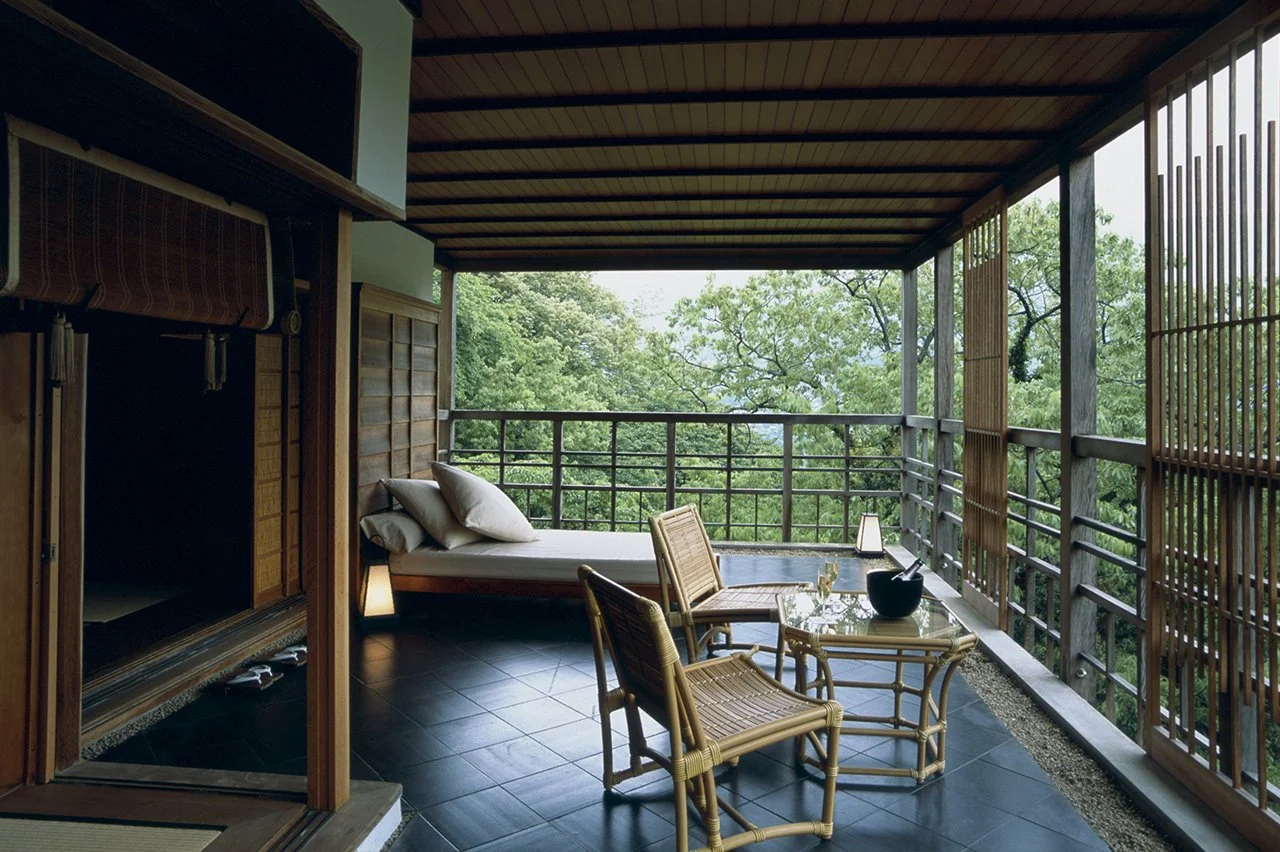
Location: 1300 Gora, Hakone-machi, Ashigarashimo-gun, Kanagawa, Japan 250-0408
Price: ~$900/night
Vibe: Authentic, cultural, imperial
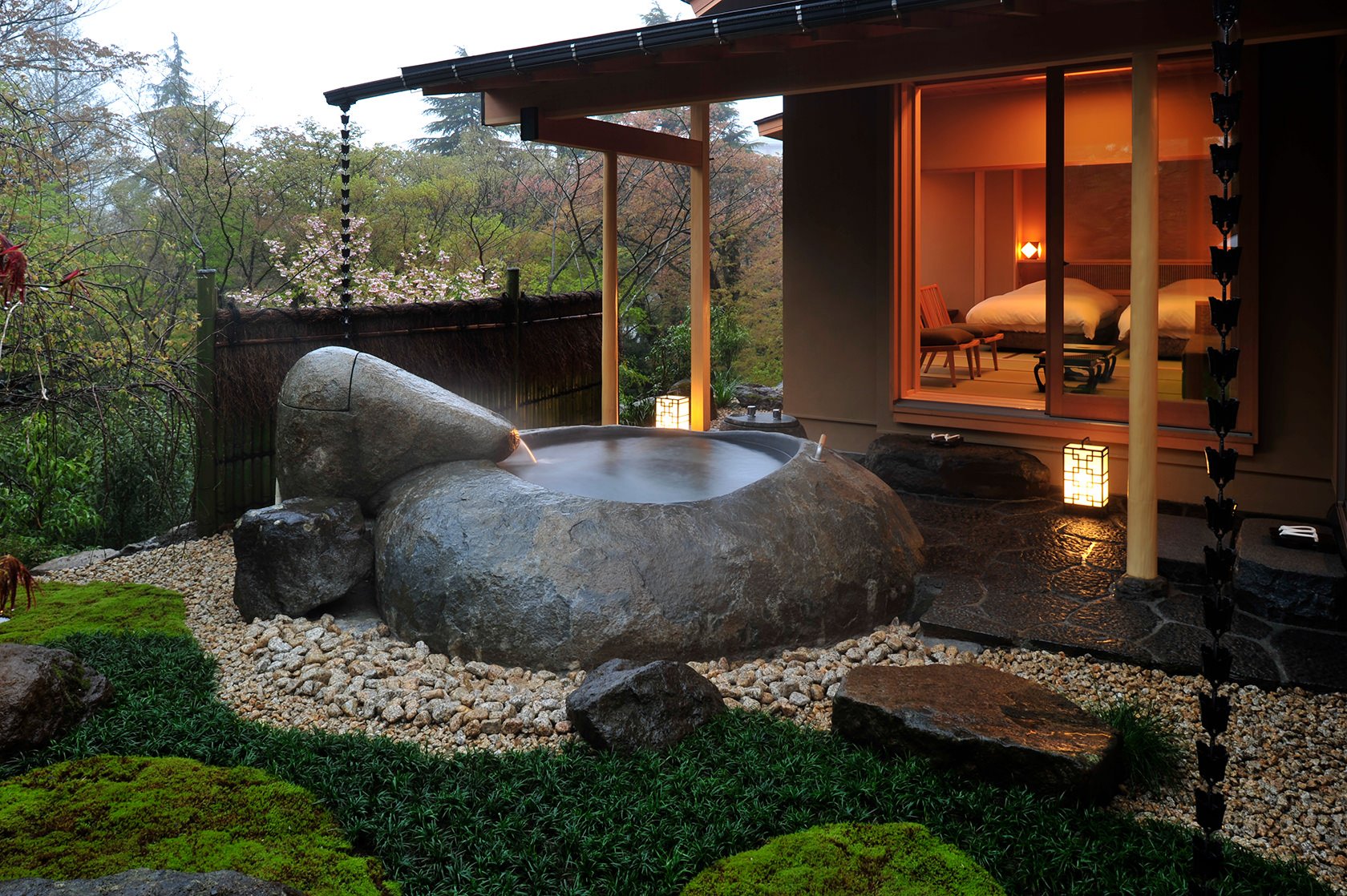
This is tradition executed at the highest possible level, without dilution or trend-chasing. Gōra Kadan occupies the former summer residence of the Kan’in-no-miya imperial family, and that lineage is felt in the property’s formality, spatial restraint, and sense of ceremony. Architecture blends classic Japanese elements with subtle modern interventions, while the grounds, baths, and pacing of service feel deeply intentional. It’s not designed to impress quickly — it reveals itself slowly, rewarding guests who appreciate precision, ritual, and continuity.
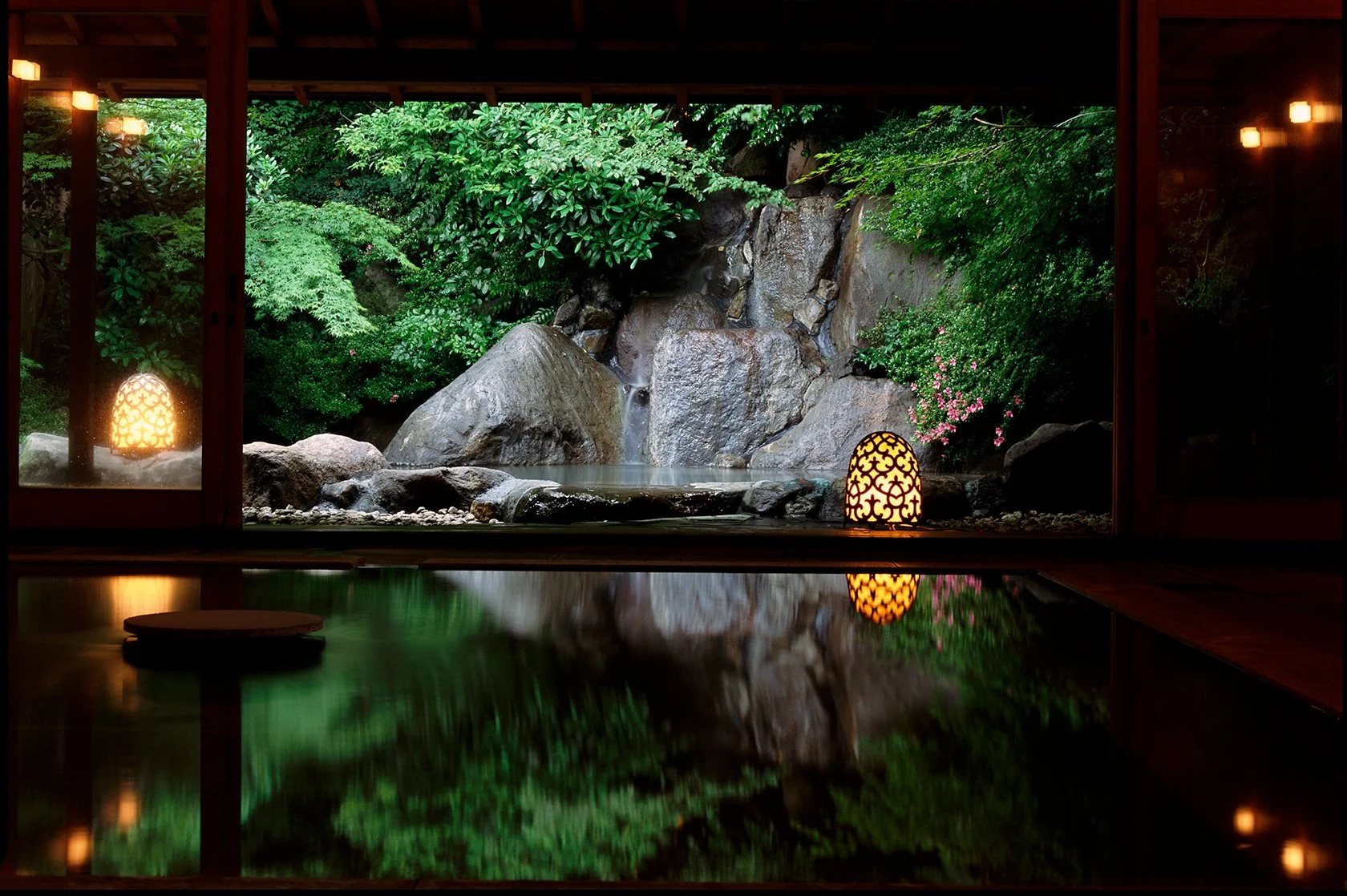
Located in Gōra, Hakone, surrounded by mountains and landscaped gardens
Historic ryokan with imperial provenance, reflected in its scale and formality
Rooms range from traditional tatami suites to contemporary interpretations
Exceptional onsen facilities, including expansive communal baths and private options
Kaiseki dining is a central part of the experience, rooted in seasonality and technique
Service is highly formal, precise, and deeply traditional
Best suited for travelers seeking classic Japanese luxury rather than modern minimalism
Gōra Kadan’s original buildings were designed to mirror imperial Kyoto aesthetics — a rare case where Hakone luxury is shaped by court culture rather than resort sensibility.
All images courtesy of Gōra Kadan
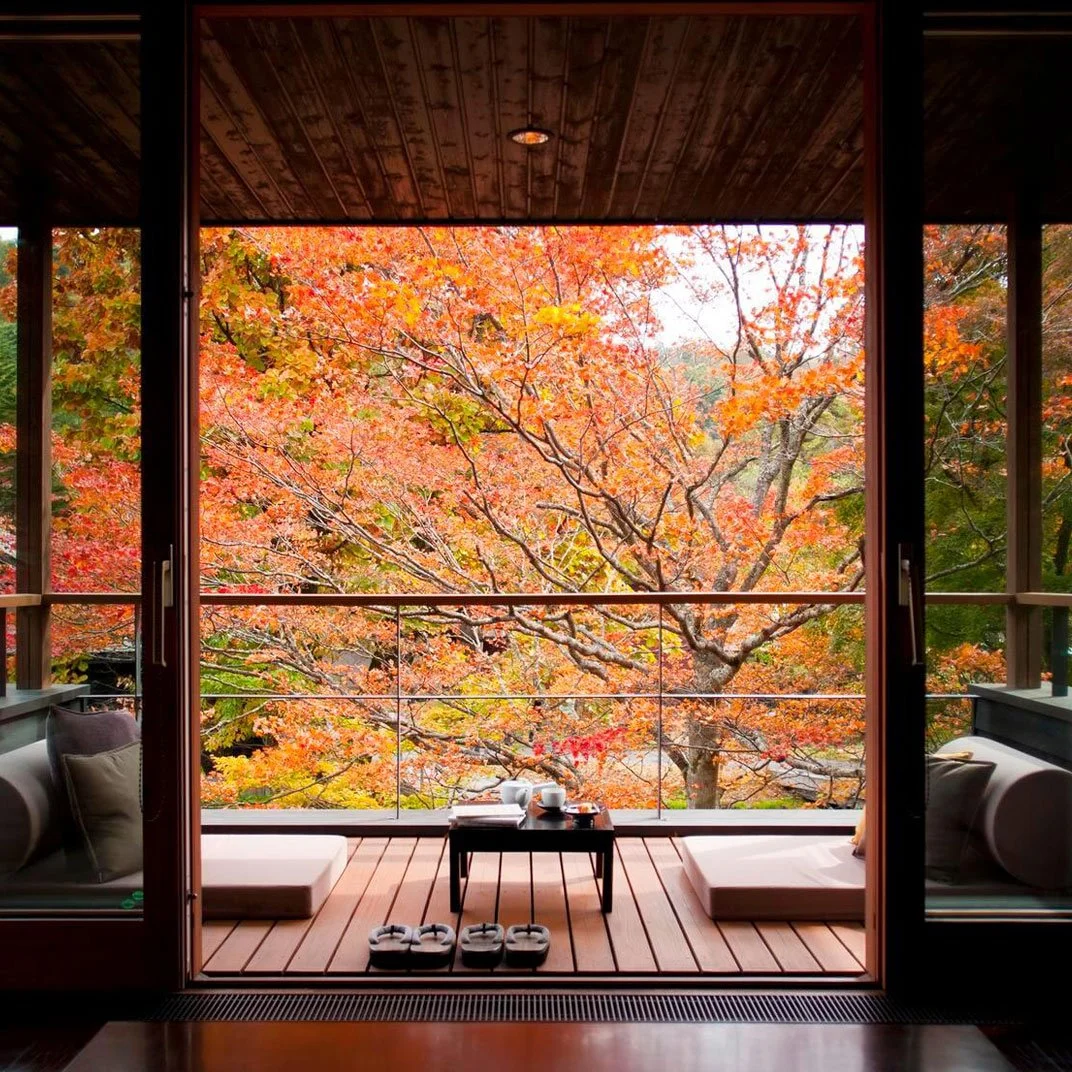
Janu
Tokyo
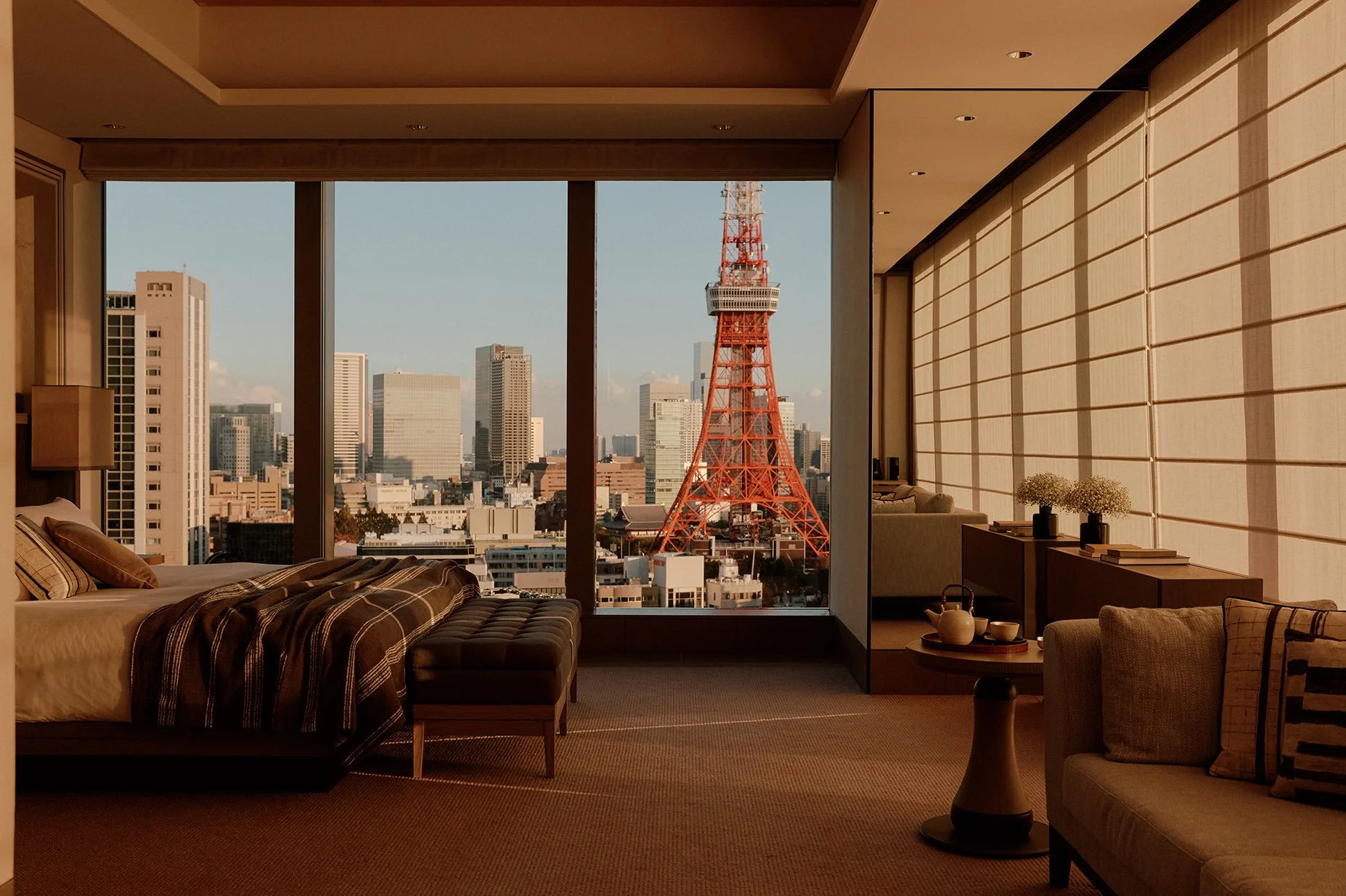
Location: 1-2-2 Azabudai Minato-ku 106-0041 Tokyo, Japan
Price: From ~$950/night
Vibe: Luxurious, design-forward, wellness-focused
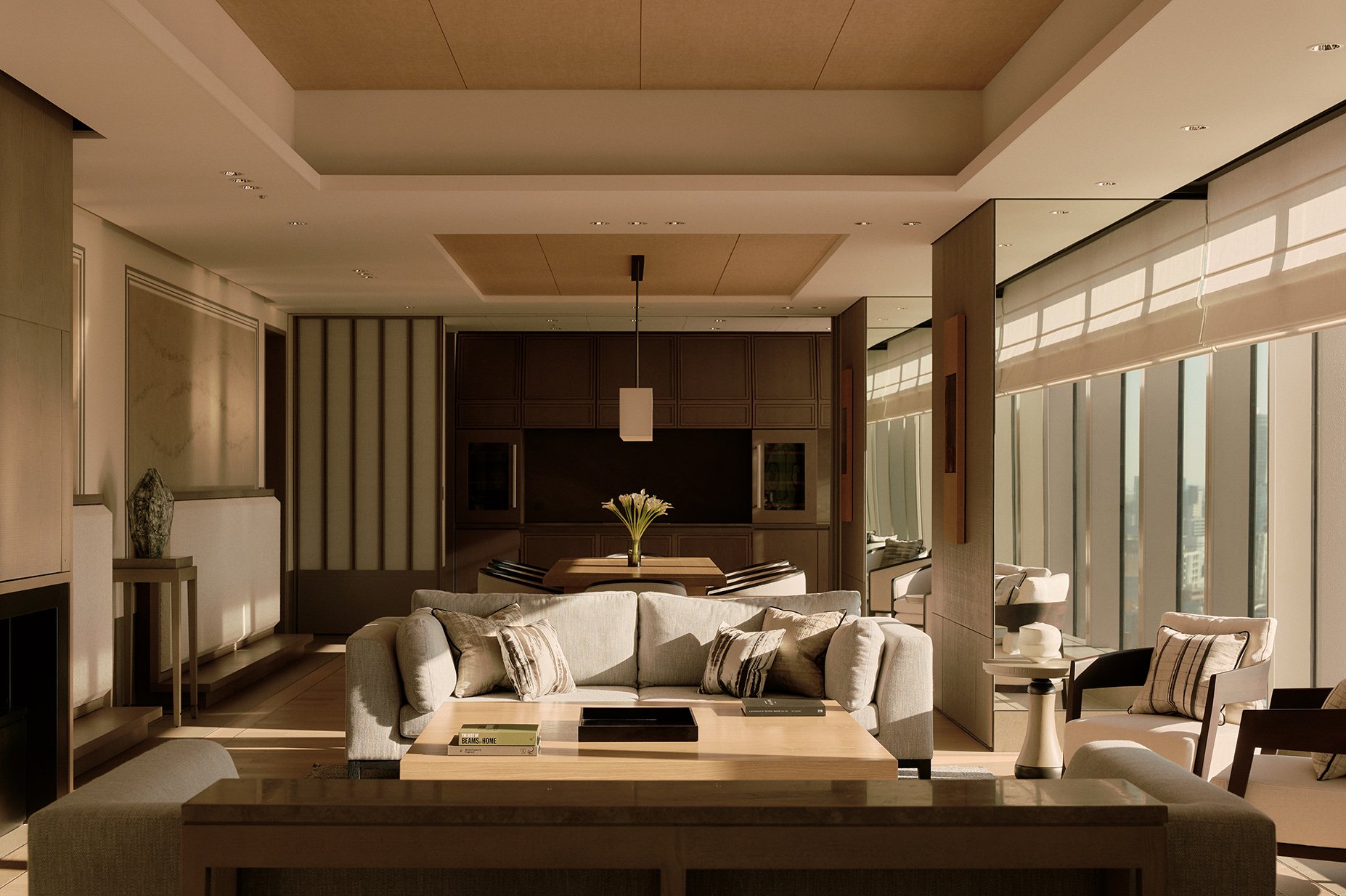
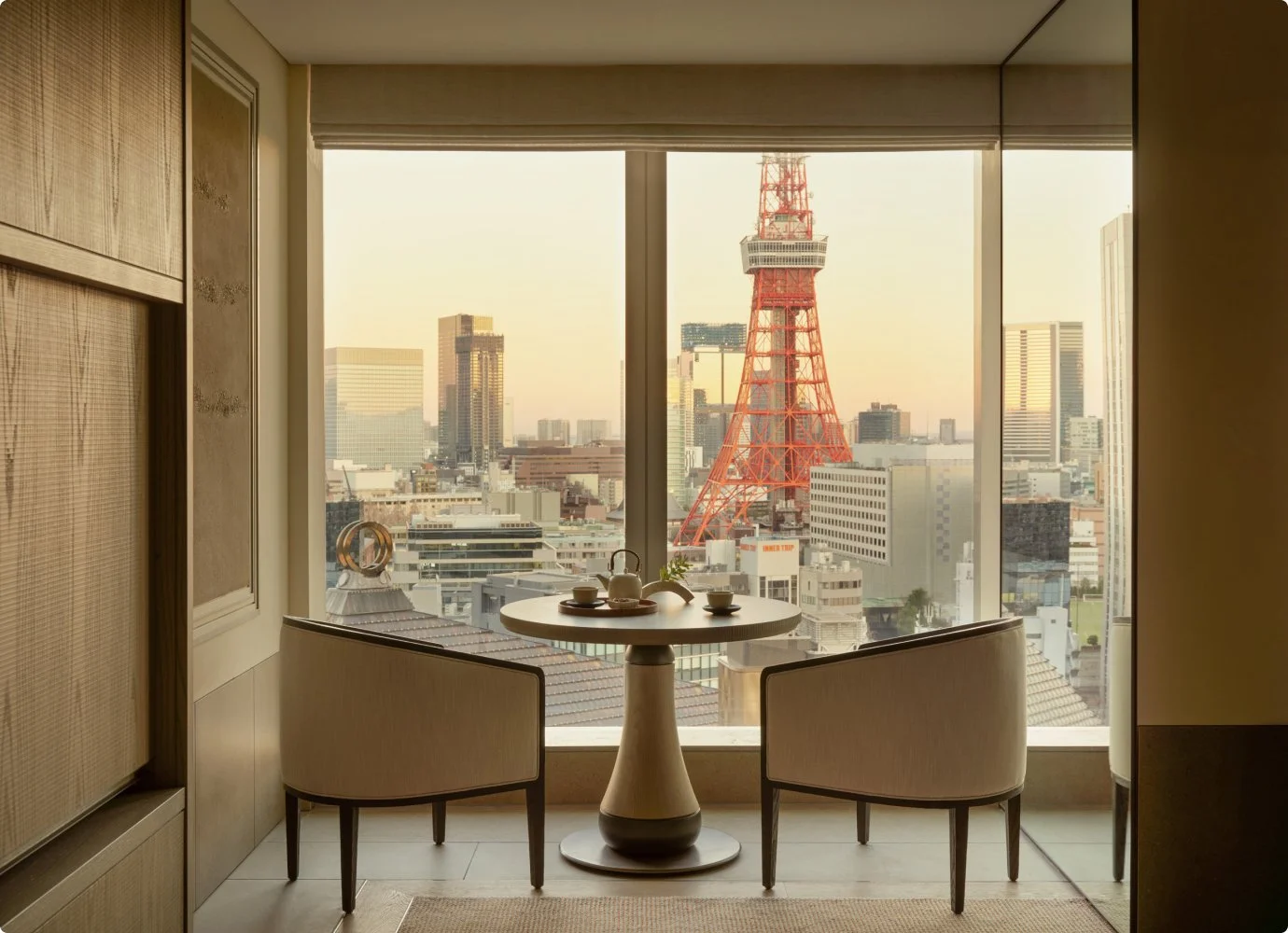
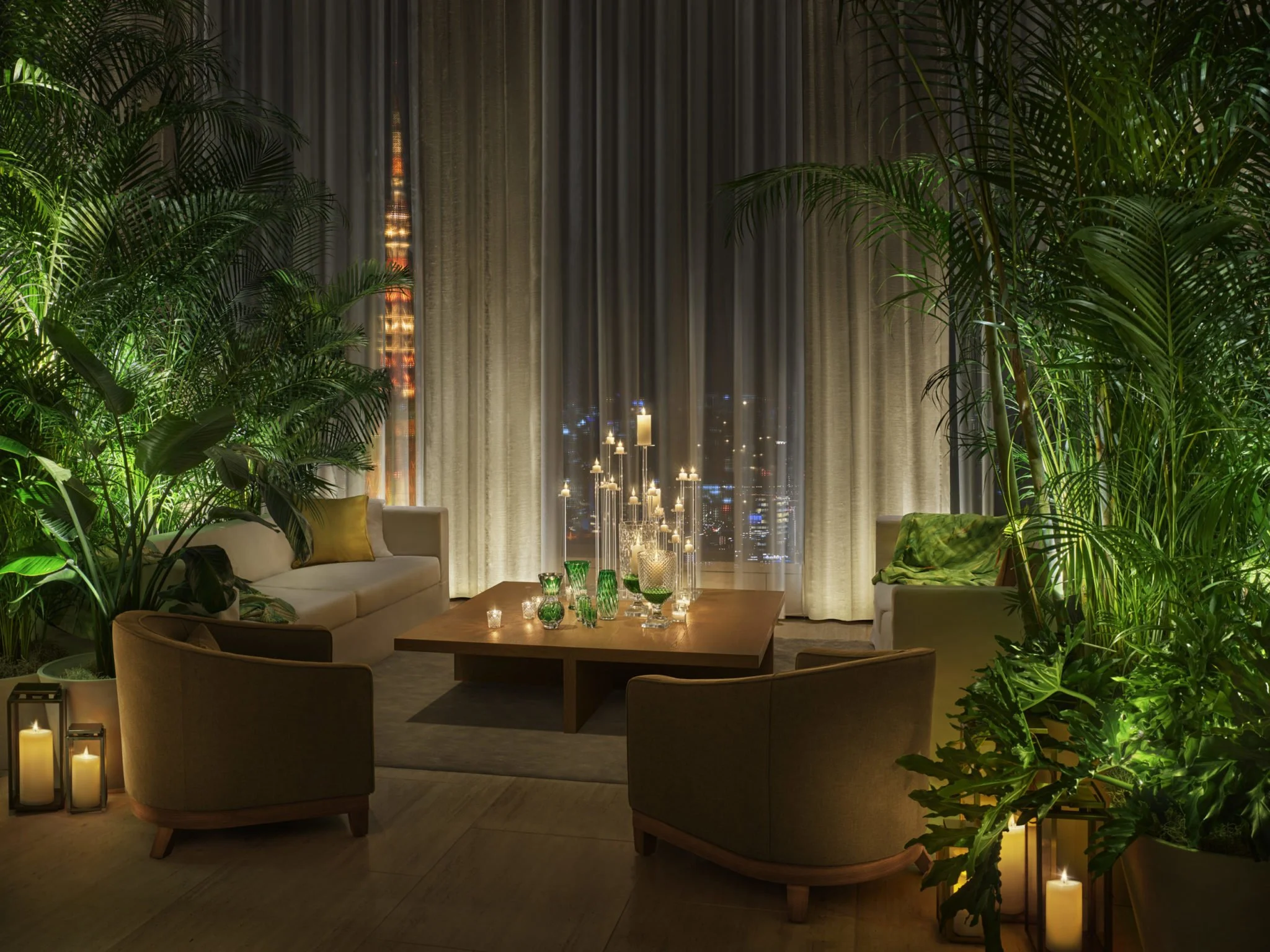
Where Aman is meditative and inward-looking, Janu is an open, architectural, and deliberately human addition to the brand. Set within the new Azabudai Hills development, the hotel feels expansive and modern, with interiors that lean warmer and more tactile than Aman’s signature minimalism. Rooms are beautifully proportioned and filled with light, and the public spaces — restaurants, lounges, and wellness areas — are designed to be used, not just admired. It’s luxury that invites engagement, making it especially compelling for travelers who want high design without total withdrawal from the city.
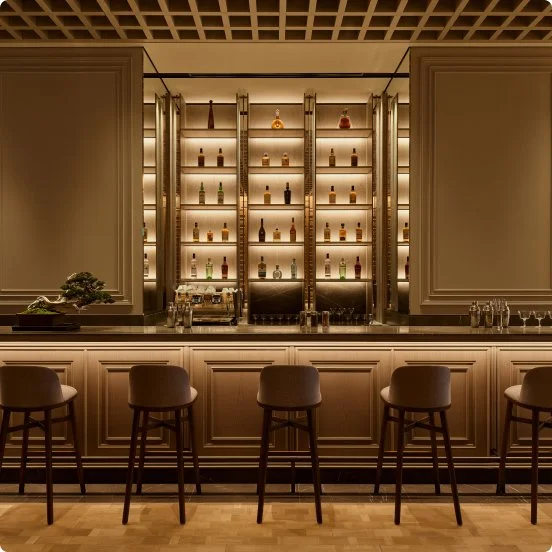
Located in Azabudai Hills, Tokyo’s newest design- and culture-forward district
Janu is Aman Group’s more social, contemporary luxury brand
Rooms are generous by Tokyo standards, with floor-to-ceiling windows and refined, modern interiors
One of the most ambitious wellness offerings in the city, including an expansive spa, fitness, and movement spaces
Exceptional dining with multiple in-house concepts
Atmosphere is polished but lively, balancing serenity with social energy
Janu Tokyo is the brand’s global flagship, making it the clearest expression of how Aman envisions the future of luxury hospitality — less silent retreat, more beautifully designed living.
All images courtesy of Janu Tokyo
The Edition
Tokyo
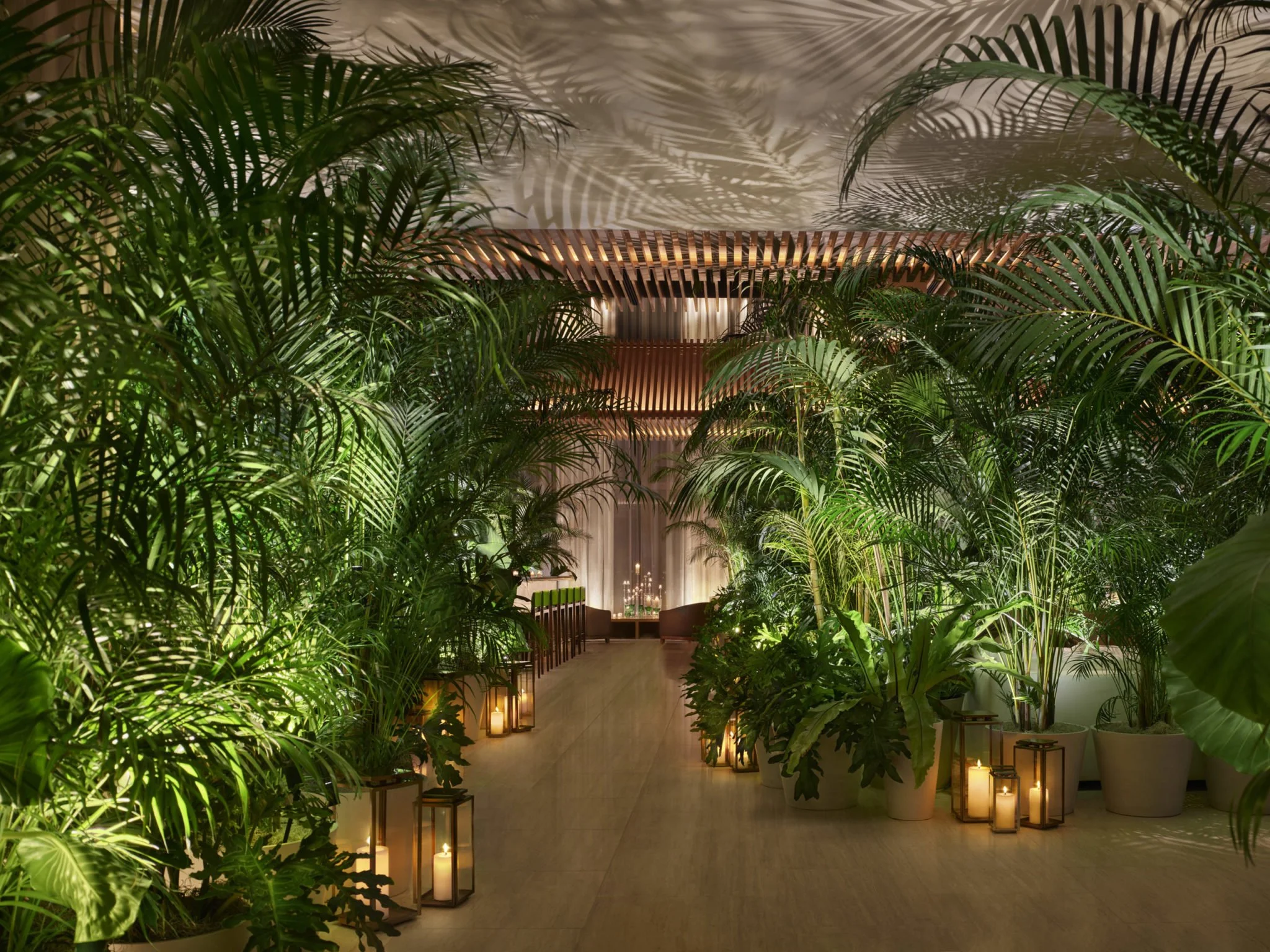
Location: 4 Chome-1-1 Toranomon, Minato City, Tokyo 105-0001, Japan
Price: From ~$600/night
Vibe: Luxurious, design-forward, wellness-focused
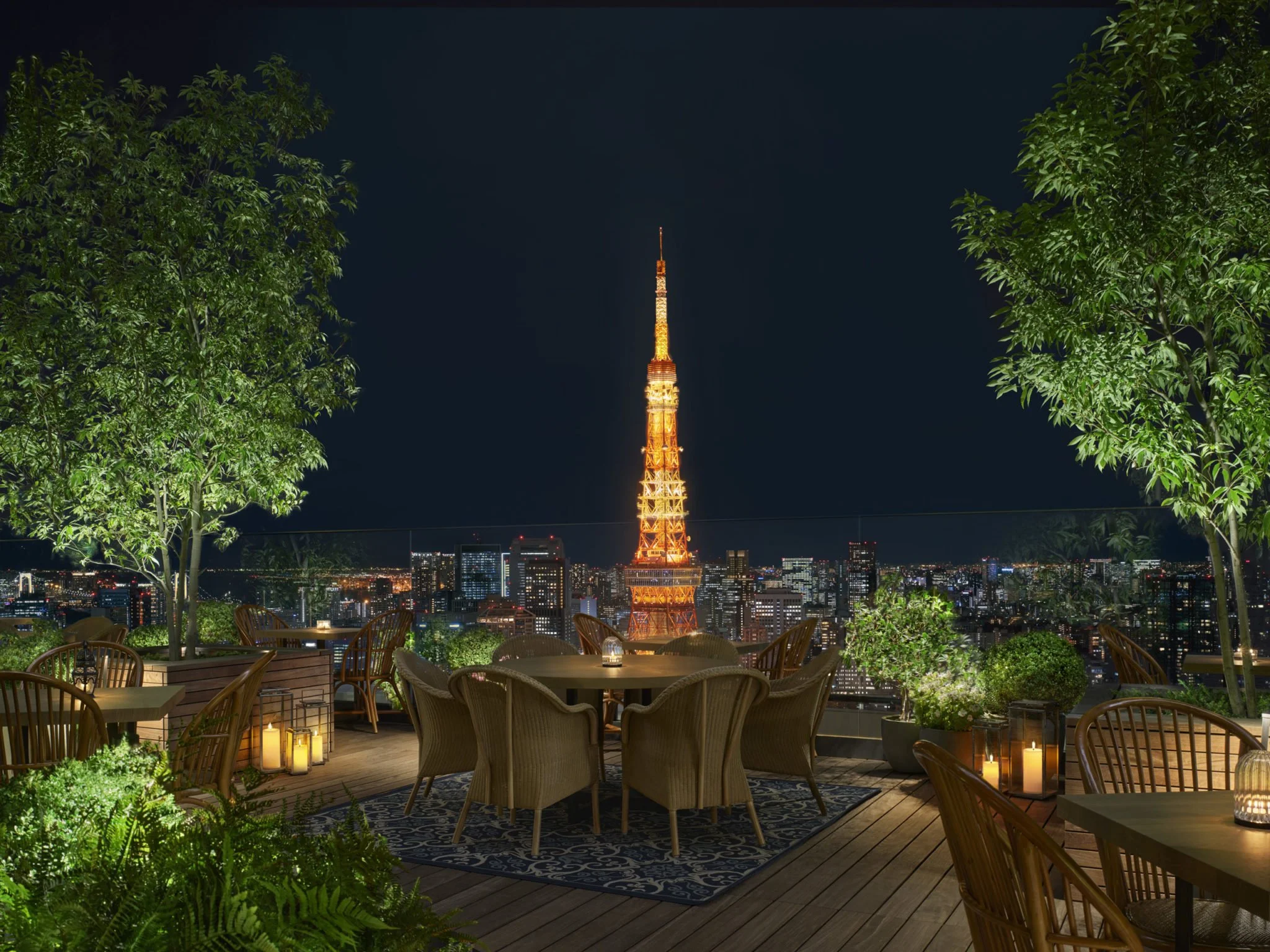
Designed in collaboration with Kengo Kuma, the hotel tempers the brand’s global DNA with distinctly Japanese materiality — soft woods, filtered light, and an almost residential calm once you’re inside. Rooms feel serene and composed, with floor-to-ceiling windows that frame the city rather than overwhelm it. The energy here is quiet confidence: social when you want it, restorative when you don’t. It’s international luxury that actually understands where it is.
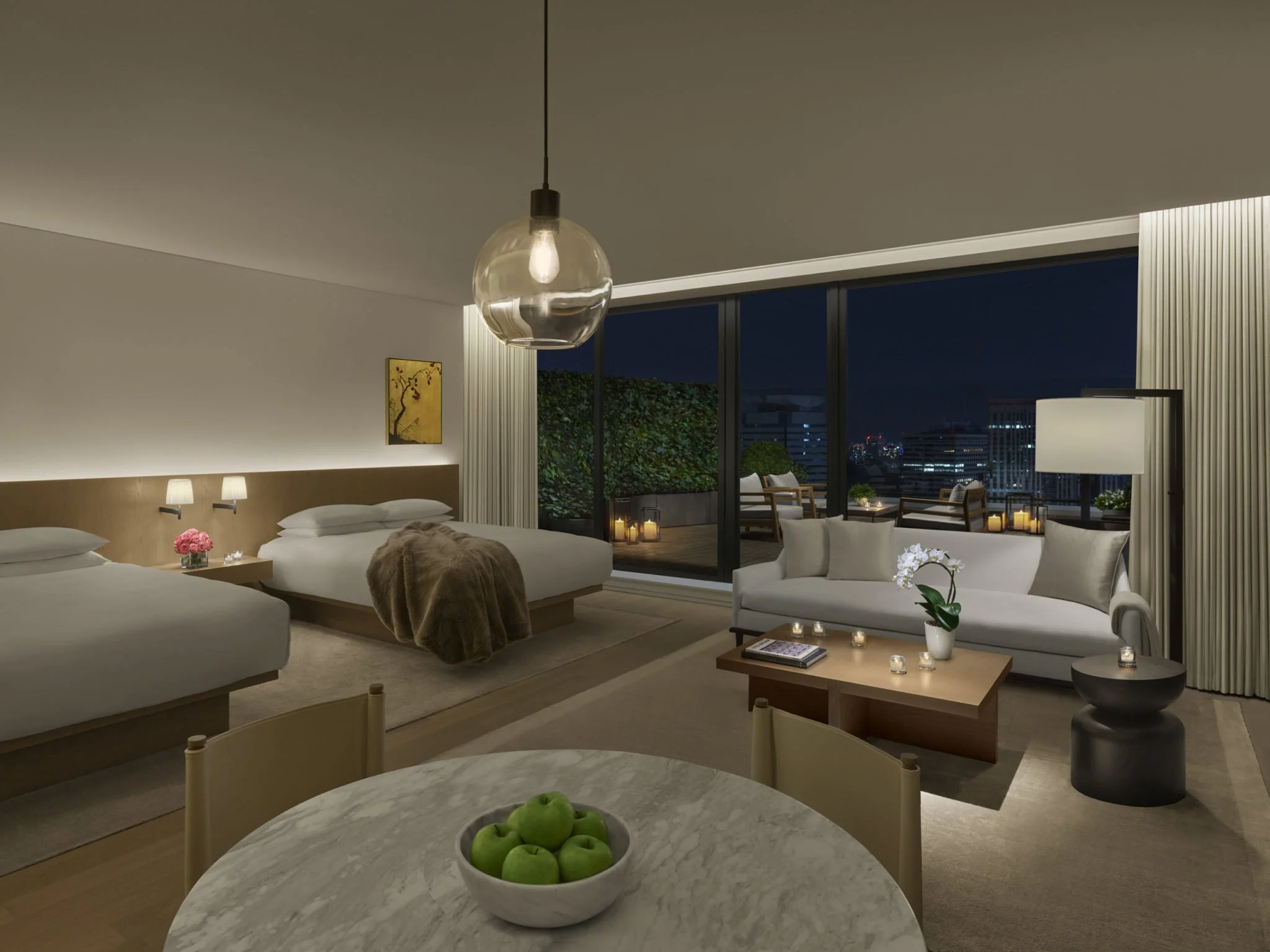
Located in Toranomon, a central, well-connected district near business, dining, and cultural hubs
Architecture and interiors blend EDITION’s modern luxury with Japanese restraint
Rooms are calm and minimalist, with generous proportions by Tokyo standards
Great food and beverage program, including a celebrated rooftop bar with skyline views
Appeals to design-conscious travelers, creatives, and repeat visitors to Tokyo
Works well for both short stays and longer city bases
The lobby’s layered greenery — a Schrager signature — was intentionally designed to echo the experience of entering a quiet Tokyo garden from a busy street, softening the transition from city to hotel.
All images courtesy of The Tokyo Edition
Hoshinoya Karuizawa
Nagano
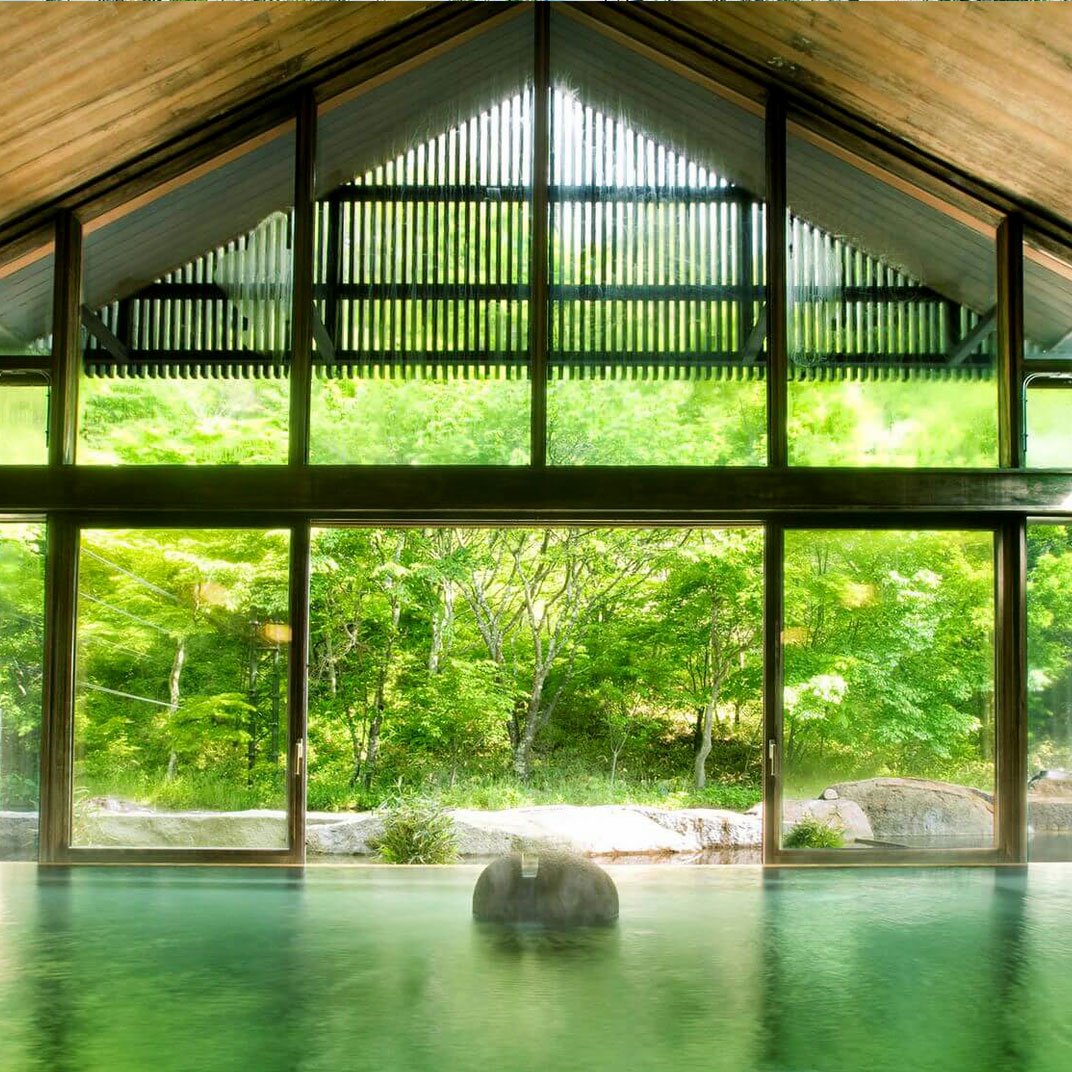
Location: 2157-428 Nagakura, Karuizawa, Kitasaku District, Nagano 389-0111, Japan
Price: From ~$600/night
Vibe: Peaceful, slow, weekend escape
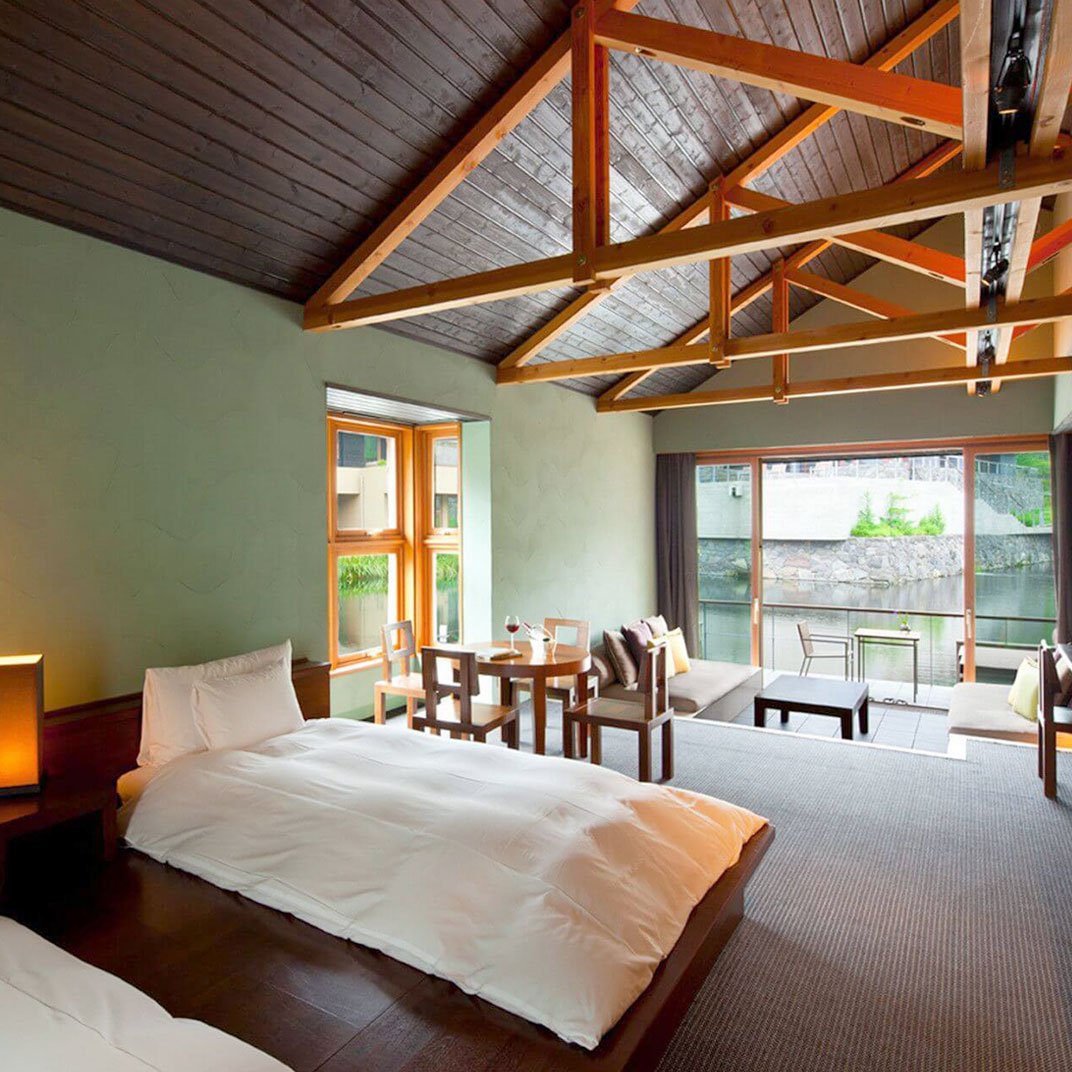
Rather than a single hotel building, the property unfolds as a low-slung village woven into the landscape, with villas lining a river and pathways that encourage wandering and pause. Design is minimalist but warm, with interiors that prioritize light, wood, and proportion over decoration. Everything here is paced deliberately — from the way meals are served to how the baths are approached — creating a feeling of total removal that’s rare this close to Tokyo. It’s luxury as environment, not object.
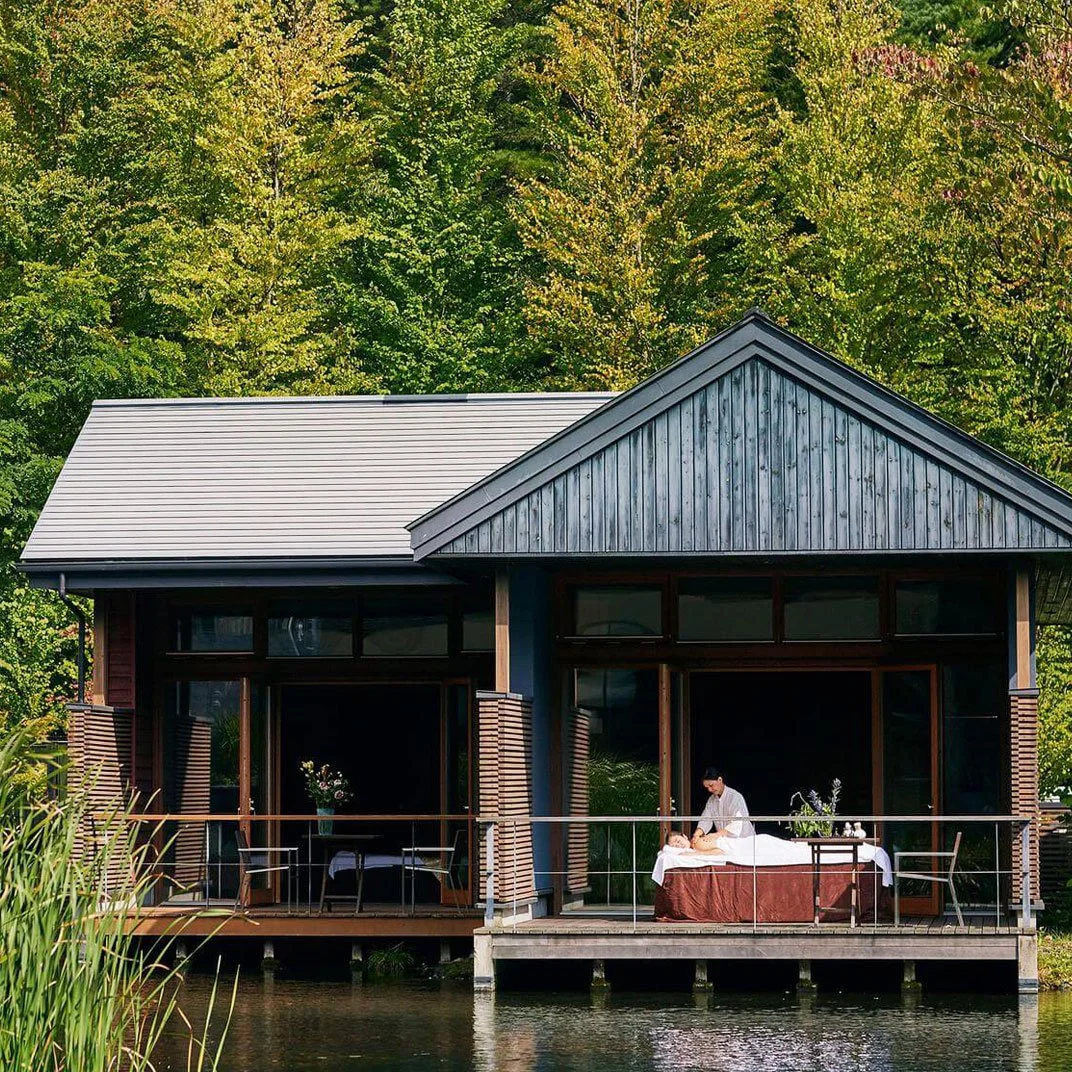
Located in Karuizawa, a historic mountain retreat about one hour from Tokyo by Shinkansen plus transfer
Designed as a ryokan village with individual villas rather than a central hotel block
Architecture emphasizes integration with forest, water, and seasonal change
Rooms are spacious and serene, many with river or woodland views
Onsen facilities include both communal and private options, deeply integrated into the landscape
Dining focuses on refined Japanese cuisine with strong seasonal and regional sourcing
Atmosphere is quiet, restorative, and destination-focused
The property was built around a restored hot spring system originally used by the local community — a subtle but meaningful reminder that the retreat is rooted in Karuizawa’s long-standing culture of restorative living, not just luxury travel.
All images courtesy of Hoshinoya Karuizawa
Kyoto, Kansai & The Inland Sea

Amanemu
Ise-Shima
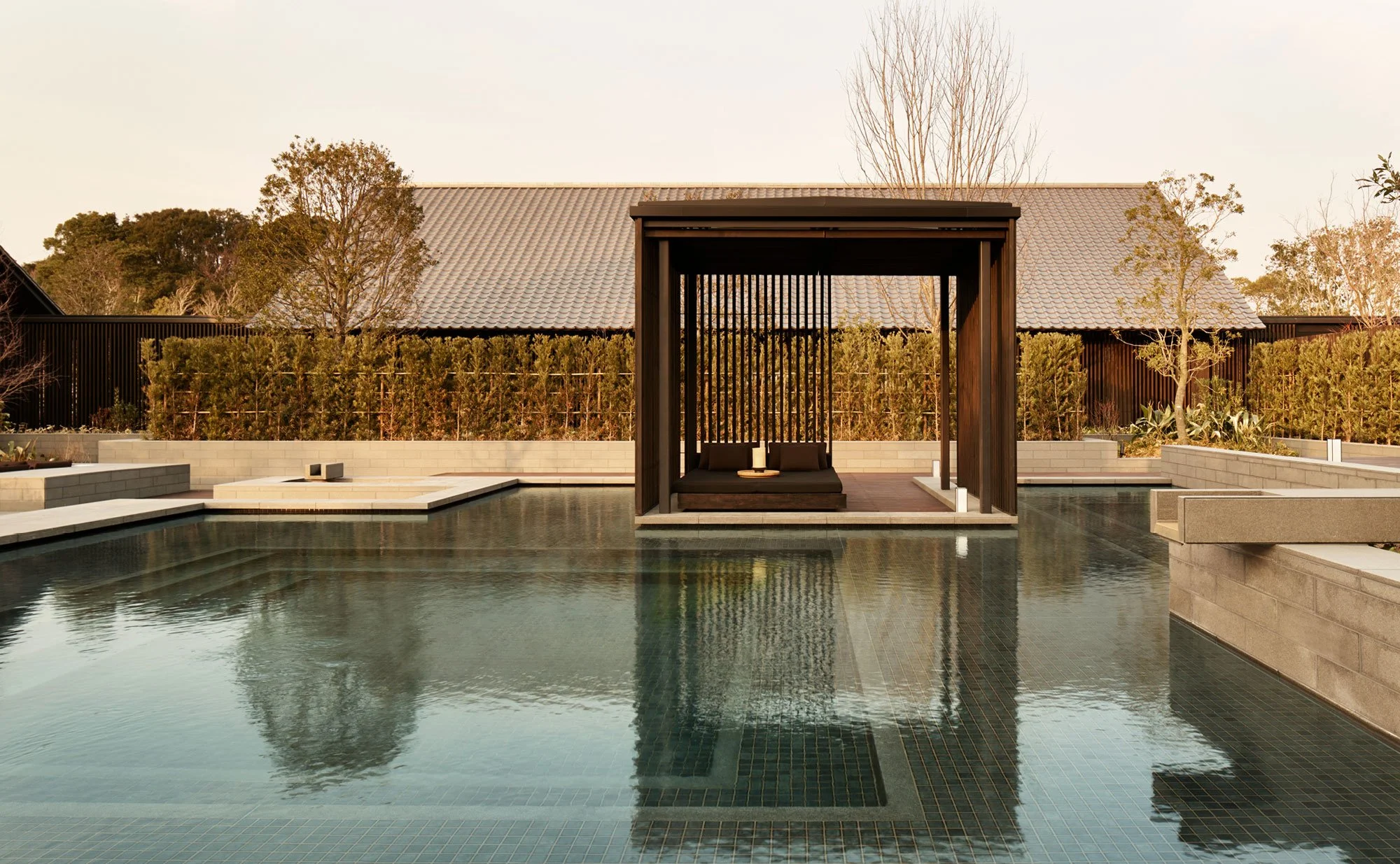
Location: Hamajima-cho, 2165 Hamajimacho Hazako, Shima, Mie 517-0403, Japan
Price: From ~$900/night
Vibe: Luxurious, grounded, elemental
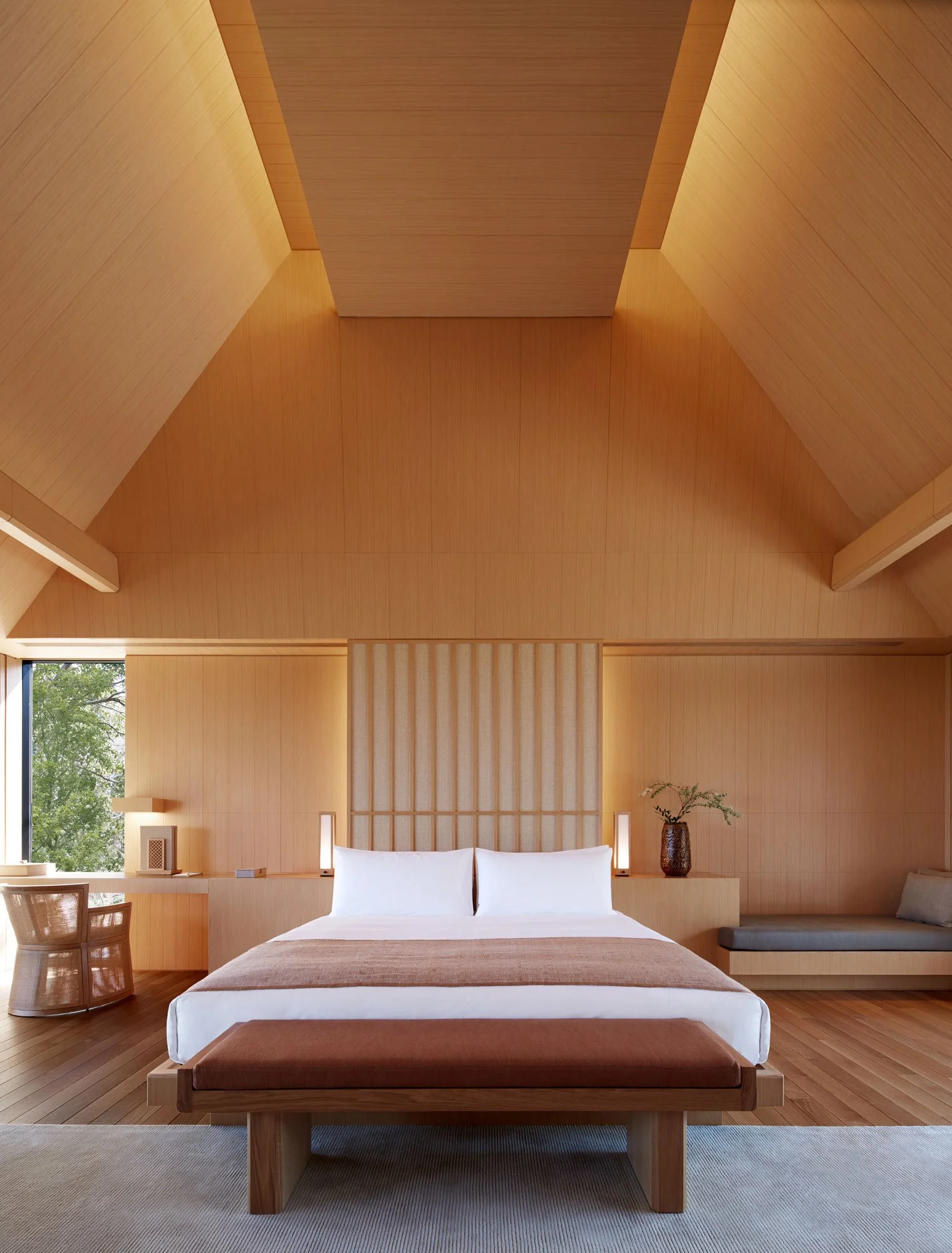
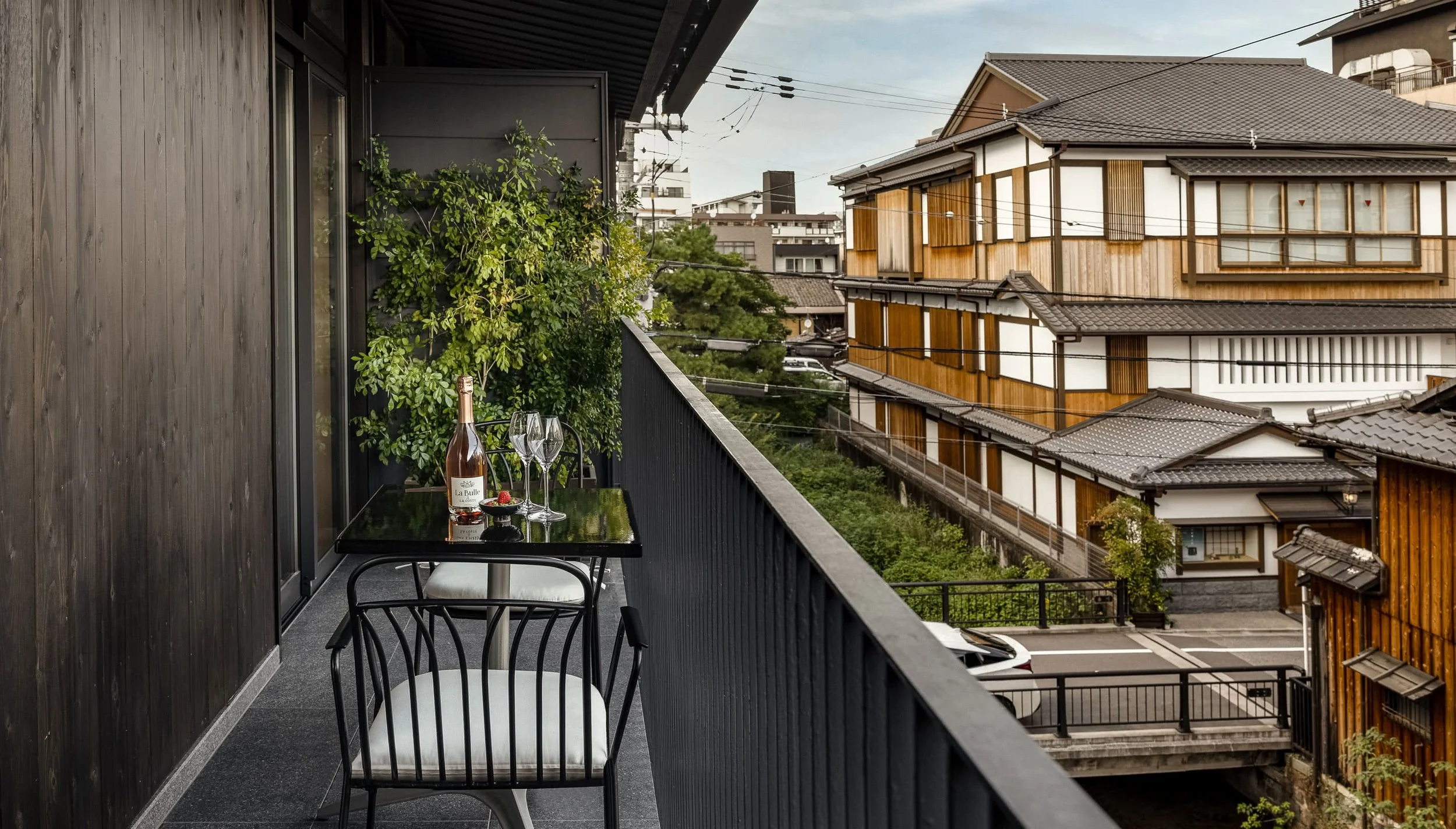
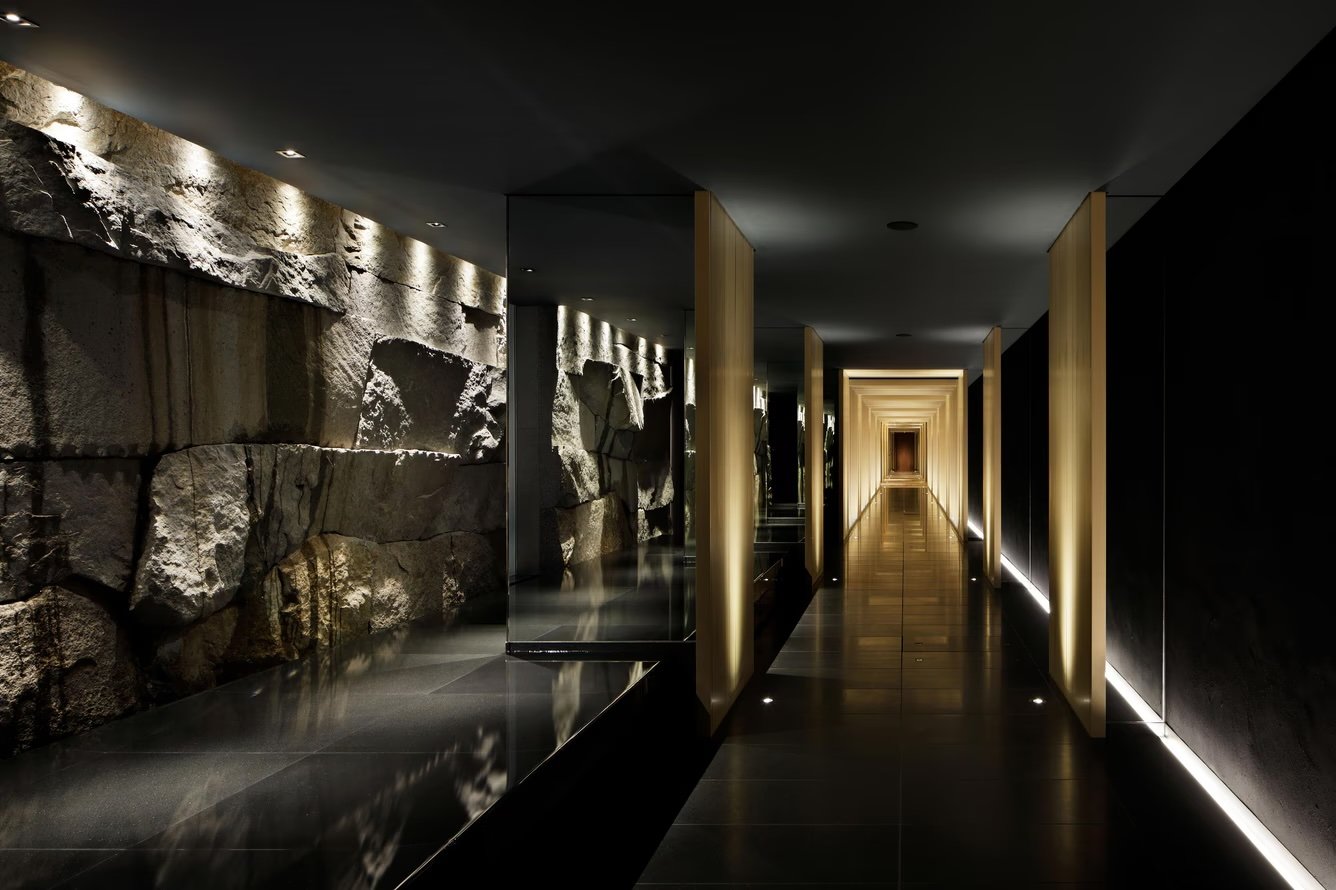
This is Aman at its most elemental. Pavilions sit lightly above forest and water, their clean lines and muted materials designed to disappear into the scenery rather than compete with it. The experience revolves around rhythm and restoration — long walks, slow meals, and mineral-rich hot springs that anchor the stay. Everything feels intentional and unhurried, with a spiritual undertone that reflects the region’s proximity to the Ise Grand Shrine. It’s not a sightseeing base; it’s a destination in itself.
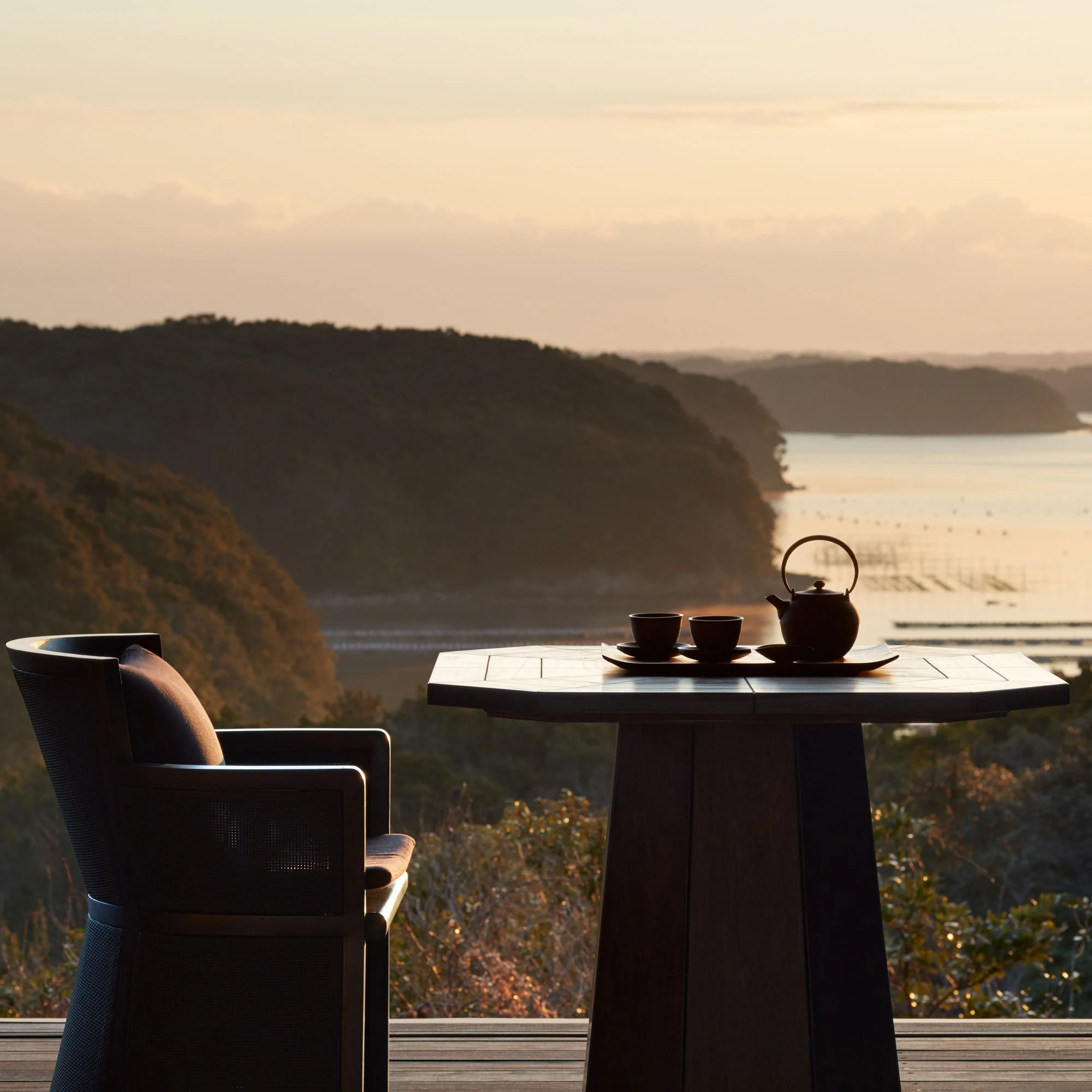
Located in Ise–Shima National Park, overlooking Ago Bay
Pavilion-style accommodations, many with private onsen baths fed by local hot springs
Destination spa with onsen pools, treatment rooms, and wellness programming rooted in Japanese healing traditions
Indoor pool with bay views, plus a stunning gym, with yoga and guided wellness sessions offered periodically
Dining focuses on seasonal Japanese cuisine and regional seafood, presented with Aman restraint
Atmosphere is deeply quiet and adult; best for couples and travelers seeking retreat over activity
Amanemu is built around a rare, naturally alkaline onsen source — guests are encouraged to bathe daily, as the hot springs are considered central to the property’s restorative philosophy
All images courtesy of Amanemu
The Shinmonzen
Kyoto
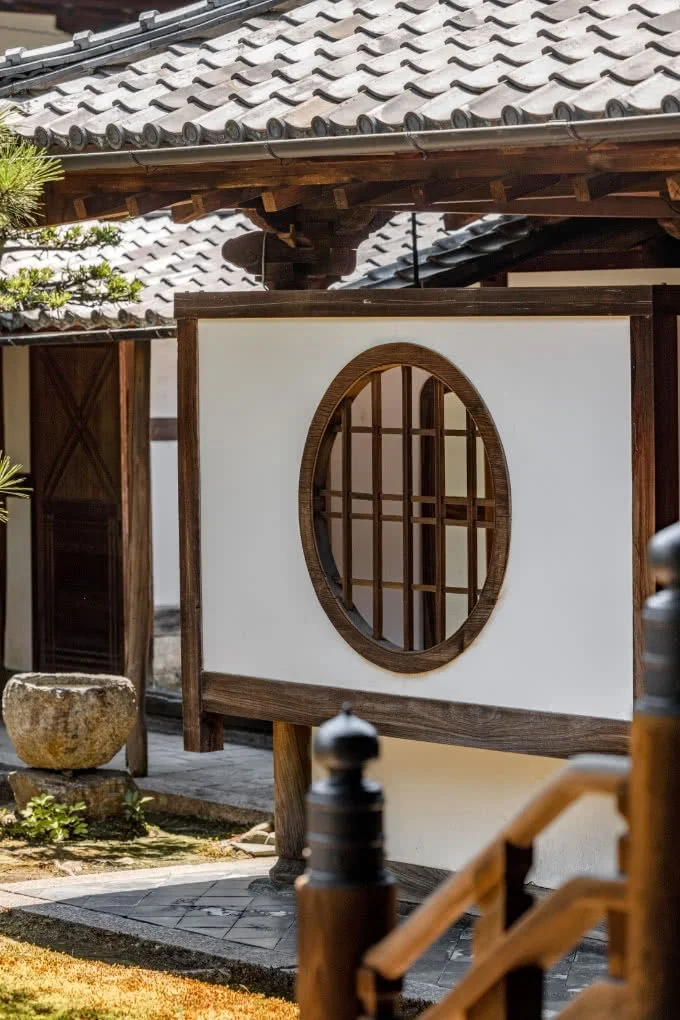
Location: 235 Nishinocho, Higashiyama Ward, Kyoto, 605-0088, Japan
Price: From ~$800/night
Vibe: Simple, authentic, private
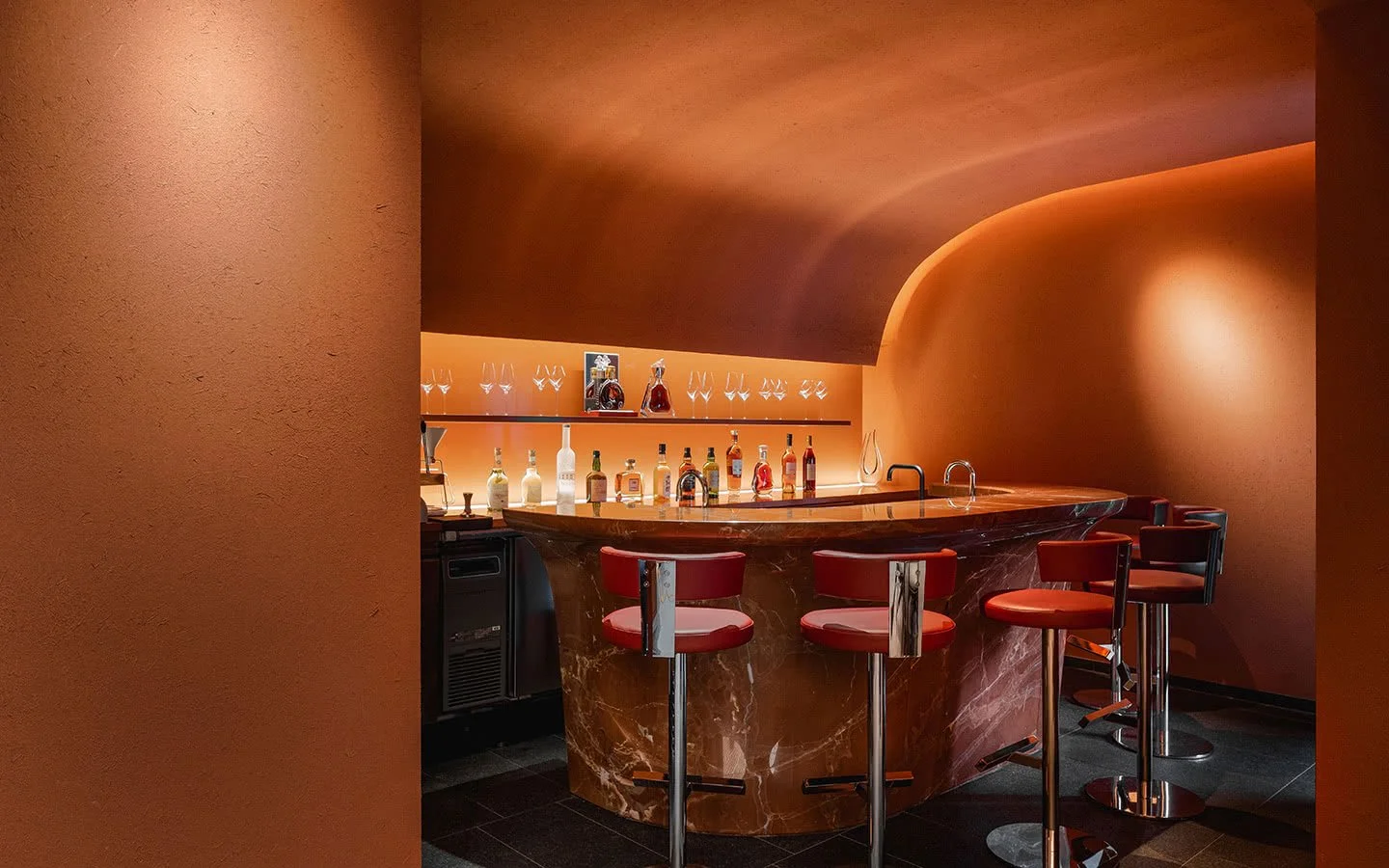
Designed by Tadao Ando, The Shinmonzen is all restraint and confidence—clean lines, softened concrete, and a sense of quiet that feels deliberate rather than precious. With only a handful of rooms, the experience is personal and unshowy, more private residence than hotel. It’s contemporary without being cool-for-cool’s-sake, and deeply Kyoto without leaning on nostalgia.
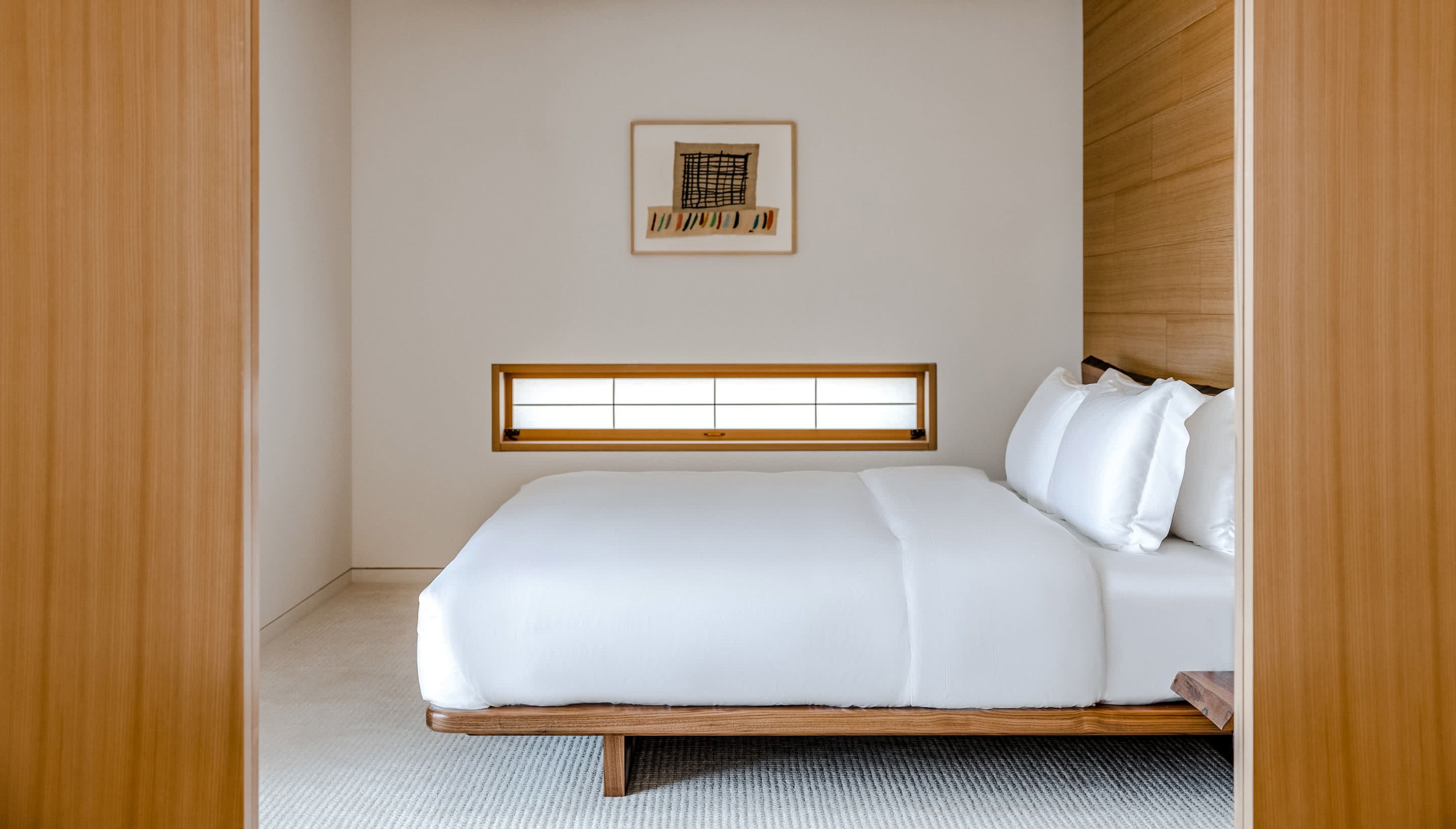
Just 9 suites, making this one of Kyoto’s most intimate luxury stays
Located in Gion on the Shirakawa River, walkable to temples and traditional streets
Architecture by Tadao Ando, with interiors that emphasize proportion, light, and calm
Suites are generous and serene, many with river views and soaking tubs
Destination dining by Jean-Georges, plus a small, elegant bar
No spa or pool; the luxury here is privacy, design, and location
Service is discreet and highly personalized, closer to a private house than a hotel
Because of the limited room count, the hotel often feels like it’s hosting a single party at a time—an unusually private experience in the heart of Kyoto.
All images courtesy of Shinmonzen
The Mitsui
Kyoto
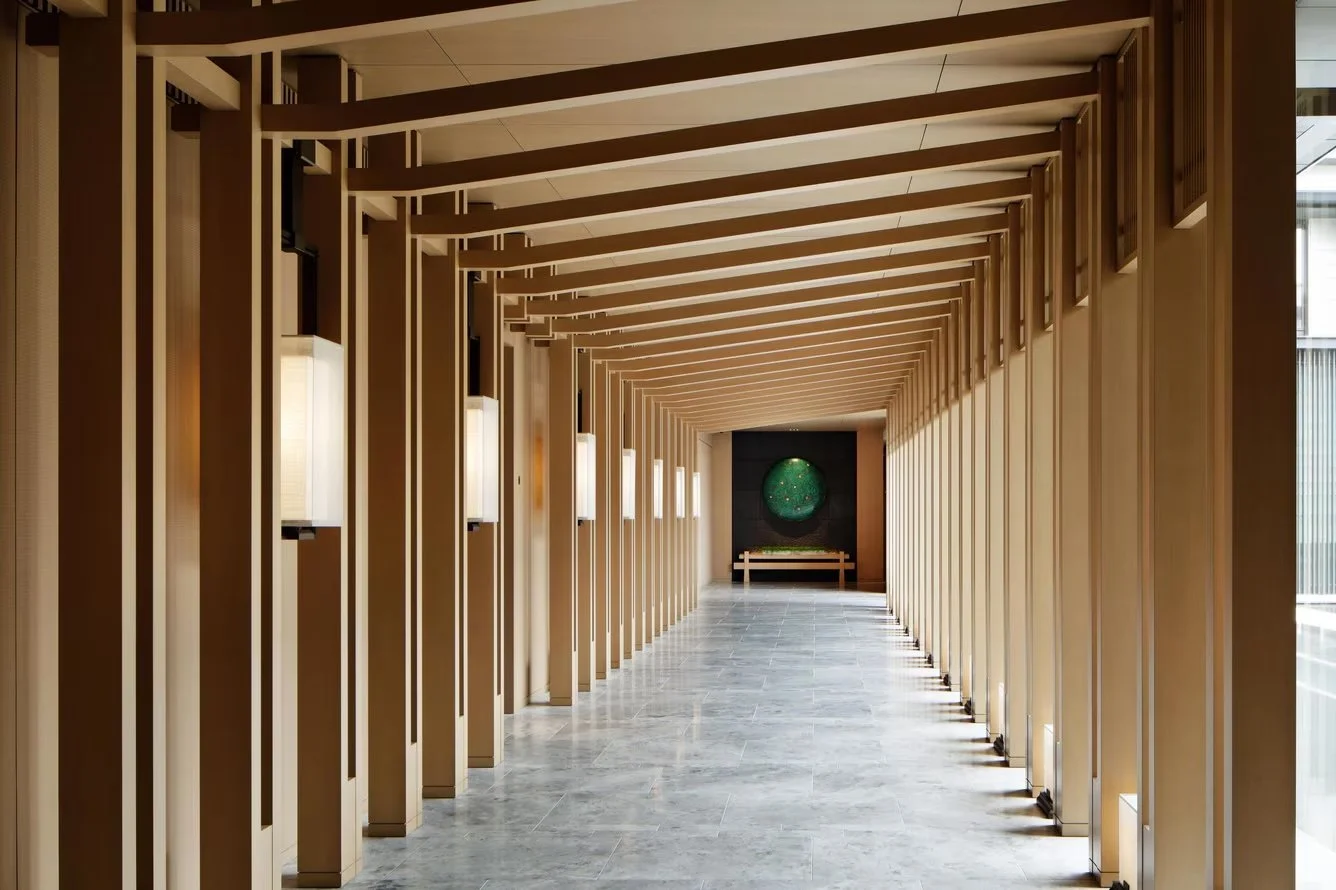
Location: 284 Nijoaburanokojicho, Nakagyo Ward, Kyoto, 604-0051, Japan
Price: From ~$700/night
Vibe: Luxurious, grounded, elemental
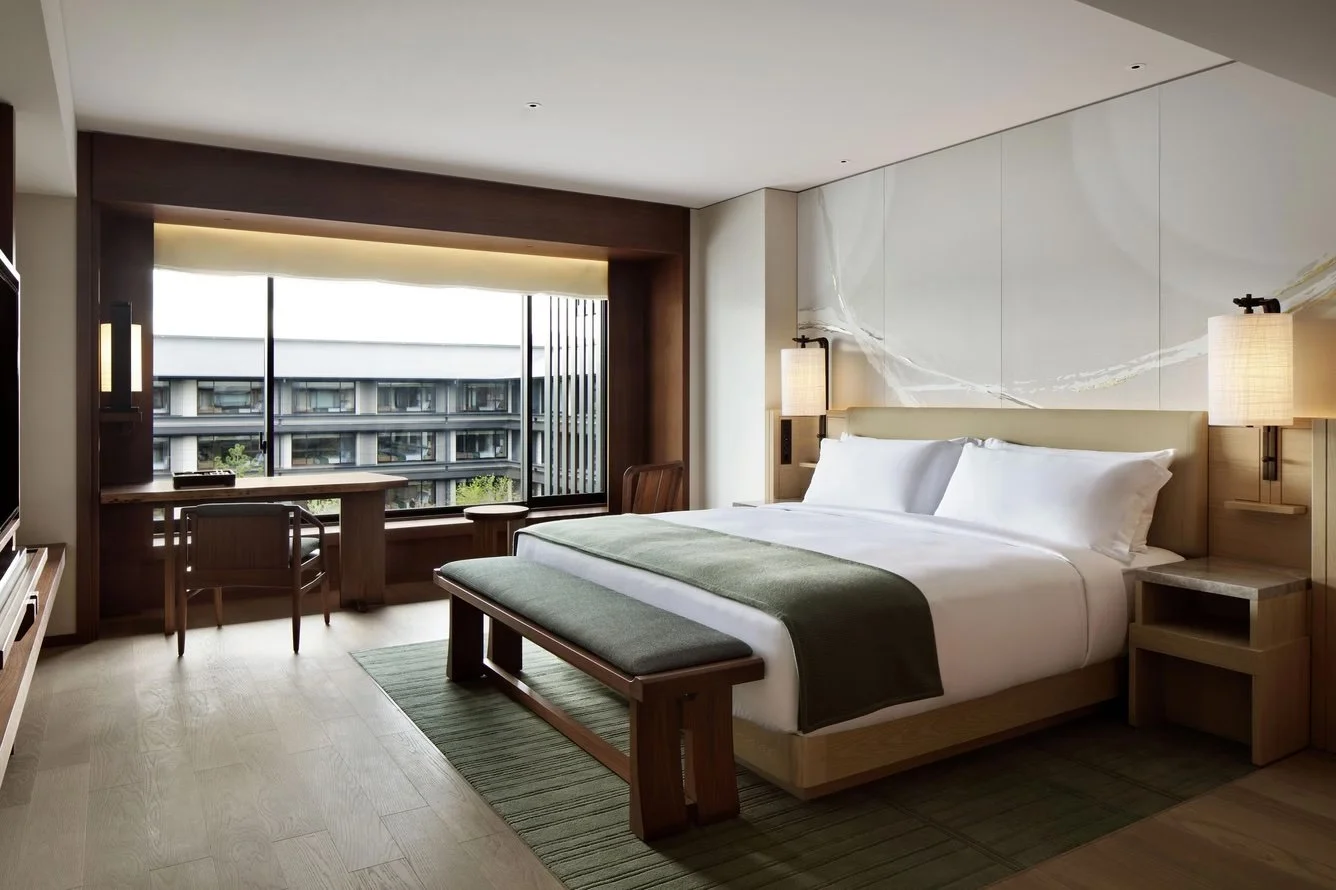
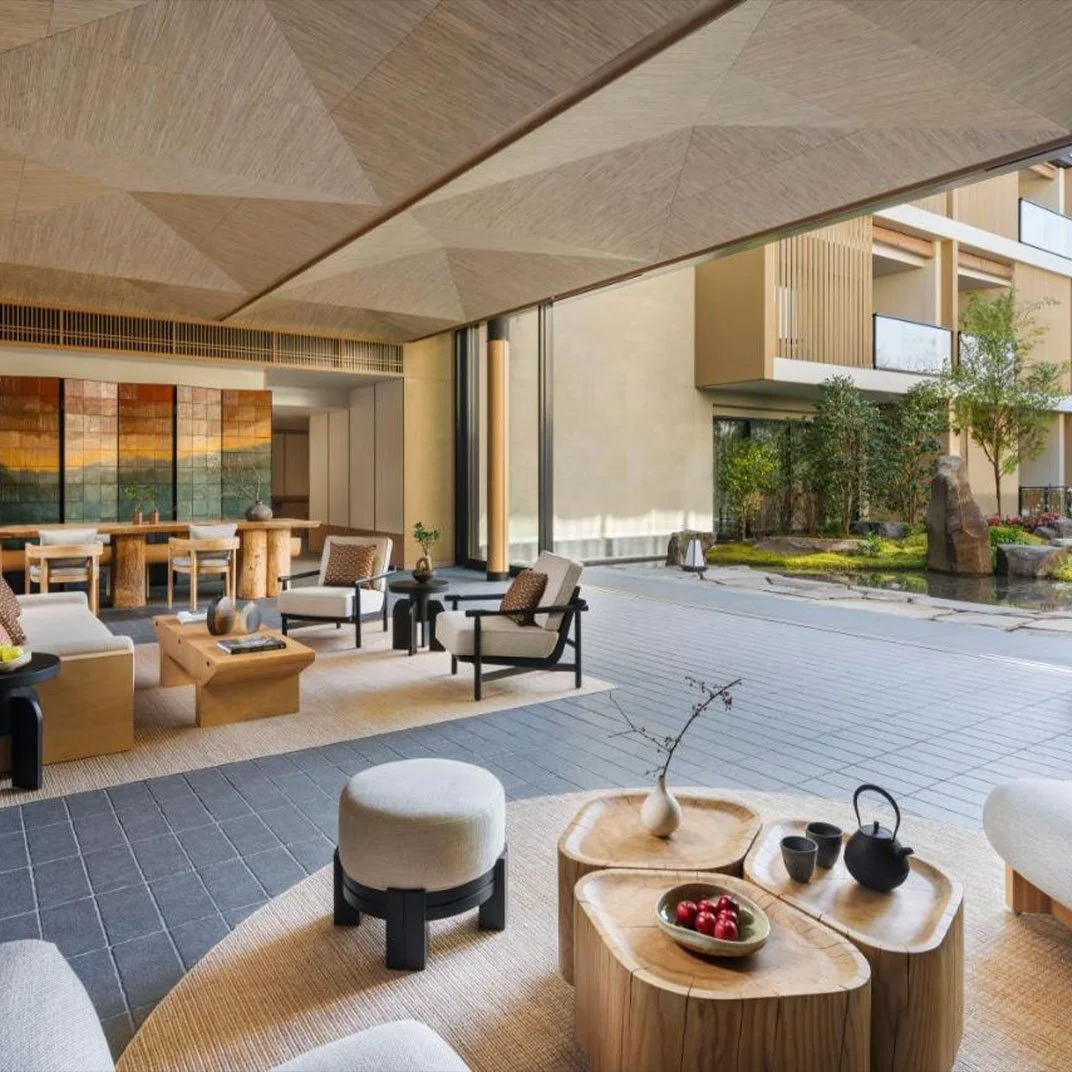
This is contemporary Kyoto luxury done with discipline. The architecture is low, composed, and intentionally unobtrusive, allowing gardens, light, and proportion to lead the experience. Interiors feel serene rather than styled, and the overall atmosphere is measured and grounded—more private residence than grand hotel. It’s an excellent counterpoint to Kyoto’s ryokan scene: deeply Japanese in spirit, but unmistakably modern in execution.
Located beside Nijo Castle, with easy access to central Kyoto while remaining notably quiet
Approximately 160 rooms and suites, large enough to offer amenities without losing intimacy
Architecture emphasizes horizontal lines, natural materials, and garden views throughout
Full thermal spa with natural hot spring water, plus an indoor pool and well-equipped gym
Dining focuses on Japanese cuisine with a contemporary approach; calm bar on site
Well suited for travelers who want luxury amenities without a resort feel
The hotel’s central garden was designed to echo the scale and pacing of an imperial courtyard, creating a sense of space that’s unusually expansive for Kyoto.
All images courtesy of Mitsui
Six Senses
Kyoto
Location: 431 Myohoin Maekawacho, Higashiyama Ward, Kyoto, 605-0932, Japan
Price: From ~$750/night
Vibe: Wellness-oriented, aesthetic, luxurious
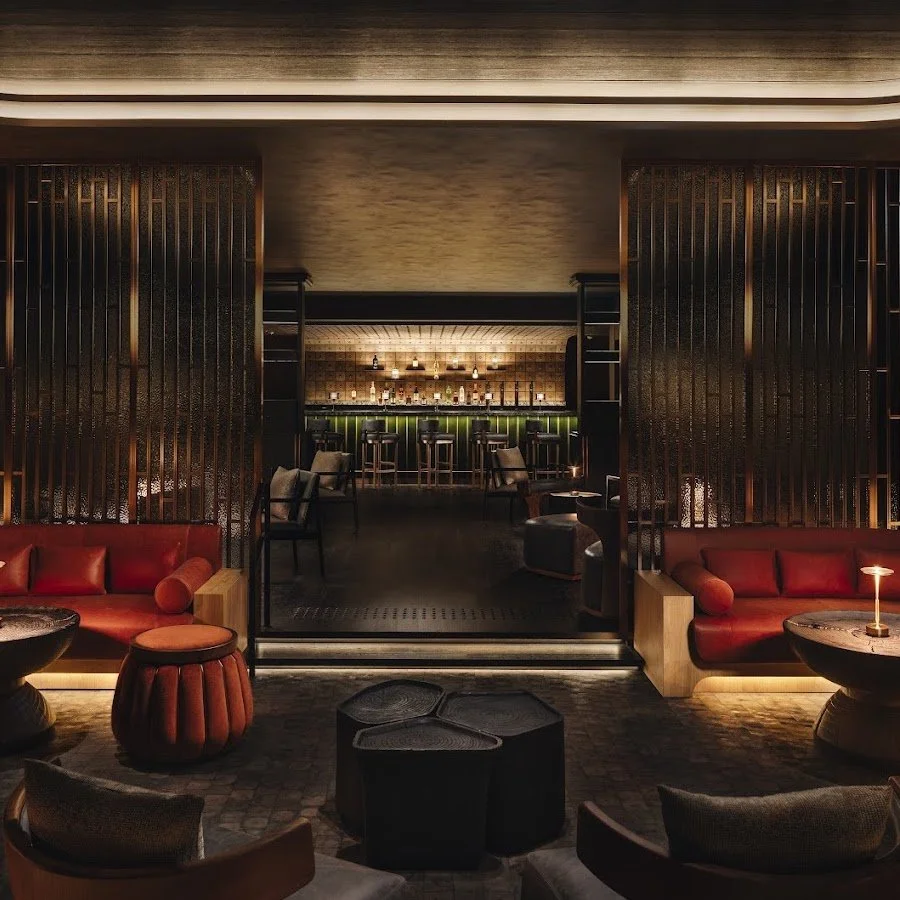
Unlike many new luxury openings in Kyoto, Six Senses resists spectacle. The design is calm and contemporary, with natural materials, soft light, and a layout that prioritizes inward-facing gardens over street drama. The focus here is balance: thoughtful rooms, serious wellness facilities, and a pace that encourages restoration without tipping into retreat isolation. It feels international, but not generic—an urban sanctuary that understands Kyoto’s quieter rhythms.
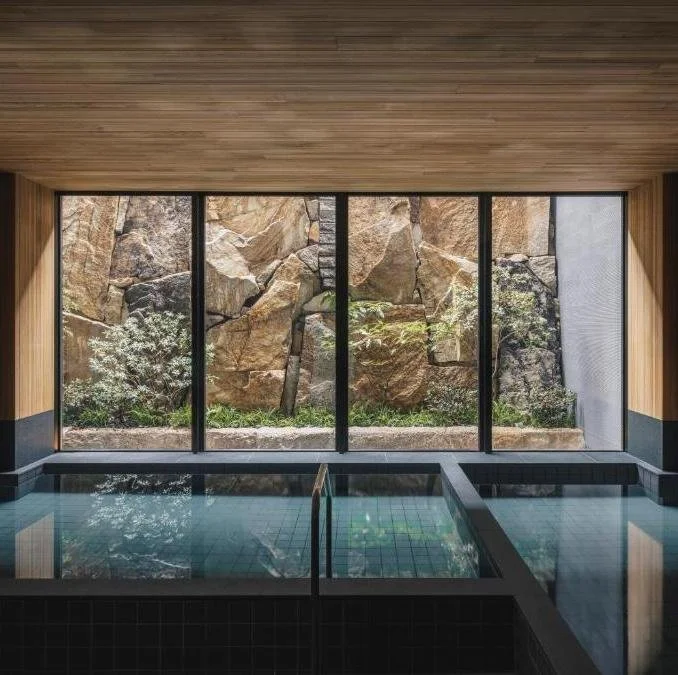
Located in the Higashiyama district, within walking distance of major temples and traditional neighborhoods
Around 80 rooms and suites, keeping the scale relatively intimate for a full-service luxury hotel
Design leans modern and nature-driven, with courtyards and gardens woven throughout the property
Large, destination-level spa with treatment rooms, relaxation areas, and thermal facilities
Indoor pool and a well-equipped gym, which is still relatively rare in Kyoto
Dining focuses on seasonal, wellness-conscious cuisine with Japanese influence
Six Senses Kyoto is one of the very few high-end hotels in the city where wellness facilities are not an add-on but the core of the experience, making it especially appealing for longer stays or mid-trip resets.
All images courtesy of Six Senses
Aman
Kyoto

Location: 431 Myohoin Maekawacho, Higashiyama Ward, Kyoto, 605-0932, Japan
Price: From ~$1,200/night
Vibe: Introspective, calm, luxurious
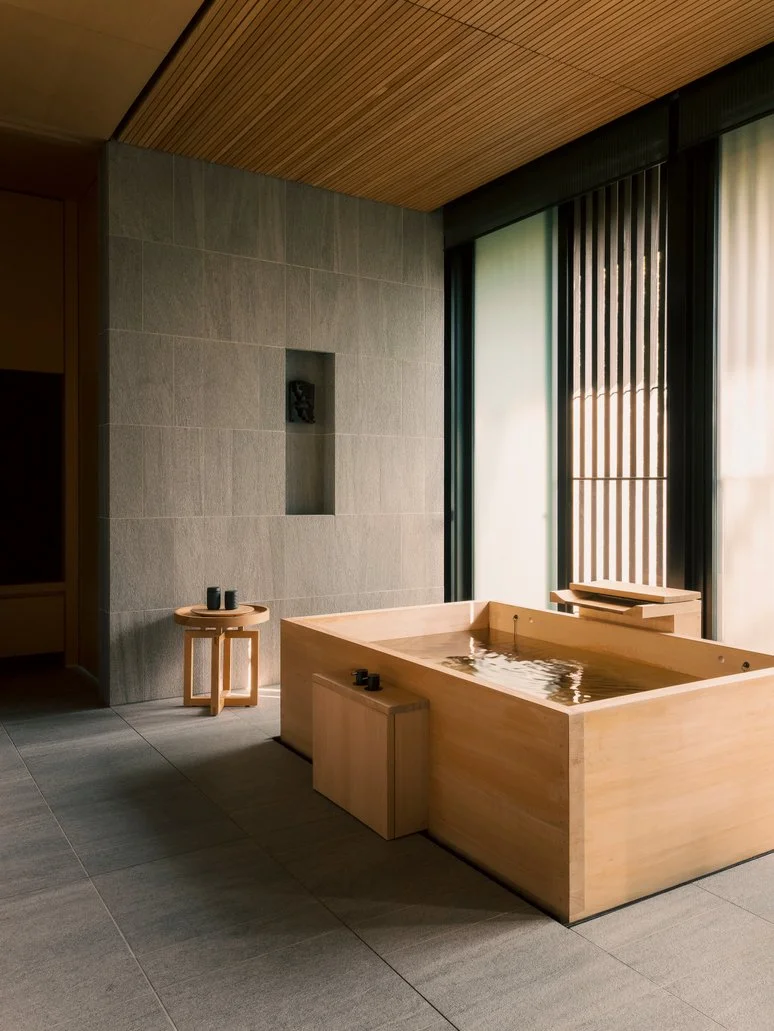
Set within a hidden garden estate near Kinkaku-ji, the hotel feels completely removed from the city despite being within it. Architecture is low and deliberate, built to follow the land rather than reshape it, with pavilions tucked among moss, stone paths, and forest canopy. The experience is slow and elemental—more about atmosphere, walking, bathing, and stillness than doing. It’s not showy, not social, and not trying to be convenient, which is precisely why it works.
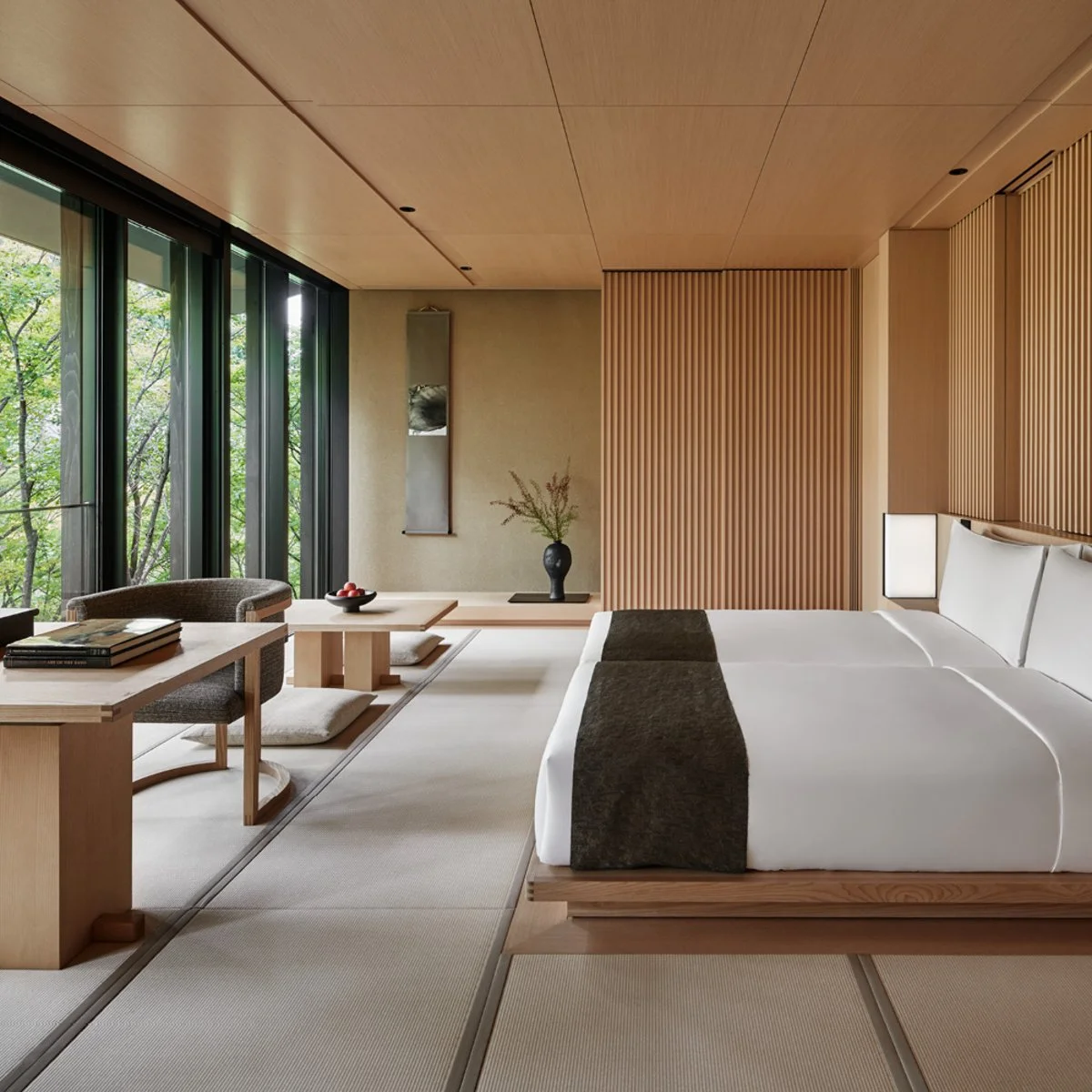
Located in Kita-ku, a quiet, wooded area north of central Kyoto; transfers required for most sightseeing
Approximately 26 pavilions and villas, giving the property an exceptionally private, low-density feel
Pavilion-style rooms are expansive, with floor-to-ceiling glass facing forest or garden
Destination spa with onsen-style baths, treatment rooms, and a strong focus on stillness and ritual
Indoor pool and fitness facilities available, integrated discreetly into the landscape
Dining centers on refined Japanese cuisine with seasonal Kyoto ingredients, served with Aman restraint
The property was discovered rather than developed—Aman spent years clearing and restoring the overgrown garden before building anything, which is why the landscape feels ancient, not landscaped.
All images courtesy of Aman
Northern & Southern Islands
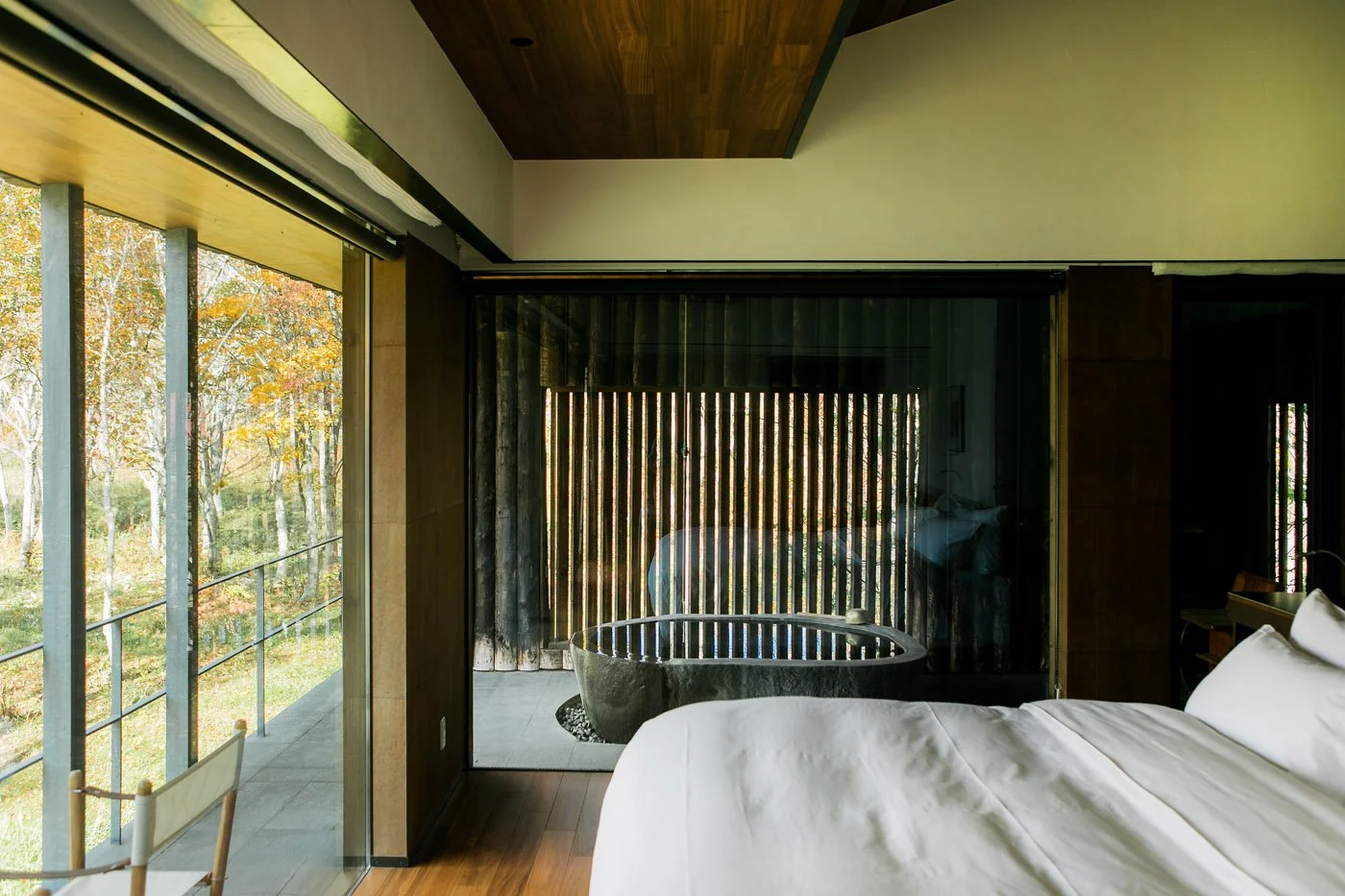
Zaborin
Hokkaido
Location: 76-4 Hanazono, Kutchan, Abuta District, Hokkaido 044-0084, Japan
Price: ~$1,000/night
Vibe: Cozy, minimalist, natural
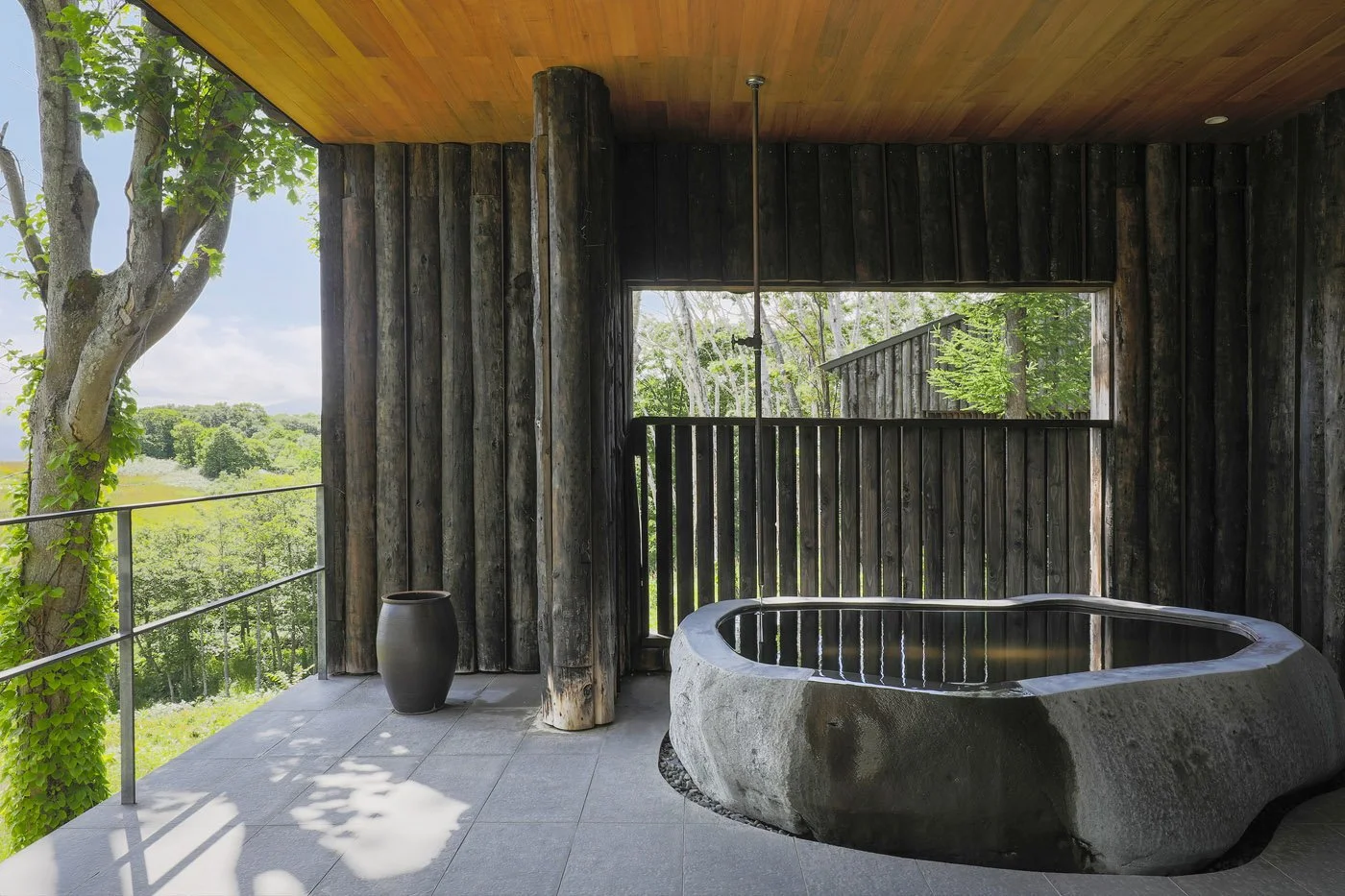
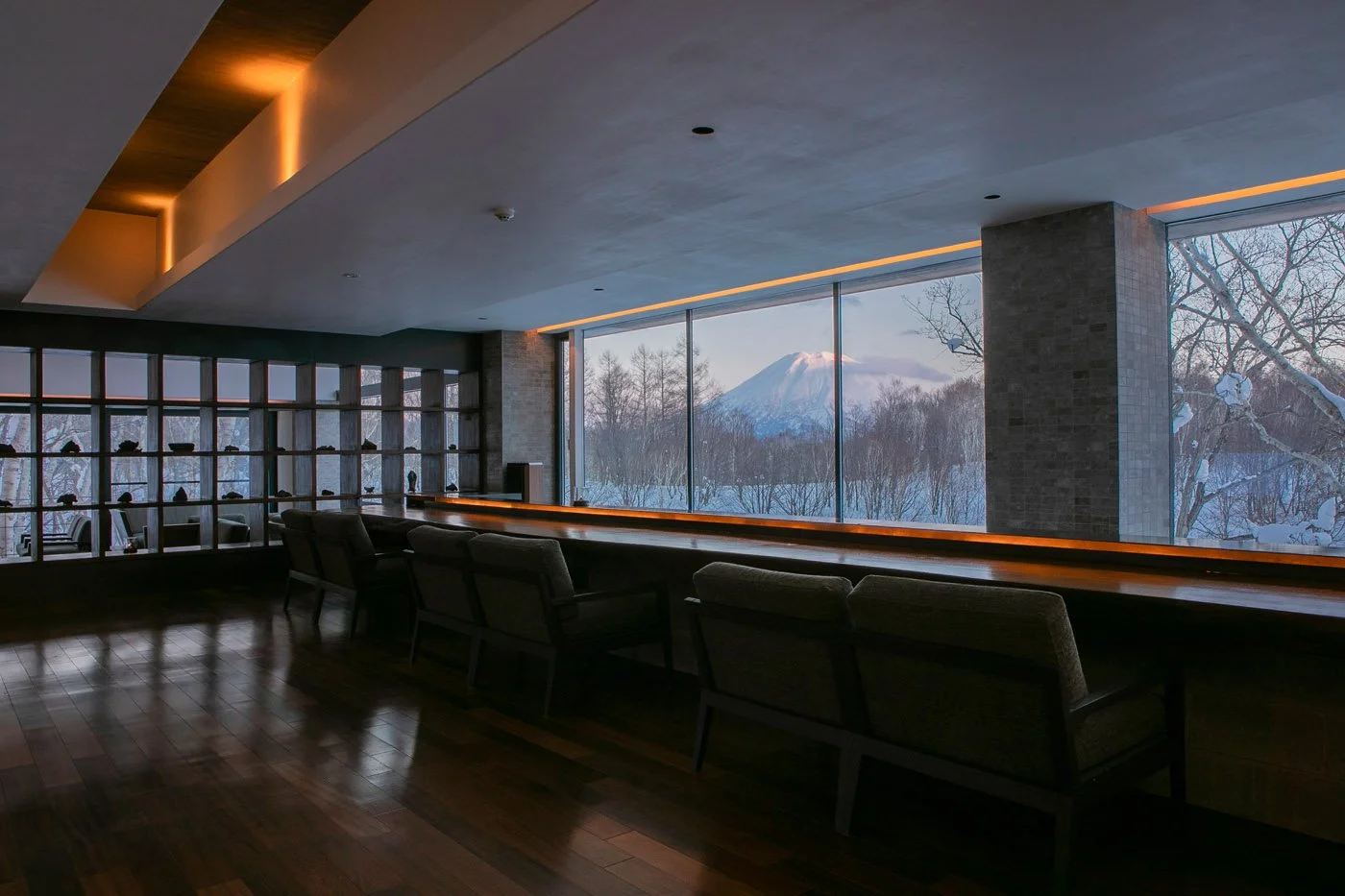
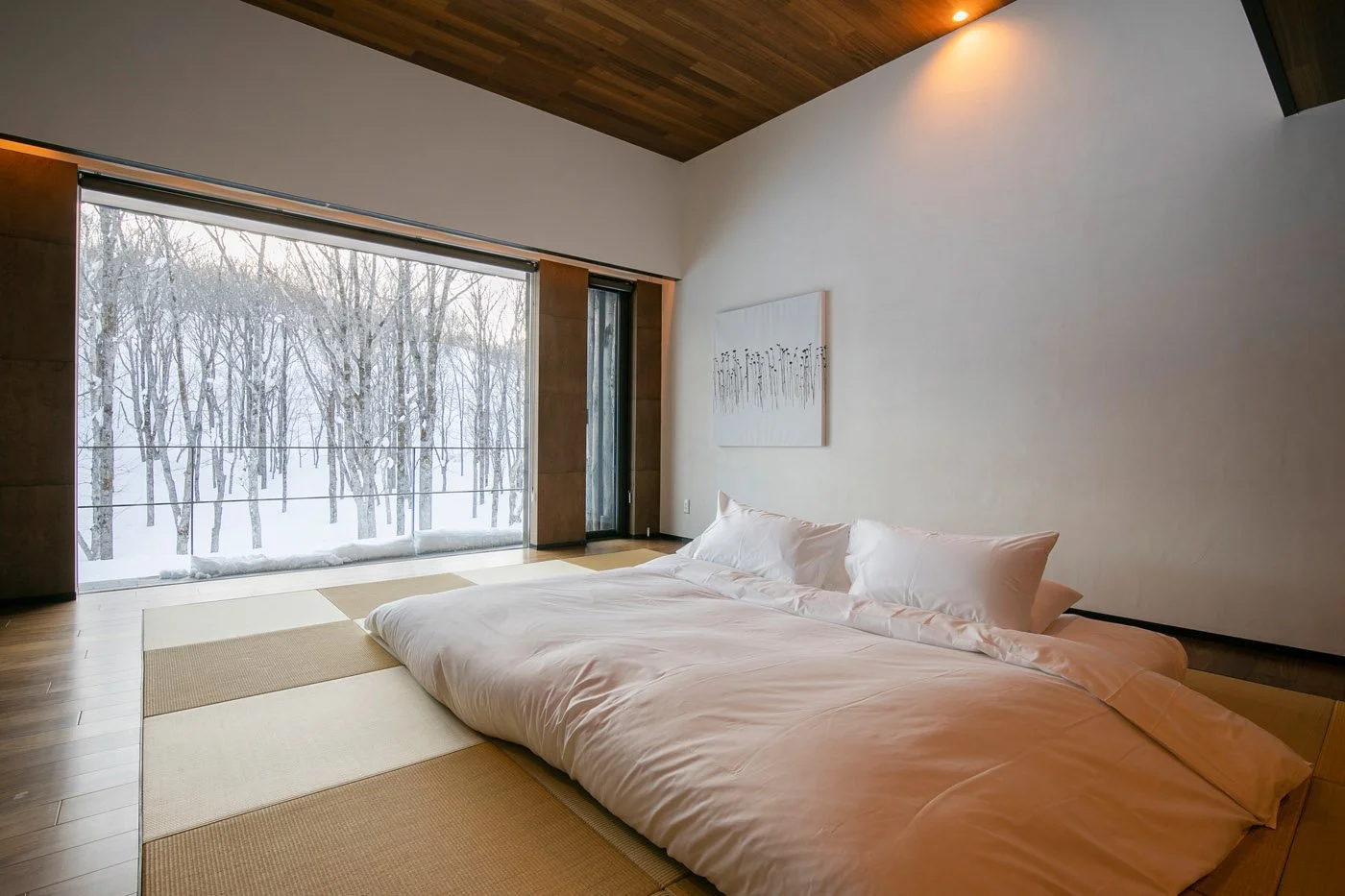
Zaborin is uncompromising in its restraint. The architecture is spare and precise, built to foreground snow, forest, and silence rather than tradition or ornament. Each villa feels entirely self-contained, allowing the rhythm of bathing, dining, and rest to unfold without interruption. It’s not theatrical, social, or nostalgic—this is modern Japanese luxury defined by proportion, privacy, and total immersion in place. Among northern Japan’s high-end stays, it’s the closest thing to Aman energy without being Aman.
Located outside Niseko, surrounded by forest rather than ski village activity
Approximately 15 villas only, giving the property an exceptionally low-density feel
Every villa includes both indoor and outdoor private onsen baths
No pool and no gym; the focus is bathing, landscape, and stillness
Dining is kaiseki-inspired, highlighting Hokkaido seafood, produce, and seasonality
Works especially well in winter and shoulder seasons for atmosphere and quiet
Service is highly discreet and paced to match the guest’s rhythm
Zaborin is deliberately designed without shared lounges or social spaces—most guests barely encounter one another, reinforcing the feeling that the entire property exists solely for your stay.
All images courtesy of Zaborin